

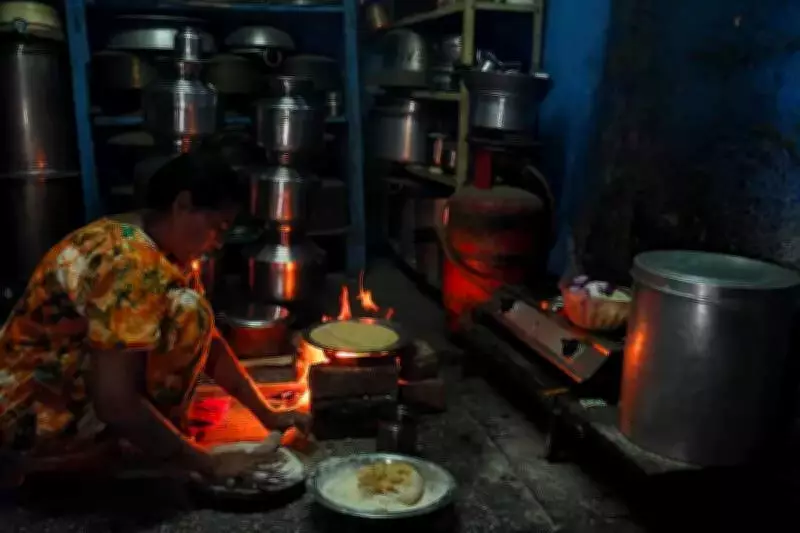
Rural Maharashtra Residents Decry Discriminatory LPG Cylinder Booking Rules Amid Shortage
Residents across rural areas of Maharashtra have raised strong allegations of discrimination against the government's recent decision to impose different minimum booking periods for domestic liquefied petroleum gas (LPG) cylinders. While urban consumers can book a refill after 25 days, rural and interior area residents must wait 45 days between bookings. This policy has sparked sharp criticism against the backdrop of an ongoing LPG shortage triggered by the conflict in West Asia.
Government Defends Policy as Demand Management Measure
Union Petroleum Minister Hardeep Singh Puri, speaking in Parliament during the ongoing session in Delhi on Thursday, defended the decision as a necessary demand management measure. "A 25-day minimum booking period has been introduced in urban areas and the same is 45 days for rural and interior areas," he stated. However, hundreds of villagers argue this rule is fundamentally unfair, given that LPG consumption in rural areas has risen significantly over recent years.
Most rural households now rely primarily on gas cylinders instead of traditional chulhas (earthen stoves), making the different refill limits particularly burdensome. Sunil Kalbhor, a resident of Narayangaon in Pune district, highlighted that joint families are more common in villages, resulting in higher LPG consumption. "In rural areas, families usually have more members staying together, due to which gas consumption is higher. Government should not differentiate between rural and urban consumers," he emphasized.

Practical Challenges and Family Needs Ignored
Sunita More, a resident of Maval, echoed these concerns, noting her five-member family requires cylinder refills every 28-30 days. "Before announcing this decision, government should have at least considered whether the allowed quantity would be enough for families," she rued. The practical implications extend beyond daily cooking needs. Sachin Gaikwad from Bhor pointed out that many villages organize festivals, yatras (pilgrimages), or fairs, during which family members working in cities return home.
This seasonal migration increases LPG demand sharply, particularly during summer months. "During such occasions, gas consumption rises sharply and the 45-day restriction will create problems for villagers," Gaikwad explained, adding that most households no longer depend on traditional chulhas and do not keep firewood at home as backup.
Black Market Concerns and Delivery Issues
The new policy has also raised fears about exacerbating black market activities. Pritam Purohit, another resident of Bhor, alleged that LPG agencies in rural areas already delay deliveries citing non-availability and often sell cylinders illegally. "The official 45-day cap has now given them a legitimate excuse to continue such illegal practices," he warned. Several rural residents reported being turned away by agencies this week despite government claims of adequate LPG stocks.
Shabiul Raza Sayyad from Junnar shared, "The gas agency told me demand had increased and asked me to return later when I visited for a refill on Tuesday." Others claimed that even after waiting the mandated 45-day period, they were unable to book cylinders online and had to visit agencies in person, where long queues were observed.
Traditional Alternatives No Longer Viable for Many
Bandopant Patil, a rural resident from Herwad in Kolhapur, highlighted the shift away from traditional fuel sources. "Ours was a large family, but now it has divided and arranging for wood is more difficult. Most of us rely on LPG supply," he said. Patil noted that some villagers previously made cakes from cow dung for fuel, but stocks are typically prepared only in April and May, and many lost their reserves during the 2019 floods.
An official from a gas agency in Junnar, speaking anonymously, confirmed the challenging situation. "We were already witnessing panic buying when government introduced the 25-day cap for refills. Now, with a 45-day cap for some customers, the situation will further worsen and we will have to deal with it," the official told TOI.

Administration Response and Enforcement Measures
Pune District Collector Jitendra Dudi on Friday reiterated that there is no shortage of LPG for domestic consumers and urged citizens to avoid panic-buying. He assured that the administration maintains adequate LPG stock for domestic customers and that supply will remain normal in coming days. Dudi added that government has instructed district administrations to ensure uninterrupted gas supply to hospitals and hostels.
Special monitoring squads have been formed in each taluka, led by tehsildars, to prevent black marketing of LPG cylinders. "We have received complaints about cylinders being sold at higher rates and have taken action accordingly," Dudi stated, emphasizing that strict action against violators will continue.
Not All Villagers Equally Affected
Despite widespread concerns, some rural residents report minimal impact from the new restrictions. Dipak Mali, who resides with his 47-member family in Terwad, Kolhapur district, said, "We cook food on the chulha daily. We arrange for wood from old trees that are cut on farms annually, and keep these in stock." His family uses LPG cylinders only for urgent purposes like making tea for guests or boiling milk for children, and they maintain multiple LPG connections as backup.
"So, I do not think the 45-day restriction to refill LPG cylinders will have a huge impact on us in near future," Mali concluded. However, for the majority of rural households that have fully transitioned to LPG, the differential booking periods represent a significant hardship amid ongoing supply uncertainties.





