

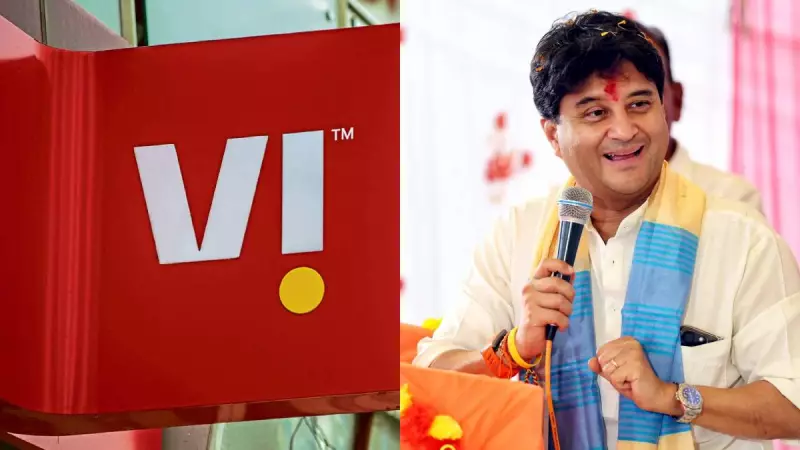
Union Minister for Communications and Information Technology, Jyotiraditya Scindia, has provided crucial clarity regarding the future trajectory of the financially strained telecom operator Vodafone Idea. This statement comes at a critical juncture when the government holds a significant 49% stake in the company following a conversion of past dues into equity.
Minister Scindia's Assurance on Operational Continuity
Addressing concerns about the company's survival, Minister Scindia emphasized that the government's role is that of a stakeholder and not a day-to-day manager. He stated that the operational decisions and strategic direction of Vodafone Idea remain the responsibility of its professional board and management team. The minister's comments aimed to dispel notions of direct governmental intervention in the telco's business operations, despite its substantial ownership.
The government acquired this equity as part of a relief package for the telecom sector, allowing operators to convert interest on deferred adjusted gross revenue (AGR) and spectrum dues into government shareholding. For Vodafone Idea, this lifeline resulted in the state becoming its largest single shareholder. However, Scindia clarified that this does not translate to a government-run entity, assuring that the company's future is in the hands of its own leadership.

The Challenge of Pending Dues and Market Dynamics
Despite the equity conversion, Vodafone Idea continues to grapple with a massive burden of pending dues. The company is still obligated to clear the remaining AGR liabilities and spectrum installment payments over time. Its financial health remains under severe stress, impacting its ability to invest in network expansion and 5G rollout, thereby affecting its competitiveness against rivals Reliance Jio and Bharti Airtel.
Minister Scindia acknowledged these challenges but refrained from outlining any specific further relief measures. His statement underscores the government's expectation for the company to navigate its recovery through market mechanisms, potential fundraising, and strategic improvements. The focus, as per the minister, is on ensuring a stable and competitive three-private-player market structure, which is considered vital for consumer interest and national digital infrastructure.
Implications for the Indian Telecom Sector
The future of Vodafone Idea, with its over 200 million subscribers, is pivotal for the entire Indian telecom landscape. A competitive market with multiple players is essential to prevent monopoly or duopoly, which can lead to higher tariffs and reduced innovation. The government's 49% stake creates a unique precedent in the sector, balancing between providing a safety net and enforcing market discipline.
Analysts suggest that Scindia's statement signals the government's intent to avoid a bailout while hoping the company attracts external investors. The clarity from the minister is seen as an attempt to stabilize perceptions and provide a framework for the telco's potential revival. The coming months will be critical as Vodafone Idea works on its fundraising plans and network upgrade strategies to retain its customer base and reclaim market confidence.
In conclusion, while the government holds a significant share, the onus of survival and growth rests firmly on Vodafone Idea's own strategic and operational choices. The sector watches closely as this unprecedented scenario unfolds, shaping the future of telecommunications in India.






