

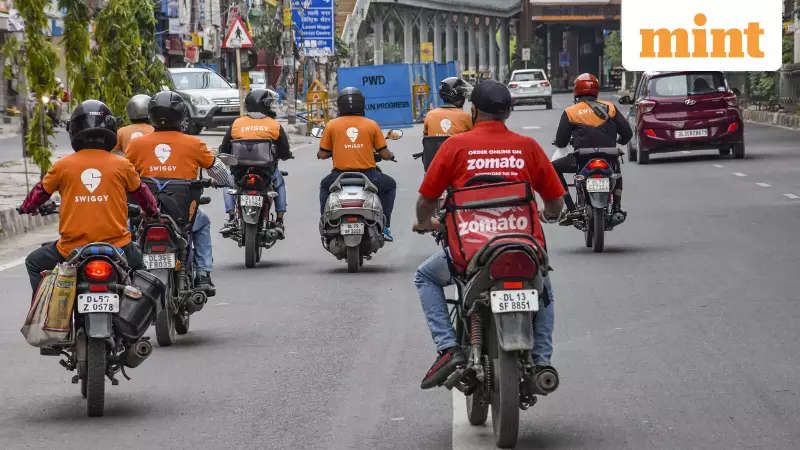
A major dispute has erupted between food delivery platforms and their workforce over the economics of fast delivery services. The Telangana Gig and Platform Workers Association has launched a sharp critique against Zomato founder Deepinder Goyal, directly challenging his recent claims about delivery partner earnings.
Union Counters Zomato's Earnings Figure
The conflict centers on Goyal's assertion that delivery executives can earn approximately ₹26,000 per month. In a detailed post on the social media platform X, the workers' union presented a starkly different calculation. They argued that the net income for a partner drops drastically once operational costs are factored in.
The association broke down the numbers, starting from the company's stated earnings per hour (EPH) of ₹102. Assuming a grueling schedule of 10 hours per day for 26 days, the gross monthly income reaches roughly ₹26,500. However, the union highlighted that fuel and vehicle maintenance costs consume about 20% of this amount. This deduction brings the net monthly salary down to around ₹21,000.

The Reality of Net Earnings and Missing Benefits
This revised figure translates to a net hourly wage of just ₹81 for 260 hours of work. The union's statement emphasized that this income comes with no social security benefits, no paid leave, and no accident insurance cover, painting a picture of precarious employment.
Addressing the potential supplement of customer tips, the association provided a sobering statistic. They claimed that tips add a mere ₹2.6 per hour on average, as only about 5% of all orders receive a tip. "This is not decent work," the union stated unequivocally, condemning the overall compensation structure.
Protest Against the 10-Minute Delivery Model
This financial rebuttal is part of a larger, ongoing protest by gig workers against the 10-minute delivery model pioneered by Swiggy Instamart and Zomato's Blinkit. Workers have consistently raised alarms about the immense pressure and safety risks associated with fulfilling such ultra-fast delivery promises. The union's latest post directly ties the debate over wages to the demands of this accelerated service model.
The public challenge to Goyal's claims marks a significant escalation in the dialogue between platform companies and the growing gig workforce in India. It puts a spotlight on the net take-home pay of delivery executives after accounting for their work-related expenses, a figure often absent from corporate announcements.
As the story develops, the response from Zomato and other stakeholders is awaited. The controversy underscores the deepening tensions in India's platform economy, where the pursuit of speed and convenience for consumers collides with the welfare and fair compensation demands of the workers who enable these services.






