

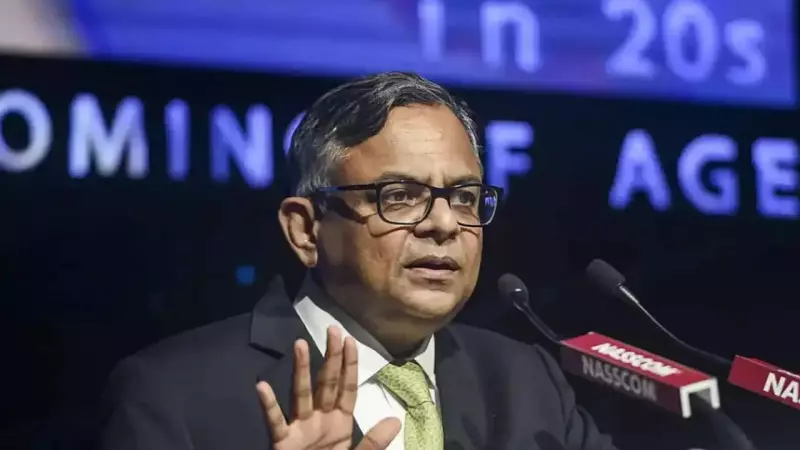
In a powerful year-end address to employees, Tata Group Chairman N Chandrasekaran laid out a clear roadmap for the conglomerate to thrive amidst global unpredictability. He emphasized that the coming years hold immense strategic potential for both India and the Tata Group, provided they embrace calculated risks and relentless innovation.
Turning Uncertainty into Strategic Opportunity
Chandrasekaran described 2025 as a "humbling year" marked by "unrelenting unpredictability," acknowledging difficult moments like the Air India flight 171 crash in Ahmedabad that deeply affected the group. Despite these challenges, he pointed to a silver lining: global growth has remained steadier than anticipated. He highlighted India's standout economic performance, underscoring its path to becoming the world's third-largest economy this decade.
"For India and for the Tata Group, this era of uncertainty carries with it big strategic opportunities," the Chairman stated. He believes global realignments are creating openings for youthful, dynamic economies, and that the coming years could be the most successful in Tata's long history. The key, he said, lies in delivering on commitments, fostering cross-team collaboration, and taking well-considered risks.

The Pillars of Tata's 2026 Strategy
The conglomerate's plan to convert volatility into advantage rests on several core initiatives. A major focus will be on accelerating Artificial Intelligence (AI) and data-driven projects across its businesses. Alongside this, the group plans to expand its advanced manufacturing capabilities and aggressively build a future-ready workforce skilled in emerging technologies.
Sustainability remains a non-negotiable priority. Initiatives like green steel production and scaling electric mobility will continue to be at the forefront. Chandrasekaran also highlighted the importance of building resilience against cybersecurity, operational, and geopolitical risks. He cited programs like the Tata Transformation Prize, which backs Indian scientists working on sustainability, health, and food security, as examples of their commitment to long-term impact.
Navigating a Complex Global Landscape
While celebrating progress, the Chairman did not shy away from outlining ongoing headwinds. He noted that heightened geopolitical tensions are creating more operational challenges for global businesses. Furthermore, the blistering pace of technological advancement continues to outstrip the ability of regulators to keep up, presenting a unique set of compliance and ethical dilemmas.
The overarching goal of Tata Group's 2026 strategy is clear: to drive innovation, strengthen India's position as a global manufacturing and technology hub, and ensure the conglomerate is best positioned to navigate volatility for long-term stability. Chandrasekaran's message underscores a belief that in today's turbulent world, agility, foresight, and a commitment to core values are the ultimate competitive advantages.






