

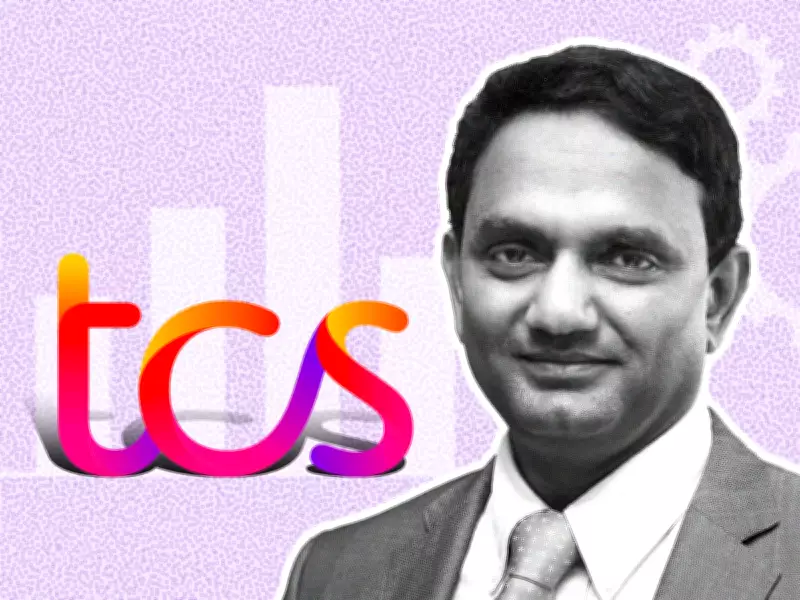
TCS Leadership Counters 2030 Obsolescence Predictions for Indian IT
In a strong rebuttal to recent forecasts, TCS CEO K Krithivasan has firmly rejected claims that India's information technology services industry will become obsolete by 2030. Speaking exclusively to The Economic Times, Krithivasan presented a compelling counter-narrative, asserting that enterprises will actually require greater support from IT service providers like TCS as artificial intelligence adoption accelerates globally.
Resilience Through Skill Depth, Not Just Cost Advantage
"We have been writing its obituary every 10 years, but I think Indian IT services have proven to be very resilient," Krithivasan stated during the interview. He emphasized that this resilience stems not merely from traditional cost arbitrage advantages, but fundamentally from the depth of skill sets developed within the industry over decades.
The CEO elaborated that as AI implementation accelerates across sectors, enterprises will increasingly struggle to keep pace with the rapid technological evolution. This dynamic, according to Krithivasan, will create substantial demand for IT services companies to bridge the critical gap between cutting-edge AI technologies and practical, real-world implementation within business operations.

AI Viewed as Strategic Opportunity, Not Existential Threat
Echoing this optimistic perspective, TCS Chief Operating Officer Aarthi Subramanian reinforced that the company views advanced AI systems as significant opportunities rather than existential threats. "GenAI has unlocked a significant opportunity in legacy modernization, particularly for large, decades-old systems such as mainframes," Subramanian explained.
She argued that artificial intelligence can substantially reduce technical debt while driving measurable productivity gains across IT operations. This positions companies like TCS to help organizations navigate the complex transition to AI-enhanced systems and processes.
Financial Performance and Strategic Moves Amid Challenges
These comments come at a pivotal moment for TCS, which recently reported its first annual revenue decline since going public in 2004. The company's FY26 revenue decreased by 2.4%, reflecting broader global slowdowns in technology spending. Despite this challenging environment, TCS achieved its highest-ever total contract value of $40.7 billion for FY26, including an impressive $12 billion secured in the fourth quarter alone.
Krithivasan noted encouraging signs of improvement in client decision-making cycles, with organizations continuing to invest in AI transformation initiatives despite ongoing geopolitical uncertainties affecting global markets.
Workforce Development and Strategic Acquisition
Demonstrating confidence in future growth, TCS maintained robust hiring practices throughout FY26. The company onboarded 44,000 new trainees and extended 25,000 offers for the upcoming cycle, even after implementing a 2% workforce reduction the previous year.
In a significant strategic move, TCS completed its largest acquisition in over a decade, purchasing US-based Salesforce consulting firm Coastal Cloud for $700 million. This acquisition strengthens TCS's capabilities in cloud consulting and digital transformation services, positioning the company to better serve clients navigating the AI transition.
The combined perspectives from TCS leadership present a cohesive vision: rather than rendering Indian IT services obsolete, the AI revolution is creating new, substantial demand for implementation expertise, system integration, and legacy modernization—areas where established players like TCS possess deep institutional knowledge and technical capabilities.






