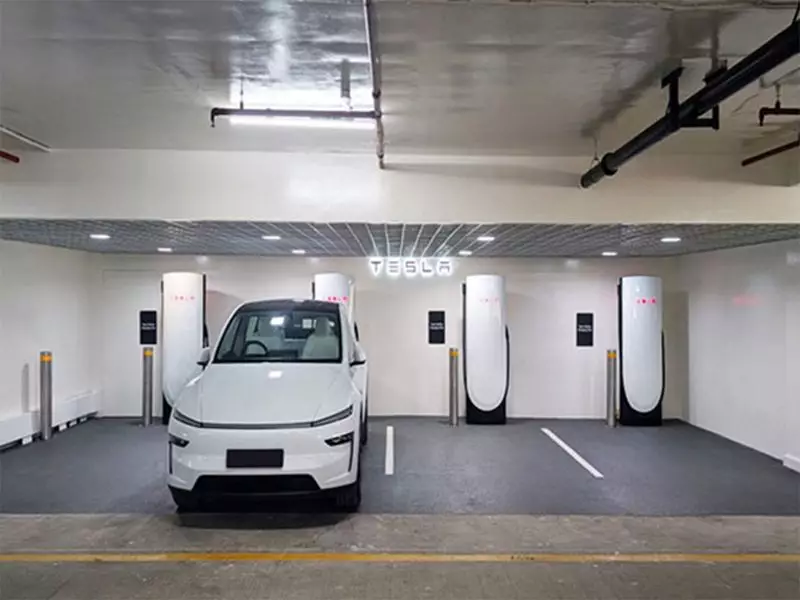
In a dramatic turn of events, the high-profile battery supply partnership between Tesla Inc. and South Korea's LG Energy Solution Ltd. has hit a major roadblock. The value of their existing contract has been slashed to almost nothing, a staggering fall from its initial multi-billion dollar valuation, sending shockwaves through the electric vehicle (EV) supply chain.
A Contract Evaporates: From Billions to Almost Zero
The core of the story lies in a drastic financial revision. According to a recent regulatory filing by LG Energy Solution, the executable contract value with its key client, Tesla, has been reduced to nearly zero. This is a monumental shift from the previously stated long-term supply agreement, which was valued at a colossal 3 trillion South Korean won (approximately $2.8 billion or ₹233 billion) as of the end of 2023.
This contractual devaluation directly impacts LG Energy Solution's financial outlook. The company has stated that its total remaining order backlog now stands at 440 trillion won ($325 billion). However, the near-erasure of the Tesla portion means a significant portion of projected revenue has simply vanished. The filing, made public on Tuesday, did not specify the exact reasons behind this mutual agreement to reduce the contract value, leaving industry analysts to speculate on the underlying causes.

Market Repercussions and Investor Jitters
The immediate consequence of this news was felt sharply on the trading floor. Shares of LG Energy Solution tumbled by as much as 4.3% in early Seoul trading following the disclosure. This decline significantly underperformed the broader benchmark Kospi index, highlighting the market's negative perception of this development.
For LG Energy Solution, Tesla represents a major client, though not the largest. The American EV giant accounted for a substantial 12% of the Korean firm's total revenue in the first quarter of 2024. Losing a contract of this magnitude inevitably raises concerns about future revenue streams and capacity utilization at LG's production facilities dedicated to supplying Tesla.
The Bigger Picture: Global EV Market Dynamics
This contract revision occurs against a complex backdrop in the global electric vehicle industry. Tesla, like many automakers, is navigating a period of slower-than-expected demand growth in key markets. The company has been aggressively focusing on cost-cutting measures and streamlining its supply chain to protect margins.
One plausible interpretation is that Tesla is adjusting its battery procurement strategy, possibly due to an oversupply situation or a strategic pivot towards other battery technologies or suppliers, including its own in-house cell development. The EV leader has been known to diversify its battery sources, working with multiple giants like Panasonic and Contemporary Amperex Technology Co. Limited (CATL) from China.
For LG Energy Solution, this setback underscores the risks of over-reliance on a single, powerful customer in a volatile market. It may prompt the company to accelerate its efforts to diversify its client portfolio further and secure more binding agreements with other automakers expanding their EV lineups.
The fallout from this contract slash extends beyond the two companies directly involved. It serves as a stark indicator of the shifting tides in the electric vehicle sector, where rapid scaling is now giving way to more measured, cost-conscious growth. Battery manufacturers worldwide will be watching closely, as the dynamics between automakers and their suppliers are being recalibrated in real-time.