

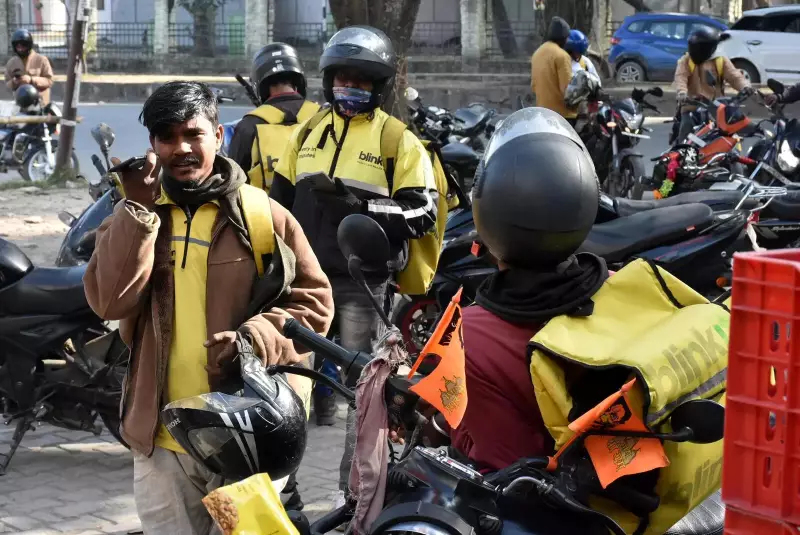
As dusk falls over Ranchi, the city's Main Road and Circular Road transform into a chaotic stream of vehicles. Amidst the honking cars and buses, a new breed of commuter emerges: men on motorcycles, weaving with agility, their shoulders weighed down by oversized delivery bags. For this growing army of app-based delivery partners, the rush hour gridlock isn't a nuisance; it's their office floor.
The Algorithm's Unforgiving Clock
Every ping on their smartphone isn't just an order; it's the start of a high-pressure countdown. A delay of mere minutes can impact their daily earnings, customer ratings, and even their ability to secure the next work shift. Over the last three years, the rapid expansion of services delivering food, groceries, medicines, and essentials has fundamentally changed consumption patterns in Ranchi. Simultaneously, it has redefined the work life of thousands, governed by tight delivery windows, algorithm-driven penalties, and mounting personal expenses.
"People assume we speed because we enjoy it," shares Aman, a 26-year-old grocery delivery rider covering Lalpur and Morabadi. "But when the app sets a 12-minute target and the road is blocked, the pressure mounts on its own. Slowing down means a lower rating. A lower rating means fewer orders." For most riders, the workday is a relentless cycle of frantic sprints followed by uncertain waiting periods. Logged in for 10 to 14 hours daily, especially on weekends for attractive-looking incentives, their actual take-home pay remains highly volatile.

The Real Cost of Instant Delivery
"Some days you anticipate earning Rs 1,200, but after deducting petrol, food, and phone recharge, you're left with only Rs 600–700," explains Rohit, a food delivery agent. There is no fixed income; everything hinges on demand and the platform's variable incentive structure. Fuel has become one of the most significant overheads, costing riders between Rs 250 to Rs 350 per day, none of which is reimbursed. To this, add mobile data plans, vehicle maintenance, and even company-branded jackets or bags, which are often deducted from their earnings.
"You pay for everything. They deduct the cost later. Nothing is free here," states Imran, a college dropout who entered the quick-delivery sector last year. The challenges extend beyond economics. Riders brave extreme weather, with summer heat sapping energy and winter fog creating hazardous driving conditions. Crucially, delivery timers do not adjust for poor visibility, waterlogging, or traffic snarls caused by civic work.
"During rains, brakes slip and roads vanish under water. But the clock never stops. If you pause, the customer calls. If you're late, you get a bad rating," describes Mukesh, who works night shifts. Night deliveries bring additional threats: poorly lit streets, stray animals, fatigue, and occasional confrontations with customers upset over delays often caused by incorrect addresses or locked gates.
No Safety Net on the Fast Lane
This high-stakes environment takes a severe toll on mental well-being. Many riders are glued to their phones, anxious about missing an order or a bonus window. Rejections, order cancellations, and low ratings generate constant anxiety that spills into their personal lives. "There is no leave, no off day. If you don't log in, you don't earn. If you fall sick, the app doesn't care," says delivery rider Sanjay Das.
Social security is virtually absent. While platforms mention accident insurance, riders find the process opaque and difficult to navigate. "If an accident occurs, you pay from your pocket first. Reimbursement is never certain," Sanjay adds. Despite these stark realities, the workforce continues to swell. Comprising largely of students, migrants, and sole breadwinners from economically constrained backgrounds, they have few alternatives.
As Ranchi's appetite for instant gratification grows, its riders continue their round-the-clock race. Behind every neatly packed parcel delivered at the doorstep is a worker sprinting not just against the app's timer, but against the escalating limits of his own endurance and financial stability.






