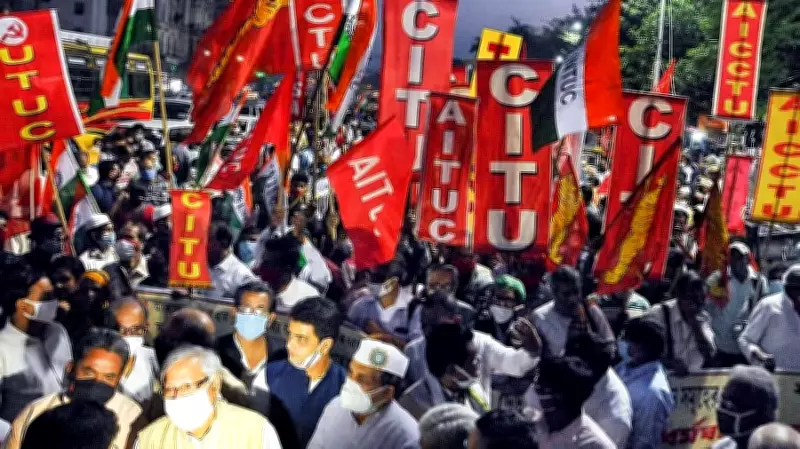
Trade Unions Reject CJI's Remarks, Pin Industrial Slowdown on Neo-Liberal Policies
In a strong rebuttal to recent comments by the Chief Justice of India (CJI) regarding industry slowdown, major trade unions have asserted that they are not to blame for the economic challenges facing the industrial sector. Instead, they have pointed fingers at what they describe as neo-liberal policies as the primary culprit behind the slowdown.
Unions Defend Their Role in the Economy
The Centre of Indian Trade Unions (CITU) and the All India Trade Union Congress (AITUC) have jointly responded to the CJI's remarks, which suggested that trade union activities might be contributing to industrial stagnation. In their defense, the unions emphasized that their primary role is to protect workers' rights and ensure fair labor practices, which they argue are essential for a healthy and sustainable economy.
They highlighted that trade unions have historically played a crucial role in advocating for better wages, safer working conditions, and social security for employees across various industries. By doing so, they contend that unions help maintain industrial harmony and productivity, rather than hinder it.

Critique of Neo-Liberal Economic Policies
Shifting the focus away from their own activities, CITU and AITUC launched a pointed critique of neo-liberal policies that have been implemented in India over the past few decades. They argued that these policies, characterized by deregulation, privatization, and a focus on market-driven solutions, have led to several negative outcomes for the industrial sector.
- Job Insecurity: The unions noted that neo-liberal reforms have often resulted in precarious employment conditions, with an increase in contract labor and a decline in permanent jobs, undermining worker stability and morale.
- Reduced Public Investment: They pointed out that a shift towards privatization has reduced government spending in key sectors like infrastructure and manufacturing, which they believe is essential for industrial growth.
- Inequality: The policies have exacerbated economic disparities, with wealth concentrating at the top while many workers struggle with low wages and poor benefits, according to the unions.
By attributing the industrial slowdown to these broader economic strategies, CITU and AITUC are calling for a reevaluation of India's policy direction. They advocate for a more worker-centric approach that prioritizes social welfare and equitable growth over market liberalization.
Implications for India's Economic Future
This debate highlights a significant tension in India's economic landscape, as trade unions push back against top-down criticisms and instead urge policymakers to address systemic issues. The unions' stance suggests that without addressing the root causes embedded in neo-liberal frameworks, efforts to revive industry may fall short.
As India navigates post-pandemic recovery and global economic uncertainties, the role of trade unions and the impact of economic policies will likely remain contentious topics. The response from CITU and AITUC underscores the need for a balanced dialogue that considers both labor rights and industrial efficiency to foster sustainable development.