Three years after the National Education Policy 2020 was announced, a Mysuru-based company is turning policy directives into working skill labs in government and private schools across fifteen states. Kidvento Education and Research Pvt. Ltd., founded in 2017, has built over 500 government-sanctioned innovation labs under three distinct central and state frameworks, including more than 250 Atal Tinkering Labs under NITI Aayog, over 100 Srishti and Avishkar labs in PM SHRI schools under Samagra Shiksha, and more than 100 labs under the Department of Science and Technology, Government of Karnataka.
From Policy to Practice
NEP 2020 called for skill-based learning, experiential teaching, and vocational exposure starting in Grades 6-8, including ten-day bagless internships with local artisans. The National Curriculum Framework 2023 sharpened these directives. However, implementation remained a challenge. PM SHRI schools—over 14,500 targeted, with more than 10,800 selected as of 2024—were mandated to model this vision, but building labs, training teachers, and sustaining quality required on-ground execution partners.
Kidvento’s Ulipsu platform addresses this gap. Running in over 500 schools across fifteen states, Ulipsu provides a structured skill curriculum aligned with NEP 2020 and NCF 2023, accredited by ISTE and certified by STEM.org. Over five lakh students are currently active on the platform.

What a Skill Lab Does
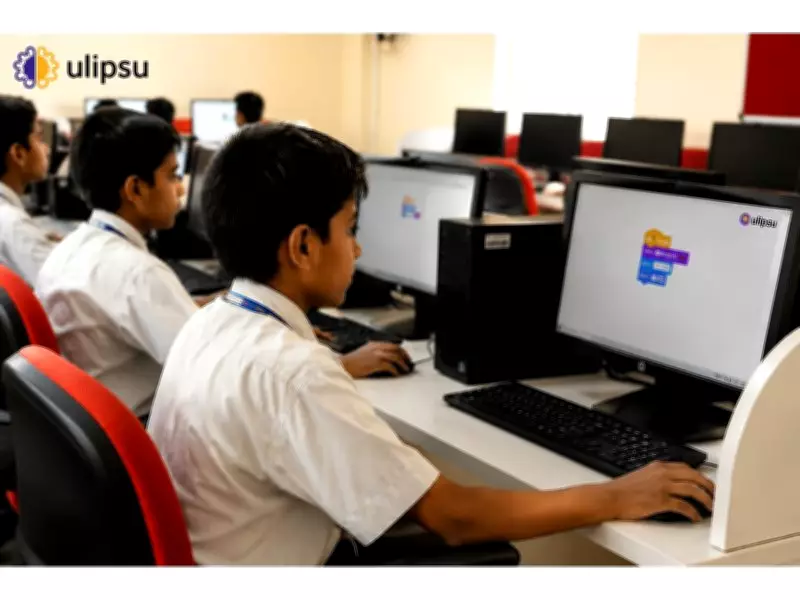
At Sacred Heart School in Moga, Punjab, a Class 7 student builds circuits during regular school hours. At DAV School in Chhattisgarh, a Class 9 student works through a module that takes him from identifying a community problem to sketching a business model. These sessions are part of the regular timetable, tracked through a platform that reports outcomes to teachers, parents, and administrators in real time.
Curriculum is the harder problem, according to the company. Ulipsu offers structured, sequenced, outcome-linked content. Students may spend one session on coding, another on financial literacy, and a third on project development. From Grade 5, they take a skill and career interest assessment based on the Holland Code framework, giving them personalised insights into their strengths.
Equity in Action
In Telangana, Kidvento runs its CAR programme and Ulipsu in government schools with limited physical infrastructure. Ms. Nagamanimala, Head Mistress of PM SHRI TGWREIS High School in Marikal, said: “Students have not only gained theoretical knowledge but have actively engaged in projects requiring practical implementation. We have witnessed a meaningful transformation in their confidence, creativity, and problem-solving abilities.”
The model shows that curriculum, if properly designed, can precede infrastructure, avoiding the wait for fully equipped labs in every government school.
Scale Beyond Pilots
Ulipsu’s footprint spans Karnataka, Tamil Nadu, Telangana, Andhra Pradesh, Chhattisgarh, Maharashtra, Punjab, Uttar Pradesh, Delhi, Bihar, and Odisha. The company reports having trained over 15,000 teachers. While India has over a million schools, this model demonstrates that NEP 2020’s vision can be implemented at scale across diverse geographies and school types.