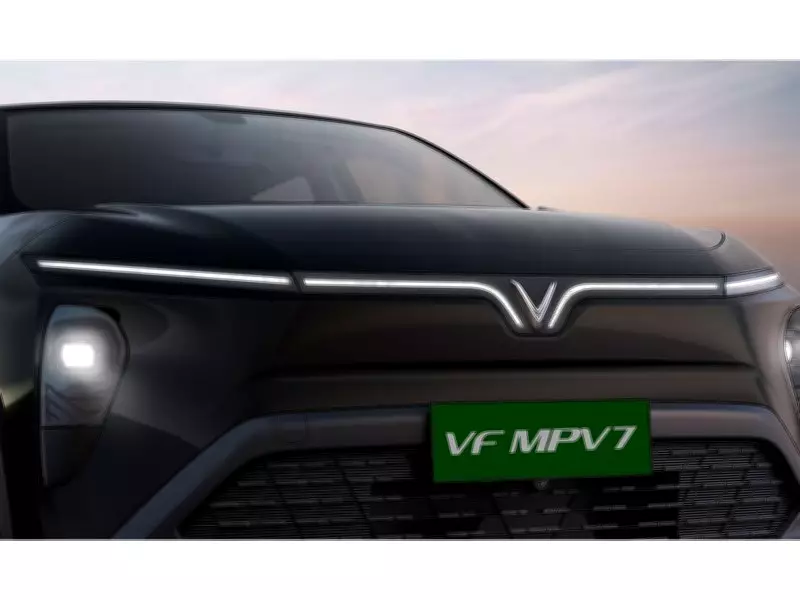
VinFast, the Vietnamese electric vehicle manufacturer, is demonstrating that the future of the EV industry depends on more than just building better cars. The company's ecosystem approach, which includes charging infrastructure, aftersales service, financing, and mobility services, is reshaping the competitive landscape.
Ecosystem Thinking in EV Transition
For over a century, industrial revolutions have rarely been driven by products alone. Detroit became the world's automotive capital not because a single brand built a better car, but due to networks of suppliers, infrastructure, and talent. Similarly, Silicon Valley's success and Shenzhen's transformation into a global electronics hub were the result of reinforcing ecosystems. The same phenomenon is now unfolding in the electric vehicle industry.
While battery technology, driving range, and vehicle performance have dominated the conversation over the past decade, these innovations alone are no longer sufficient for success in the next growth phase. As EVs move from early adopters to mainstream consumers, buyers seek confidence in convenient charging, reliable aftersales support, affordable financing, and long-term ownership with minimal disruption.

According to Rishav Kumar Choudhary, Managing Director of JP Emobility India, "It is not only about selling cars. It is also about building the infrastructure those cars require and addressing customer concerns, from charging and aftersales to resale value and ownership confidence."
Shifting Competitive Battleground
In 2025, the global EV market continues to grow despite slower demand in some mature markets. The International Energy Agency reports that more than 20 million electric vehicles were sold worldwide in 2024, representing a quarter of all new passenger vehicle sales. This marks a 20% growth from 2023 and the fifth consecutive year of annual increases of about 3.5 million units.
However, as EVs become more widespread, mainstream consumers still harbor concerns about practical ownership issues such as charging infrastructure, charging time, driving range, and long-term reliability. Industry surveys consistently highlight these anxieties.
This shift in consumer base is prompting manufacturers to think differently. Pure-play EV brands are investing across multiple parts of the EV value chain—producing their own batteries, building proprietary charging networks, and developing software capabilities. Traditional automakers are accelerating partnerships with charging operators and software providers, recognizing that customer experience extends beyond the showroom.
The competitive battleground is moving from the vehicle itself to the ecosystem that supports it, including charging, aftersales service, financing, and mobility services. This creates a network effect: every improvement in one area reduces friction elsewhere. A denser charging network eases range anxiety; better service infrastructure increases ownership confidence; attractive financing lowers the barrier to switching from internal combustion engine vehicles; and large commercial fleets normalize electric mobility for potential private buyers.
VinFast's Holistic Ecosystem in Vietnam
VinFast, backed by Vingroup—Vietnam's largest private conglomerate—exemplifies this ecosystem thinking. The company has worked with Vingroup- and founder-affiliated companies to build a broad electric mobility ecosystem.
Charging infrastructure is provided by V-Green, the global charging company owned by VinFast's billionaire founder Pham Nhat Vuong. V-Green is developing a charging network of roughly 150,000 charging ports nationwide, with stations averaging about 3.5 kilometers apart in urban areas and approximately 65 kilometers apart across 106 national highways and expressways.
Taxi fleets operated by ride-hailing arm Green SM, also under Vuong, allow consumers to experience VinFast EVs before purchasing. Electric buses made by VinFast are deployed as public transport, normalizing electric mobility in daily life. Vingroup's investments in robotics through VinRobotics and VinDynamics strengthen long-term competitiveness by future-proofing production efficiency and technological capabilities.

While each business has its own commercial objectives, together they address different barriers that have historically slowed EV adoption. Rather than asking customers to adapt to electric mobility, the ecosystem adapts to customers.
This strategy has contributed to VinFast's rapid expansion since its inception in 2017. The company delivered nearly 197,000 electric vehicles globally in 2025, more than doubling deliveries from the previous year. As of May 2025, it has been Vietnam's best-selling automotive brand for 20 consecutive months.
Lessons for Emerging Markets Like India
The importance of ecosystems is especially pronounced in emerging markets where the EV transition is still in its early stages. In India, four-wheeler EV sales grew by 75% year-on-year in 2025, reaching 165,000 units—nearly 4% of total passenger vehicle sales. Although passenger EV penetration remains modest compared to China, parts of Europe, Vietnam, and Thailand, the market is expanding steadily due to government incentives, new product launches, and charging investments. In May 2025, EV penetration across India's automobile market crossed 11% for the first time. The country is expected to welcome 16 new electrified passenger vehicle models over the next nine months, compared to just seven internal combustion vehicles.
Virtually every major automaker in India has announced ambitious electrification plans, but long-term success will depend on parallel investments in charging infrastructure, financing, aftersales service, local supply chains, and manufacturing. VinFast's expansion into India reflects this philosophy. Alongside its manufacturing facility in Tamil Nadu—a USD 500 million investment with an annual capacity of 150,000 vehicles—the company has expanded its dealership network, partnered with financial institutions, developed third-party service partnerships, and worked with V-Green to support charging infrastructure. According to company plans, its Indian network is expected to grow to 75 showrooms and more than 230 dedicated service stations.
Building such a comprehensive ecosystem from the ground up takes time, but the industry direction is clear. Manufacturers are no longer competing solely on a single aspect. If history offers one lesson, it is that companies most likely to shape the future are those that build product ecosystems making the ownership journey effortless.
About VinFast
VinFast (NASDAQ: VFS), a subsidiary of Vingroup JSC, is a pure-play electric vehicle manufacturer with the mission of making EVs accessible to everyone. Its product lineup includes electric SUVs, e-scooters, and e-buses. The company is rapidly expanding its global distribution network and manufacturing capabilities with facilities in Vietnam, India, and planned operations in the United States.
(This content is sourced from a syndicated feed and is published as received. The Tribune assumes no responsibility or liability for its accuracy, completeness, or content.)