

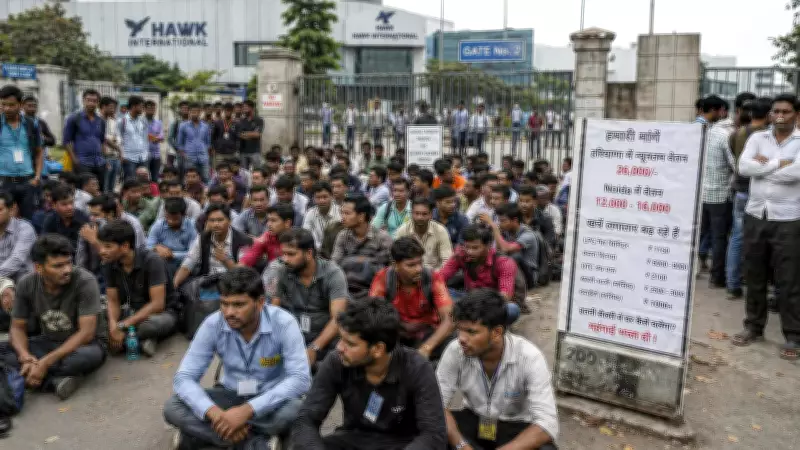
The protests that erupted in Noida on April 10 began with workers in the city's industrial belt demanding higher wages. However, the anger went far beyond a single pay revision. For years, many workers in factories and workshops across Noida earned extremely low monthly wages, ranging between Rs 9,000 and Rs 12,000, even as the cost of living rose steadily during the same period.
The Trigger: Haryana's Minimum Wage Hike
When Haryana notified a steep minimum-wage increase on April 9, workers in Noida could clearly see how far behind they had been left. Uttar Pradesh's interim wage hike, which followed on April 14, helped only to contain the immediate crisis rather than address the underlying issues.
Root Causes of the Unrest
According to economist Ajit Ranade, the unrest in the industrial belts of Noida and Gurgaon should not be viewed simply as another labour flare-up or law-and-order issue. What unfolded, he says, was the release of pressure that had been building for years. Key factors include:

- Stagnant wages: Workers' incomes remained flat despite rising productivity and profits.
- Insecure contract work: Many workers are employed on short-term contracts without job security or benefits.
- Weak bargaining power: Lack of strong unions left workers unable to negotiate effectively.
- Inflation: Steady increases in prices of essentials steadily eroded meagre pay.
Impact of Inflation on Daily Life
For workers at the bottom of the wage ladder, even small increases in the price of LPG, vegetables, fruit, transport, or medicines can make life markedly harder. The cumulative effect of rising costs on fixed or stagnant incomes has pushed many families to the edge, triggering the widespread protests seen in Noida.
Broader Implications
Ranade emphasizes that the unrest signals deeper structural problems in India's labour market. Addressing wage stagnation and inflation requires comprehensive policy measures, including stronger social security nets, better enforcement of minimum wage laws, and support for collective bargaining. The protests in Noida may be just the tip of the iceberg if these issues remain unaddressed.






