

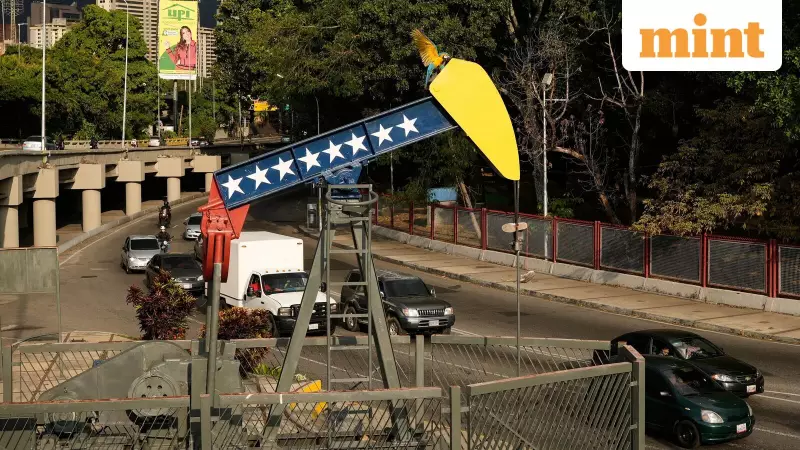
In a dramatic turn of events, the apprehension of Venezuela's dictator, Nicolás Maduro, by American forces on January 3rd, 2026, has thrust the oil-rich nation back into the geopolitical spotlight. President Donald Trump, invoking the historical Monroe Doctrine, declared a vision for US oil companies to invest billions and revive Venezuela's crippled petroleum industry. However, this 1940s-style proposition is meeting with profound scepticism from the very industry it aims to mobilise, revealing a stark clash between political ambition and modern energy economics.
The Grand Vision vs. The Harsh Reality
Following Maduro's capture to face drug-trafficking charges in New York, President Trump outlined a plan he mentioned over 20 times in a press conference. He envisions American supermajors fixing Venezuela's badly broken oil infrastructure, which currently produces a meagre 1 million barrels per day (b/d) despite sitting on the world's largest proven reserves of over 300 billion barrels. This vision harks back to an era when oil giants and US foreign policy were inseparable.
Yet, the industry's response has been tepid. Chevron, the sole American major that remained after Venezuela's 2007 nationalisation, confirmed it had no advance notice of the operation or the plan. The White House is now scrambling to arrange meetings with oil executives. While share prices initially jumped, the enthusiasm is fading fast. The core issue is a fundamental misalignment: Trump's promise of a Venezuelan bonanza ignores the cautious, capital-disciplined nature of today's big oil.

Why Supermajors Are Hesitant
The global oil landscape has transformed. The world is awash with supply, pushing crude prices to post-COVID lows. Chevron's net profit for 2025 was around $13 billion, a drop of over 40% from the 2021-24 average and its worst since 2020. More critically, with global demand softening and potentially peaking by 2030, companies are exceptionally selective.
Projects must be low-cost and low-risk to justify investment. Venezuelan oil is neither. According to energy consultancy Wood Mackenzie, the breakeven price for major Venezuelan projects exceeds $80 per barrel, far above the current market price of around $50. Chevron's production costs in the Americas (outside the US) were $14 per barrel in its latest report, significantly higher than its global average, largely due to its struggling Venezuelan operations.
The contrast with neighbouring Guyana is stark. Chevron recently completed a $60 billion takeover of Hess, primarily for its Guyanese assets. There, production costs are below $7 per barrel, and the oil is lighter and sweeter, commanding a premium. Chevron's 2026 capital budget of $18-19 billion earmarks $7 billion for offshore projects, with Guyana as the prime focus. Reviving Venezuela to its 2018 output of 2 million b/d would require an estimated $12 billion annually until 2032, a risky and costly endeavour with uncertain returns.
A Changed Industry Mindset
Today's shareholders are not the risk-tolerant backers of the old "Seven Sisters." As historian Dan Yergin notes, modern supermajors are complex, capital-disciplined organisations run by engineers and lawyers. They demand clarity on legal, political, and fiscal systems before committing vast sums. The experience in post-2003 Iraq, where it took over six years for conditions to meet investment criteria and returns often underwhelmed, serves as a cautionary tale.
The initial market optimism has already cooled. By January 6th, Chevron's shares had surrendered most of their initial 5% gain. Any remaining positive sentiment is attributed to reduced geopolitical risk—like the threat of Venezuela annexing Guyana's oil fields—or the chance for companies like ExxonMobil and ConocoPhillips to recover some arbitration awards from the 2007 expropriation, not from expectations of a Venezuelan oil boom.

President Trump's plan to unleash American oil capital in Venezuela faces a formidable obstacle: the transformed priorities of the industry itself. In an era of abundance and peak demand concerns, the supermajors' mantra is discipline, not swashbuckling expansion. The Venezuelan headache for big oil is not a lack of resources, but an excess of risk in a world where safer, cheaper barrels are available next door.





