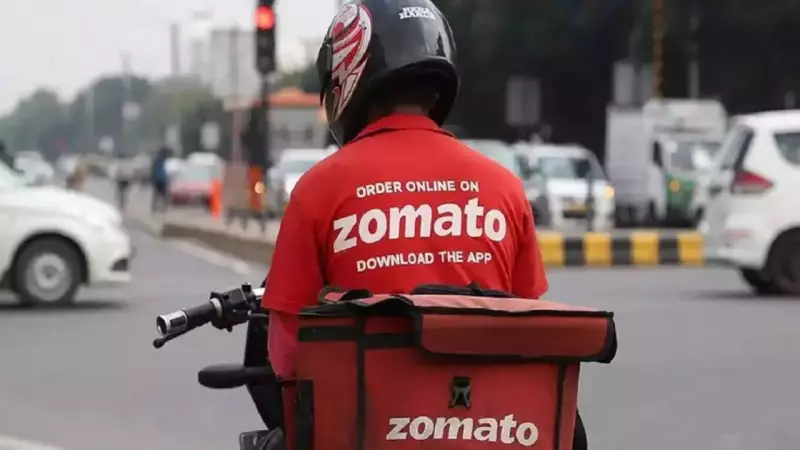
Food delivery giant Zomato and its quick-commerce arm Blinkit achieved a historic delivery milestone on New Year's Eve 2025, even as a nationwide protest by gig workers unfolded. Founder Deepinder Goyal announced that the platforms successfully delivered a record 7.5 million orders through the efforts of over 450,000 delivery partners.
Record Deliveries Amidst Nationwide Strike
The achievement came against the backdrop of a coordinated strike by delivery riders across India. The gig workers protested against issues like low pay, job insecurity, and the intense pressure created by promises of ultra-fast, 10-minute deliveries. Despite calls for the strike, Goyal stated that operations remained largely unaffected with support from local law enforcement.
In a detailed post on social media platform X, Goyal expressed gratitude to the delivery partners who "showed up despite intimidation." He emphasized that the day's record was set without any additional incentives beyond the usual higher pay for New Year's Eve. Defending the gig economy model, Goyal argued that if the system were fundamentally unfair, it would not consistently attract and retain hundreds of thousands of workers.

The Heated Debate Over 10-Minute Deliveries
The record delivery numbers have intensified an ongoing debate about the sustainability and safety of hyper-fast delivery services. Former Jet Airways CEO Sanjiv Kapoor publicly questioned the necessity of 10-minute deliveries in India's traffic-heavy cities. "Would 30 minutes or 1 hour delivery (without so much pressure and need for speed) be the end of the world?" he asked in response to Goyal's post.
Goyal offered a robust defense of Blinkit's 10-minute delivery promise. He clarified that the speed is not achieved by asking riders to drive fast but is enabled by a dense network of dark stores located close to residential areas. According to his explanation, an order is picked and packed within 2.5 minutes, and the rider then travels an average distance of under 2 kilometers at an average speed of 15 kmph to complete the delivery.
"Delivery partners don't even have a timer on their app," Goyal stated, countering claims that riders are forced to rush.
Political Voices and Concerns Over Exploitation
The discussion has also drawn commentary from political figures. Member of Parliament Raghav Chadha voiced strong concerns about the treatment of gig workers, labeling the current system a potential "guilt-free exploitation economy." After meeting with delivery riders from various platforms, Chadha stated that these companies succeeded not just because of algorithms but due to "human sweat and labour."
He called for companies to start treating riders as human beings rather than disposable data points. This political intervention highlights the growing scrutiny on the working conditions within India's rapidly expanding gig economy, which is one of the country's largest organized job creators.
The contrasting narratives—from Goyal's defense of the system's efficiency and fairness to the workers' demands for better pay and safety—set the stage for a crucial ongoing conversation about the future of work, technology, and workers' rights in digital India.