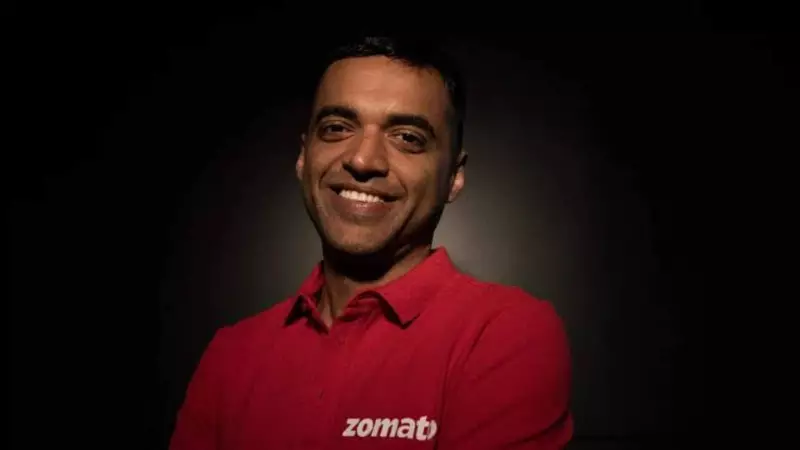
In a robust defence of platform-based work, Zomato CEO Deepinder Goyal has stated that the gig economy has made societal inequality impossible to ignore for the consuming class. Goyal's comments came over a series of posts on social media platform X, spanning two days, where he responded to criticism and addressed a recent strike by delivery workers.
Gig Work Brings Inequality to the Doorstep
Goyal framed the public's discomfort with gig work as a profound moral reaction rather than a simple systemic critique. He argued that for centuries, the labour of the poor remained invisible to the wealthy, hidden behind factory walls or in distant fields. The gig economy, particularly food and quick-commerce delivery, has shattered this invisibility.
"Suddenly, the poor aren't hidden away. They're at your doorstep: the delivery partner handing over your Rs 1000+ biryani, late-night groceries, or quick-commerce essentials," Goyal wrote in a post on January 2. He described this as a historic shift where the working class and consuming class now interact face-to-face, transaction after transaction, on a massive scale.

Responding to Strikes and Safety Concerns
Goyal's detailed defence followed his post on January 1, where he stated that Zomato and its quick-commerce arm Blinkit operated at a "record pace" on December 31, unaffected by a nationwide strike call from a section of gig workers. He praised the delivery partners who chose to work and thanked local law enforcement for managing disruptions.
He claimed the disturbances were caused by a small group of terminated workers trying to force their way back onto the platforms. Addressing widespread safety concerns, Goyal firmly rejected allegations that platforms push riders to speed to meet delivery targets like the 10-minute promise.
"It's not enabled by asking delivery partners to drive fast. Delivery partners don't even have a timer on their app to indicate what was the original time promised to the customer," he clarified. He explained that Blinkit's model relies on a dense network of stores, with orders picked and packed in about 2.5 minutes, and riders traveling an average distance of under 2 km.
A Warning Against Over-Regulation
Goyal cautioned against banning or excessively regulating gig work, warning that such moves could push workers back into informal, unorganised sectors with even fewer protections and benefits. He positioned platform work as a preferable alternative.
"The gig economy just exposed the reality of inequality to the people who previously had the luxury of not seeing it. The doorbell is not the problem. The question is what we do after opening the door," he stated, urging society to use the discomfort to build a better system.
Concluding his remarks, Goyal wrote, "Visibility is the price of progress. We can either use this discomfort to build something better… or we can ban and over-regulate our way back into ignorance." His posts have sparked significant debate on the nature of work, inequality, and the social contract in the digital age.