

As 2025 concludes, India's economic performance has positioned it as a standout among the world's major economies. The nation continues to be the fastest-growing large economy, a status bolstered by stronger institutions, enhanced credibility, and clear national direction. The Confederation of Indian Industry (CII) has revised its growth projection for 2025-26 upwards to a robust 7.3–7.5%, signaling rising confidence in the country's medium-term trajectory.
A Year of Resilient Growth and Decisive Reforms
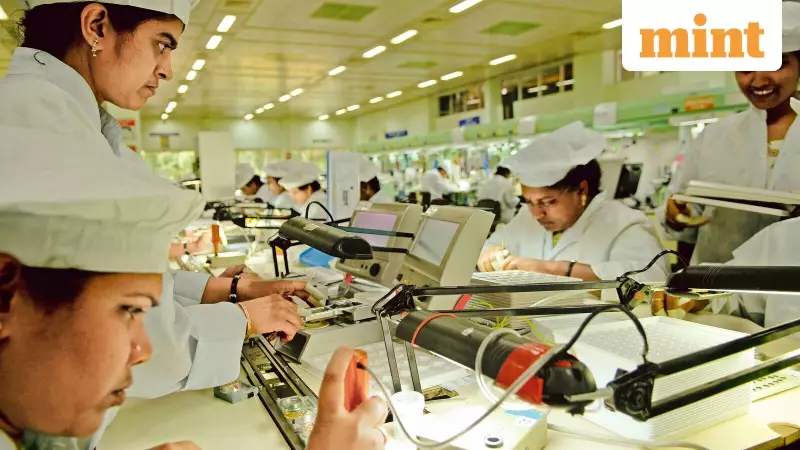
The past year witnessed economic strength exceeding expectations on multiple fronts. Domestic demand remained resilient, powered by steady income growth and improved consumer sentiment. A significant expansion in service exports further cemented India's role in global technology and knowledge-based value chains. Meanwhile, the manufacturing sector showed clear signs of a gradual revival, supported by better capacity utilization, enhanced logistics, and a noticeable increase in investment intent.
Macroeconomic stability served as a crucial foundation. Inflation stayed comfortably below the target for much of 2025, aided by better food supply management, efficient logistics, and rationalized taxes. Monetary policy was calibrated carefully to balance growth with financial stability.

Beyond the numbers, 2025 will be remembered for landmark reforms. The rollout of GST 2.0, with its simplified rate structures and faster refunds, lowered business transaction costs and eased working capital stress. Income tax reforms focused on simplifying compliance and raising disposable incomes, thereby reinforcing consumption. The implementation of the four consolidated labour codes marked a transformational step towards modernizing worker protection and providing clarity to enterprises.
Seven-Point Agenda for Sustaining Momentum in 2026
Looking ahead, the CII emphasizes that the next phase of India's growth hinges on effective action by both the government and industry on a clear medium-term agenda. The industry body has identified seven focal areas for 2026.
First, sustaining high-quality public capital expenditure is paramount. This requires a renewed National Infrastructure Pipeline focused on outcomes, speed, and efficiency, with priority on logistics, renewable energy, urban infrastructure, and digital connectivity.
Second, mobilizing patient, long-term capital is critical. The creation of a proposed India Development and Strategic Fund could catalyze investments in infrastructure, the energy transition, and human capital.
Third, regulatory modernization must accelerate towards a digitization-first model. Concepts like a Unified Enterprise Identity, an Entity Locker, and a national compliance grid can dramatically reduce costs and improve the ease of doing business.
Driving Competitiveness Through Innovation and Governance
Fourth, a sharp focus on innovation and research is non-negotiable. While government support via the RDI Fund is important, industry must lead by aggressively boosting private R&D spending in areas like artificial intelligence, clean energy, and advanced manufacturing.
Fifth, enhancing trade competitiveness requires a predictable tariff philosophy and continued export diversification. Progress on trade agreements with partners like the EU will reinforce India's position as a trusted global partner.
Sixth, financial sector reforms are needed to underpin long-term investment. Strengthening development finance institutions, deepening capital markets, and boosting the GIFT City ecosystem are vital for financing future growth.
Seventh, evolving corporate governance frameworks are essential for economic credibility. In an era shaped by technology and sustainability, industry must take voluntary action to enhance board effectiveness, transparency, and long-term value creation.

A Shared Responsibility for the Future
While government policy is crucial, the CII stresses that Indian industry has a concurrent responsibility. Businesses must invest with confidence, scale up capacities, adopt advanced technologies, and commit to large-scale skilling. Integrating sustainability into core business strategy and guiding decisions with transparency are imperative.
Chandrajit Banerjee, Director General of CII, asserts that if the government leads with clarity and courage, and industry responds with investment and innovation, India can convert its current reform momentum into enduring national confidence. The collective action on this seven-point agenda will determine whether the economy can sustain its hard-earned growth path through 2026 and beyond.





