

Amritsar LPG Crisis Forces Families to Adopt Alternative Cooking Solutions
The ongoing LPG gas shortage in Amritsar has compelled numerous families to seek out alternative cooking methods, leading to a significant surge in the sales of induction cooktops and traditional hearths. This crisis, exacerbated by disruptions linked to the West Asia conflict, has made refills increasingly expensive and difficult to obtain, particularly for households with high consumption rates and migrant laborers without local connections.
Soaring Prices and Black Market Exploitation
Residents report that obtaining LPG refills has become a costly ordeal, especially for those whose cylinders are exhausted before the standard 25-day period. Shubash Khanna, a city resident with a family of seven, highlighted that his household requires a refill every 20 to 22 days due to frequent visitors. "Before the outbreak of the war involving the US, Israel, and Iran, a refill was easily available between Rs 1,000 and Rs 1,100. Now, a refill bought outside the system is being sold for Rs 2,000 to Rs 2,500," he explained.
While some areas, like Majitha Road, experience no supply glitches with daily deliveries via tempos and rickshaws, customers often pay an additional Rs 30 to Rs 40 over the fixed price per refill, as noted by resident Harjit Singh. This subtle markup adds to the financial strain on families already grappling with rising costs.

Migrant Workers Bear the Brunt
The situation is particularly dire for migrant workers employed in factories and shops, who reside in Amritsar temporarily. Sundeep Khosla, president of the Bal Kalan Industrial Welfare Association, emphasized their plight: "For them, buying a refill for over Rs 2,000 is extremely expensive." Many of these workers lack local LPG subscriptions, forcing them to rely on the open or black market, where prices have skyrocketed.
Shift to Induction Cooktops and Traditional Hearth Sales
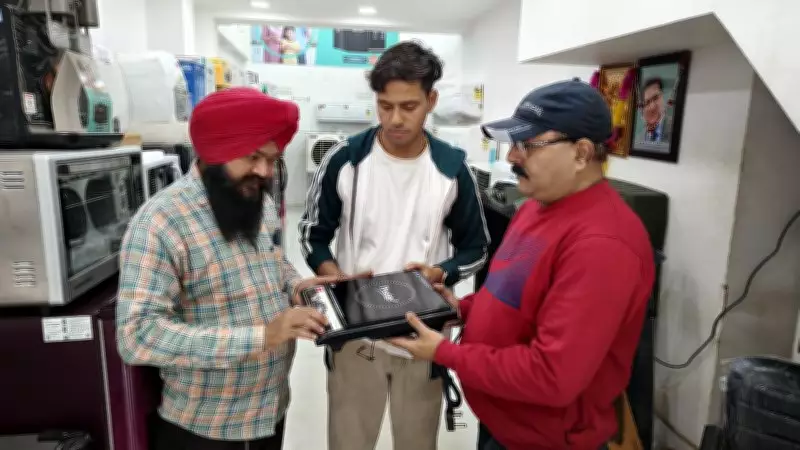
In response to the crisis, there has been a sharp increase in the sale of induction cooktops. Punit Sharma, a kitchenware store owner, observed: "Many families are buying them as a stopgap arrangement in case the crisis continues. Earlier, we used to sell only a couple of units a month." This trend reflects a growing reliance on electric alternatives to mitigate the LPG shortage.
Simultaneously, the Ram Talai Chowk area, known as a hub for traditional tandoors and bhatthis (hearths), has witnessed heightened demand. Sunil, a seller in the area, reported a spike in sales of small hearths for domestic use, with prices rising from Rs 250-300 to Rs 350. This resurgence of traditional cooking methods underscores the community's adaptability in the face of energy scarcity.
Government Assurances and Household Adaptation Strategies
Despite government assurances, household LPG supply remains affected, leading to extended booking times and irregular deliveries. Anil Vinayak, a resident, suggested practical measures to reduce gas consumption, such as skipping one meal a day. "This can save around 300 grams of LPG daily, or 3 to 4 kg per month. A cylinder that usually lasts 30 days could last up to 45 days," he said, adding that such steps could help alleviate panic booking and curb black marketing.
The LPG crisis in Amritsar highlights broader issues of energy security and affordability, driven by geopolitical tensions. As families and migrant workers navigate these challenges, the shift towards alternative cooking methods may have lasting implications for local consumption patterns and market dynamics.






