

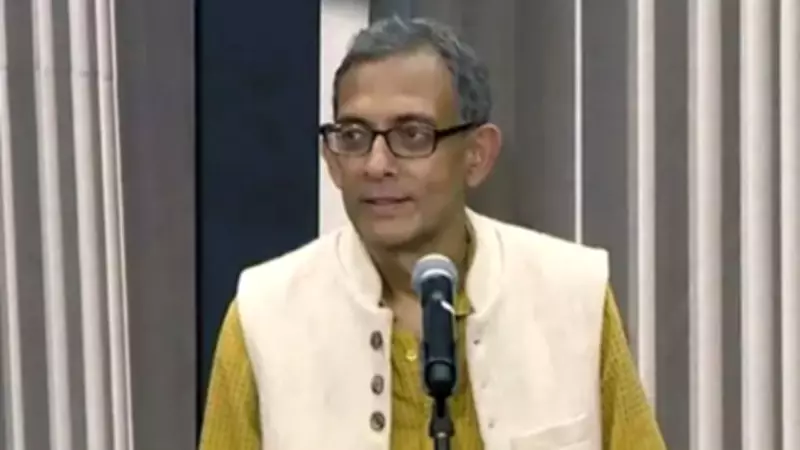
Nobel laureate economist Abhijit Banerjee has raised significant concerns about the impact of increasing political polarisation in India, stating that it is weakening transparency and undermining the country's global credibility. He warned that strong economic growth figures alone are insufficient to reassure international investors about India's stability and reliability as an investment destination.
Core Challenges: Media Freedom and Transparency
Speaking in an interview with PTI, Banerjee emphasized that from an economic perspective, India's most serious challenges today relate not to headline growth numbers but to fundamental issues of media freedom, transparency, and institutional trust. "I think India is going through a politically polarised phase in the sense that there are many conflicts that have existed for a long time, and we have to decide, as a nation, to what extent we want to be seen as open and reliable," he stated.
The economist highlighted that transparency forms the bedrock of investor confidence, stressing that reliable data matters far more than political messaging. "The most important issues are media freedom and transparency. Do we really know what the numbers are? That's what investors care about," Banerjee pointed out, suggesting that without clear, verifiable information, India's economic narrative remains incomplete.

Volatile Foreign Investment and Currency Concerns
While India has continued to attract foreign investment, Banerjee noted that capital inflows have become increasingly volatile and vulnerable to uncertainty. "We have done reasonably well on foreign investment, but it's flighty. The rupee is depreciating because money isn't coming in fast enough," he explained, attributing the currency's weakness to insufficient and inconsistent capital inflows.
According to the Nobel laureate, uncertainty around policy direction, combined with internal political polarisation, is damaging India's reputation as a stable destination for long-term investment. "People need to know what the policy rules are. Will there be shifts in attitude towards specific companies?" he questioned, highlighting the need for predictable governance frameworks.
Systemic Transparency Required for Sustainable Growth
Banerjee argued that transparency must be systemic if India hopes to deepen its capital markets and attract sustained global capital. "Unless we have a very predictable and transparent policy regime and a transparent media, India will remain a mystery to the world," he cautioned.
The 64-year-old economist further elaborated, "I think our internal polarisation is undermining our commitment to transparency. And that, I think, is the key point. If we want to be the kind of place where people always want to invest, we need transparency at all levels." He added that from a global perspective, India currently appears "a bit too much of a mystery" and needs to become more transparent to build lasting economic partnerships.
Identity Politics and Development Priorities
On the role of identity politics, Banerjee acknowledged that such dynamics are not unique to India and are visible globally, including in the United States. However, he questioned whether sufficient attention has been paid to the practical steps required to achieve development goals.
"The government is serious about development, but it hasn't thought enough about what it would actually take," he observed, suggesting that beyond political rhetoric, concrete implementation strategies are essential for meaningful progress.
Banerjee's comments come at a time when India's economic trajectory is being closely watched by global markets, with questions emerging about how political factors might influence long-term investment decisions and economic stability.






