Nobel Laureate Economist Raises Alarm Over India's Transparency Crisis
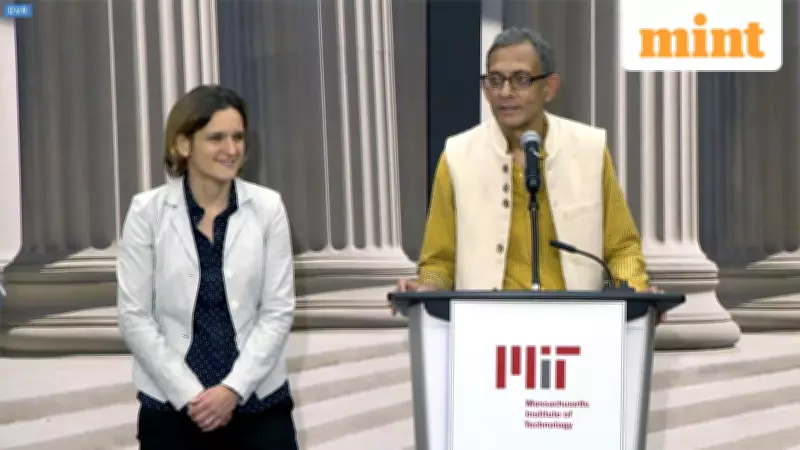
Nobel Prize-winning economist Abhijit Banerjee has issued a stark warning that political polarisation in India is significantly eroding transparency and creating an environment of uncertainty, making the country appear as a "mystery" to global investors. This caution comes even as India maintains robust economic growth figures, highlighting a critical disconnect between headline numbers and institutional credibility.
Media Freedom and Data Credibility: Core Concerns for Investors
In an exclusive interview with PTI, Banerjee emphasized that from an economic perspective, the most pressing issues facing India today revolve around media freedom and transparency. He argued that international investors fundamentally care about the reliability of data rather than political narratives.
"I think India is going through a politically polarised phase where longstanding conflicts require national decisions about how open and reliable we wish to appear. The real issues pertain to media freedom," Banerjee stated. His remarks gain particular significance as they precede Finance Minister Nirmala Sitharaman's presentation of the Union Budget 2026 in Parliament.

The economist elaborated: "The most important issues are media freedom and transparency. Do we truly understand what the numbers represent? That's what investors prioritize."
Unstable Foreign Investment and Currency Depreciation
While India continues to attract foreign capital, Banerjee described these inflows as unstable and highly susceptible to uncertainty. He linked the rupee's depreciation directly to insufficient and inconsistent capital inflows.
"We have performed reasonably well in attracting foreign investment, but it remains flighty. The rupee is depreciating because money isn't entering the economy rapidly enough," he explained, highlighting the vulnerability of India's financial stability.
Policy Unpredictability Undermining Long-Term Credibility
Banerjee cautioned that policy unpredictability, combined with internal political divisions, is seriously damaging India's reputation as a secure long-term investment destination.
"Investors need clarity on policy rules. Will there be sudden shifts in attitudes toward specific companies?" he questioned. "Unless we establish a predictable, transparent policy regime alongside a transparent media, India will remain a mystery to the global community."
The economist stressed that for India to deepen its capital markets and attract sustained global capital, transparency must become institutionalized rather than occasional. "Our internal polarisation is weakening our commitment to transparency. If we aspire to be a perpetual investment destination, we need transparency at every level," the 64-year-old Nobel laureate asserted.
Identity Politics and Development Roadmap
When questioned about whether identity politics has overshadowed growth priorities, Banerjee acknowledged that such politics exists worldwide, including in the United States. However, he expressed concerns about whether India's leadership has adequately considered the practical roadmap to development.
"The government is serious about development, but it hasn't sufficiently contemplated what implementation actually requires," he said. "What is the concrete roadmap? How do we provide high-quality education to all? How do we escape the trap of limited good jobs, especially as AI potentially eliminates more positions?"
GDP Growth Masking Social Distress
Banerjee warned that headline GDP growth cannot indefinitely conceal deeper social challenges. "GDP can increase, but if most citizens lack decent education, growth will eventually slow and misery will intensify. Distributional issues still demand attention," he noted.
Long-Term Risks to Political Stability and Reform
Beyond economic markets, Banerjee flagged long-term risks to political stability, arguing that economic reform becomes nearly impossible when trust in institutions deteriorates.

"If people feel excluded from the democratic process, it creates additional problems," he said, adding that erosion of trust makes consensus-driven reform exceptionally difficult.
Rationale for Cash Transfers and Critique of 'Dole Politics'
Citing examples like power subsidies to farmers, Banerjee explained that while direct compensation would be economically superior and environmentally necessary—especially with collapsing groundwater tables—such reforms are politically challenging due to trust deficits.
He strongly dismissed the term "dole politics" to describe welfare programs, arguing that substantial public transfers to middle and upper classes often go unrecognized.
"I genuinely dislike the term 'dole politics' because we fail to acknowledge the extensive public investment directed toward the wealthy and middle classes," Banerjee remarked.
He defended cash transfers as a rational response to an economy that has failed to generate sufficient employment despite growth. "We haven't created a Chinese-style vibrant labor market where people can secure jobs and benefit from growth. With jobless growth, the only way to include people in the national growth process is through transfers, which makes logical sense," he concluded.
Banerjee made these observations during his visit to Kolkata for a discussion on Poor Economics at the Exide Kolkata Literary Meet.