

Budget 2026 to Unveil Strategy for Export Growth and Manufacturing Quality
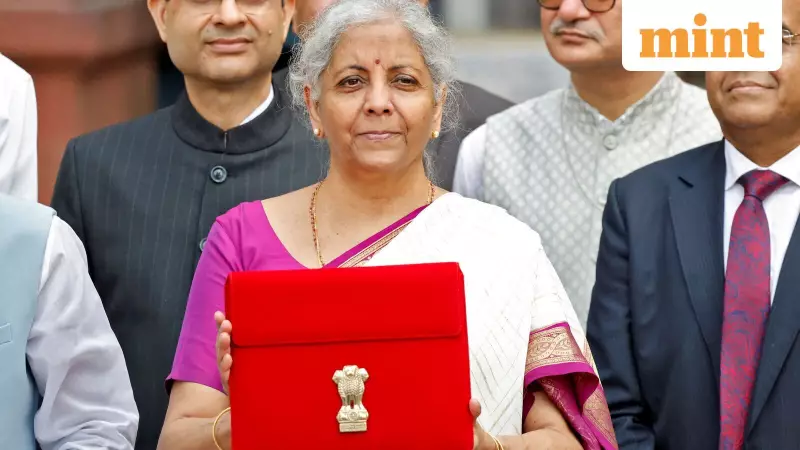
Finance Minister Nirmala Sitharaman will present the Union Budget on 1 February 2026. This budget comes after significant US tariffs disrupted global trade last year. The government plans to introduce reforms and incentives aimed at manufacturers, small businesses, and exporters.
Focus on De-risking the Economy
According to sources familiar with budget discussions, one key theme will be de-risking India's economy from prolonged global headwinds. The budget will announce schemes to diversify exports, improve market access, and enhance the quality of Indian-made goods.
The government is finalizing policies to better integrate Indian manufacturing with global supply chains. It also aims to reduce import dependence on commodities, select products, and capital goods. Reforms to improve ease of doing business and boost industrial competitiveness will be another highlight.

"The idea is to address risks from overall global uncertainty, not just specific markets," said one person involved in the discussions. "Improved manufacturing quality will help Indian products excel in multiple markets."
Resilience Amid Global Trade Shifts
India has shown resilience as global trade moves from hyper-globalization to a more protectionist landscape. US President Donald Trump imposed tariffs on trading partners in August last year. Despite 50% tariffs from the US, India's largest trading partner, merchandise exports rose during April-December.
Exports reached $330.29 billion, up from $322.41 billion a year earlier. Imports increased to $578.61 billion, resulting in a trade deficit of $248.3 billion. The government has been cushioning the domestic economy with measures like tax rate reductions, infrastructure focus, and faster free-trade agreement negotiations.
Lifting Manufacturing Standards
Rishi Shah, partner and economics advisory lead at Grant Thornton Bharat LLP, emphasized the need for a strategic shift. "The next phase must move from stimulus to competitiveness," he said. "Policy should lower the effective cost of doing business through regulatory simplification, logistics efficiency, and predictable compliance."
Shah also stressed the importance of innovation incentives for genuine intellectual property creation. A focused program to upgrade quality standards across MSMEs would strengthen India's integration into global value chains.
"Ultimately, resilience will come from clarity on what India can competitively offer the world," Shah added. "We need sustained commitment to economic transformation over the next two decades."
The budget may propose deeper alignment of Indian manufacturing standards with international norms. Financial support for testing, certification, and compliance, especially for MSMEs, could improve product quality. The focus will be on expanding domestic testing infrastructure, faster lab accreditation, and incentives for firms adopting global quality benchmarks.
Sectors like engineering goods, electronics, textiles, toys, and consumer products will receive particular attention. Quality perception plays a decisive role in export success in these areas. The recent announcement of nearly 100 new voluntary quality control standards is a step in this direction.
Targeted Subsidies for Strategic Goods
A major concern for India is China's potential disruption of rare-earth metal supplies. The budget may create a narrow list of critical goods where domestic capacity remains weak but strategically important. This list could include:
- Electronic components, semiconductors, and display panels
- Capital goods like precision machinery and industrial robots
- Clean energy inputs such as solar wafers, cells, and battery storage systems
- Pharmaceutical bulk drugs and key chemical intermediates
- Select defence and aerospace components
The budget may announce measures like targeted capital subsidies, lower import duties on raw materials, and long-term procurement commitments. These steps aim to encourage domestic manufacturing without raising costs for downstream industries.

Making Exports Competitive
Scale, cost competitiveness, and branding are crucial factors for Indian goods in global markets. The budget may announce export-linked incentives for companies achieving scale thresholds. Support for cluster-based manufacturing could lower logistics and input costs.
Finance Minister Sitharaman may also offer funding for design, branding, and marketing of Indian products overseas. Labour-intensive sectors like textiles, footwear, furniture, and food processing will receive special attention.
The announcements could focus on strengthening trade finance, expanding export credit insurance, and increasing funding for market access initiatives. These moves aim to help exporters reach more markets amid trade disruptions.
Ease of Doing Business Reforms
Sameer Gupta, National Tax Leader at EY India, highlighted the need for continued reforms. "The government should implement ease of doing business reforms like reducing tax litigation and streamlining construction permits," he said. "Leveraging recent labour reforms, we need reforms in other factor markets such as land and electricity."
Expectations from the Budget 2026-27 include rationalization of customs duties. Levies on raw materials, intermediate goods, and final goods should drive domestic manufacturing and value addition.
The budget is likely to incentivize multinational firms to source more inputs from India. It may ease customs procedures for intermediate goods and create plug-and-play manufacturing zones linked to ports and logistics hubs.
The government will also focus on encouraging joint ventures, technology partnerships, and supplier development programs. These initiatives could help Indian firms, particularly MSMEs, become reliable vendors to global manufacturers. This would anchor India more firmly into international production networks.
The upcoming budget represents a comprehensive strategy to strengthen India's export muscle through quality enhancement and targeted support.





