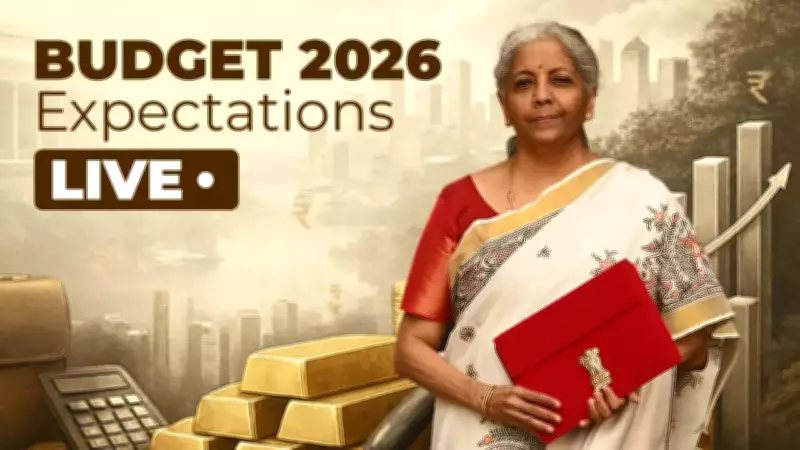
Budget 2026 Expectations: FM Sitharaman's Ninth Consecutive Budget in Focus
Finance Minister Nirmala Sitharaman is set to present her ninth consecutive Union Budget on February 1, 2026, marking a historic record in Indian fiscal policy. This budget arrives at a critical juncture, with India maintaining its status as the fastest-growing major economy globally, yet facing significant external challenges. The global landscape is marred by geopolitical tensions and an ongoing tariff war initiated by US President Donald Trump, which could potentially impact India's growth trajectory.
Economic Survey Sets the Stage for Budget 2026
Ahead of the budget presentation, FM Sitharaman tabled the Economic Survey 2025-26 in Parliament on January 29. This comprehensive document serves as a crucial policy guideline, reaffirming confidence in India's economic resilience while issuing cautious warnings about global headwinds. The survey's insights are expected to heavily influence the budget's direction, particularly in areas like capital expenditure (capex) and income tax measures that are currently under intense scrutiny.
Stakeholders across the spectrum – from individual taxpayers and large industries to burgeoning startups – are eagerly anticipating relief measures that could bolster economic stability and growth. Prime Minister Narendra Modi has emphasized the government's commitment to addressing long-term structural issues through what he termed India's 'Reform Express,' highlighting the budget's role in informed policymaking.

Key Areas of Focus in Budget 2026 Expectations
Sustainable Agriculture and Fertilizer Rationalization: Experts like Pushan Sharma, Director at Crisil Intelligence, stress the importance of rationalizing fertilizer use for agricultural sustainability. Current data shows urea application in India averages approximately 182 kg per hectare, exceeding the global average of 116 kg/ha but remaining below China's 335 kg/ha. The government's PM-PRANAM and Market Development Assistance (MDA) schemes aim to promote balanced nutrient management and organic inputs, yet these initiatives require enhanced funding and sharper implementation to achieve meaningful impact.
Financial Sector and Credit Allocation: According to Akhilesh Pandey of BDO India, Budget 2026 is likely to prioritize credit flow to underserved sectors over headline recapitalization of public sector banks. The focus may shift toward improving credit guarantees, supporting MSME lending through risk-sharing mechanisms, and enhancing recovery processes under the Insolvency and Bankruptcy Code (IBC). This approach aims to foster sustainable credit growth and reduce non-performing assets (NPAs).
Strategic Disinvestment and Governance Reforms
The Economic Survey highlights progress in strategic disinvestment, with 36 central public sector enterprises (CPSEs) receiving in-principle approval since 2016, of which 13 transactions have been completed. Recent actions include NTPC's divestment from Utility Powertech Limited, complemented by governance reforms empowering CPSE boards. Future strategies may involve selectively reducing government equity in certain CPSEs beyond minimum public shareholding norms, guided by market conditions.
Technology and Insurance Sector Expectations
HR and Payroll Systems: Subramanyam S, CEO of AscentHR, advocates for budget measures that promote enterprise-grade HR and payroll technology adoption, particularly among MSMEs. Such initiatives could improve tax compliance, expand social security coverage, and build employee trust across the economy.
Insurance Distribution: Dhirendra Mahyavanshi of Turtlemint points to regulatory reforms like the increased FDI cap to 100% and the Sabka Bima Sabki Raksha Act as steps toward deepening insurance penetration. Budget 2026 is expected to further support technology-led distribution models, including digital infrastructure, API-led partnerships, and embedded insurance, to enhance access in underserved markets.

Budget Presentation Reforms and Fiscal Roadmap
The Union Budget's presentation date was shifted to February 1 during the first tenure of the Narendra Modi government, replacing the traditional February 28 timeline. This change provides ministries and departments with additional planning time for the upcoming financial year. Additionally, the separate Railway Budget was discontinued, integrating its considerations into the main Union Budget. As a key policy roadmap, Budget 2026 will outline focus areas for the next fiscal while addressing fiscal consolidation and deficit targets, balancing growth aspirations with economic prudence.