Budget 2026: Industry Leaders Push for Doubled Infrastructure Funding Ahead of FM Sitharaman's Presentation
As Finance Minister Nirmala Sitharaman prepares to present Budget 2026 on Sunday, 1 February, industry leaders across India are voicing their expectations and wishes for this crucial fiscal document. This budget marks Sitharaman's ninth consecutive presentation and is anticipated to build upon the momentum set by previous allocations, particularly in the infrastructure sector.
Call for Enhanced Infrastructure Investment
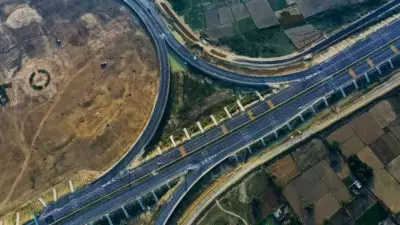
Industry stakeholders have strongly urged the government to double the allocation for various infrastructure projects to ₹3 lakh crore in the upcoming Union Budget. This significant increase is seen as essential to boosting overall economic growth and sustaining India's development trajectory. The expectations are rooted in the belief that enhanced infrastructure spending will catalyze broader economic activities and job creation.
Survey Highlights and Sectoral Expectations
A recent survey conducted by the Logistics Sector Skill Council underscores the critical need for an infrastructure-focused budget. The survey aligns with the vision to position India as a global economic powerhouse, emphasizing that strategic investments in infrastructure are key to achieving this goal.

Building on last year's allocation of ₹1.5 lakh crore for interest-free loans to states and landmark investments in highways, urban transport, and smart cities, industry leaders are optimistic about a potential doubling of this outlay. This sentiment reflects high expectations for sustained public capital expenditure.
Industry Voices on Infrastructure Priorities
Manish Garg, CEO of Interarch Building Solutions, highlighted the strategic opportunity for the government to amplify India's infrastructure-led growth engine. "Domestic steel demand is projected to remain robust, reflecting significant infrastructure and manufacturing activity," he noted, pointing to the interconnectedness of infrastructure development and manufacturing resurgence.
Mohit Jandu, MD of J Infratech, emphasized the need for continued prioritization of roads and highways within government capital expenditure. He also called for enhanced financial support to states and a refreshed National Infrastructure Pipeline to ensure cohesive development across regions.
Shashank Agarwal, Joint Managing Director of Salasar Techno Engineering, stressed the importance of multi-year predictability in public capex. "Long-cycle infrastructure requires stable pipelines, not one-time spikes in spending," he remarked, underscoring that India's infrastructure build-out is central to unlocking productivity and improving logistics efficiency.
Integrating AI with Physical Infrastructure
Over the past year, India has strengthened its artificial intelligence footprint, which is now becoming a key component of its vast physical infrastructure. Piyush Jha, Group Vice President and Head of APAC at GlobalLogic, advocated for targeted policy support to accelerate this integration.
"Policy support for AI-enabled data centres, robotics, edge intelligence, and incentives for AI adoption across traditional infrastructure can drive productivity, resilience, and global competitiveness," Jha explained, highlighting the transformative potential of technology in infrastructure management.
Viewing Infrastructure as a Long-Term System
Kamal Pal Hoda, CEO and Executive Director of Bluspring Enterprises, proposed a paradigm shift in how infrastructure is perceived. He suggested that Budget 2026 should recognize infrastructure not merely as capital expenditure but as a long-term operating system.
"India's next infrastructure leap will be defined less by what we build and more by how reliably we operate it. Uptime, safety, compliance, and workforce capability determine real outcomes," Hoda stated, advocating for a holistic approach to infrastructure development and maintenance.

Reflecting on Budget 2025 Allocations
As India approaches Budget 2026, it is instructive to recall the allocations made in Budget 2025. Finance Minister Sitharaman continued her emphasis on capital expenditure to create assets, earmarking a record ₹11.21 lakh crore for infrastructure needs. This built upon the previous year's allocation of ₹11.11 lakh crore.
In Budget 2025, the FM proposed ₹1.5 lakh crore as 50-year interest-free loans to states for capital expenditure and incentives for reforms. Priority was given to schemes such as UDAN, Jal Jeevan Mission, and the Urban Challenge Fund, setting a precedent for targeted infrastructure initiatives.
The upcoming Budget 2026 is thus poised at a critical juncture, with industry leaders advocating for enhanced investments to sustain economic momentum and address evolving infrastructure demands.