

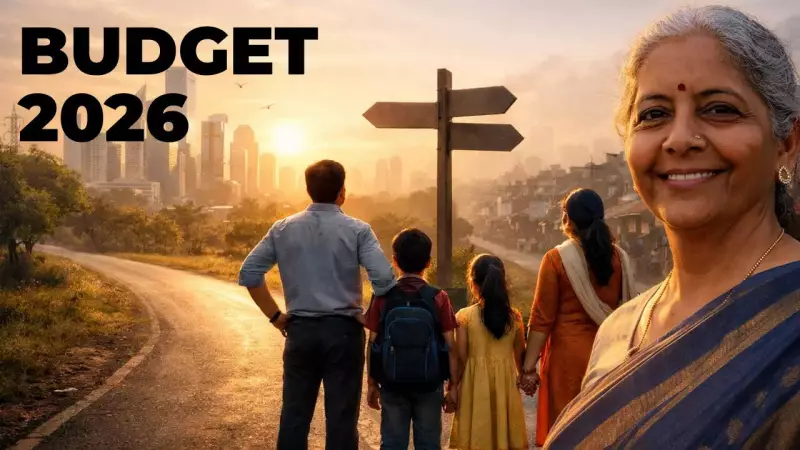
India is marching towards its ambitious goal of becoming a $5 trillion economy. The upcoming Union Budget for 2026 presents a crucial chance to accelerate this journey. Consumption continues to be the most dependable driver of India's economic engine. However, several factors are squeezing the wallets of ordinary citizens and small businesses.
The Squeeze on Spending Power
Persistent inflation, rising loan repayments, and increasing compliance burdens have slowly eaten away at disposable incomes. This is particularly true for salaried employees and micro, small, and medium enterprises (MSMEs). For Budget 2026 to make a real difference, it must focus on putting more money back into taxpayers' pockets. It also needs to make rules simpler and fairer for everyone. Here are some specific measures that could inject fresh energy into the economy and support key groups.
Modernize Tax Slabs for Today's Reality
The current tax structure feels outdated. The 30% tax bracket kicks in at an annual income of ₹24 lakh. This threshold no longer matches the high cost of living in cities or the general rise in salaries over the years. To restore purchasing power and reward career growth, the highest slab should start at a much higher level, perhaps between ₹36 to 40 lakh. This change would instantly boost discretionary spending among middle and upper-middle-class earners. Higher spending leads to more consumption, which in turn increases tax collection over the long term.

With the prices of essential goods climbing steadily, the basic exemption limit must also rise. It should be increased to at least ₹5 lakh. The tax rebate under Section 87A needs a similar adjustment to keep pace with inflation.
Revive the Housing Market
The real estate sector has a powerful ripple effect on many industries like steel, cement, and financial services. Yet, soaring property prices and high monthly loan installments have made buying a home difficult. The deduction for home loan interest under Section 24(b) is capped at ₹2 lakh, a figure that has become irrelevant. Doubling this limit to ₹4 lakh would offer a real incentive for new homebuyers. It would help revive demand in the housing market and provide a boost to the wider economy.
Address Soaring Healthcare Costs
Medical expenses are rising much faster than general inflation. Unfortunately, the deduction for health insurance premiums under Section 80D remains limited. Increasing this limit to between ₹1 lakh and ₹1.25 lakh would encourage more families to get adequate insurance coverage. It would also reduce the need to dip into savings during health emergencies, making households more financially secure.
Support the Salaried Class
The standard deduction under Section 16(ia) should be raised to ₹1 lakh. This benefit should be made the same under both the old and new tax regimes. This increase would help cover growing work-related costs like commuting, technology upgrades, and skill development. To manage the government's revenue, this benefit could be phased out for individuals earning over ₹1 crore. This ensures the relief reaches the vast majority of salaried workers while maintaining fairness.
Level the Playing Field for Small Businesses
There is a significant tax disparity that hurts small businesses. Companies enjoy a corporate tax rate of 25%, but Limited Liability Partnerships (LLPs) and partnership firms are taxed at 30%. This difference discourages entrepreneurs from forming and scaling up such businesses. Aligning their tax rate with that of companies would promote more entrepreneurship, business expansion, and job creation without harming the tax base.
Encourage GST Compliance with Rewards
Formalizing the economy cannot rely only on penalties and strict enforcement. To widen the tax net, businesses that comply with GST rules should receive clear incentives or rebates on their income tax. This positive, reward-based approach would encourage more voluntary compliance. It would lead to more businesses registering under GST, ultimately improving the sustainability of government revenues.

Open National Markets for Small Service Providers
Service providers who opt for the GST Composition Scheme face a major restriction. They are not allowed to supply services across state borders. This severely limits their growth potential. Allowing inter-state services for these dealers would open up national markets to small service providers. It would boost their incomes and strengthen economic integration across India, all without risking significant revenue loss.
These proposed reforms focus on a simple idea: empower the people and businesses that drive the economy. By increasing disposable income and simplifying the system, Budget 2026 can fuel the consumption needed to reach the $5 trillion milestone.





