

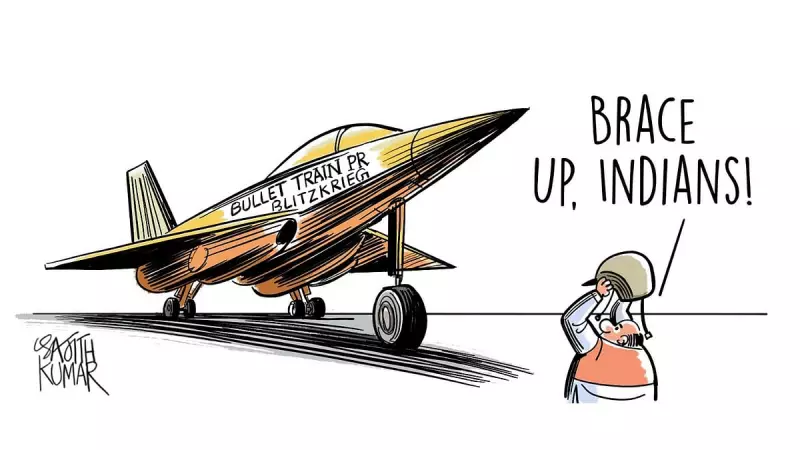
Deccan Herald, a leading Indian newspaper, has released a powerful editorial cartoon titled 'Brace Up Indians'. This piece of visual commentary offers a sharp, satirical perspective on the pressing economic issue of rising prices affecting the common citizen.
The Visual Message of 'Brace Up Indians'
The cartoon, a staple feature of the publication's opinion section, uses symbolic imagery to convey its message. It directly addresses the Indian public, implying that they need to prepare themselves or steel their nerves for ongoing or impending economic hardship. The core subject is the increasing cost of living, a universal concern that resonates deeply across households in the country. While the specific artistic elements are described here, the original illustration on the Deccan Herald website combines these elements into a single, impactful frame designed to provoke thought and discussion.
Satire as Social Commentary
Editorial cartoons like this one serve a critical function in journalism and public discourse. They distill complex socio-economic issues into an immediately accessible format. By employing satire and exaggeration, the DH Toon cuts through dense political and economic rhetoric to highlight the ground reality faced by millions. The phrase "Brace Up" is not merely a suggestion but a satirical nudge, pointing towards the resilience expected from citizens amidst financial strain. This form of commentary holds a mirror to policy outcomes and their direct impact on daily life.

Context and Public Resonance
The publication of this cartoon is timely, reflecting widespread anxiety over inflation. The cost of essential commodities, fuel, and services has been a central topic in national conversations. When traditional news reports present data and analysis, an editorial cartoon like this one translates those numbers into human emotion and experience. It speaks to the frustration and fatigue of budgeting for increasingly expensive necessities. The cartoon's strength lies in its ability to be both specific in its critique and universal in its relatability, making it a shared reference point for readers from various backgrounds.
As a piece from Deccan Herald's esteemed editorial stable, it carries the weight of the publication's journalistic stance. It is not just a drawing but a form of argument and persuasion. The call to "brace up" is layered with meaning—it comments on the current state of affairs while also questioning the narratives around economic recovery and stability. It prompts readers to look beyond headlines and consider their personal financial preparedness in an uncertain climate.
The Role of Editorial Cartoons in Modern Media
In an era of digital news consumption, potent visual content remains crucial for engagement and reflection. The DH Toon series, including this installment, continues a long tradition of using art for social and political critique. Such cartoons often become the most remembered part of a newspaper, encapsulating a week's or a month's public sentiment in one frame. They are a barometer of popular opinion and a catalyst for dialogue, sometimes even influencing broader public discourse on issues like governance and economic policy.
Ultimately, "DH Toon: Brace Up Indians" is more than just a cartoon; it is a snapshot of a national mood. It captures the collective sigh of a population grappling with inflation, using humor and irony to address a serious challenge. It reminds the audience that journalism can inform and critique not only through words but also through powerful, thoughtful imagery that stays with the reader long after they have turned the page or closed the browser tab.






