

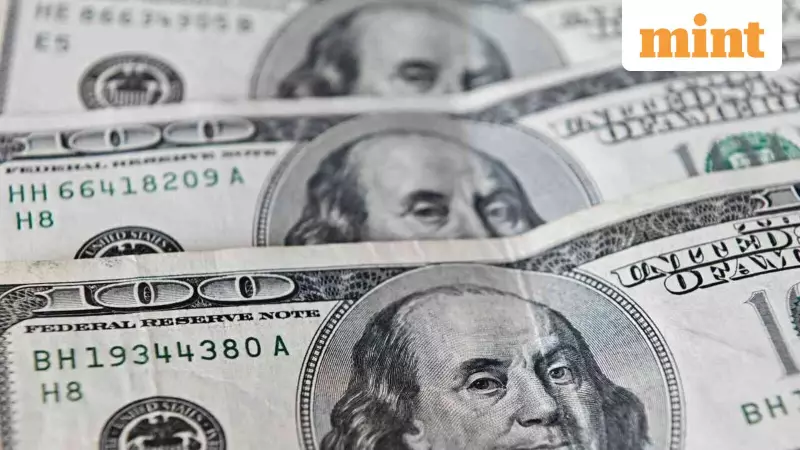
The US dollar is experiencing a significant decline in global foreign exchange markets, with analysts predicting further weakness ahead. This downturn comes amid heightened speculation about potential coordinated intervention by Japanese and American authorities to bolster the Japanese yen, coupled with a growing "Sell America" sentiment driven by domestic policy uncertainties.
Yen Surge Sparks Intervention Speculation
On Monday, the dollar slumped to a four-month low, partially linked to a sharp surge in the Japanese yen. Traders suggested this movement could signal that authorities in Tokyo and Washington are preparing for coordinated action to support the Japanese currency. Reports indicated that both the New York Federal Reserve and Japan's Ministry of Finance made rate check calls to foreign exchange trading desks, inquiring about live bid/ask levels for the dollar-yen pair.
Rate check calls are typically viewed as a precursor to direct market intervention. This possibility was reinforced on Sunday when Japanese Prime Minister Sanae Takaichi stated on Japanese television that her government would "take necessary steps against speculative or very abnormal market moves" to support the yen. The yen had been falling sharply in recent weeks, threatening to test its all-time low of 161.95 against the dollar due to concerns over Takaichi's expansionary fiscal policies and election campaign promises.

Coordinated Action Could Be More Effective
In early Monday trading, the yen surged nearly 2.9% from Friday's closing levels, reaching 153.66 against the US dollar, its highest point in two months. Chris Turner, ING's global head of macro research, noted, "The prospect of bilateral Japan-U.S. intervention is understandably a more powerful one than mere passive intervention from Tokyo alone." He explained that a weakening yen, alongside a selloff in Japanese government bonds, has been driving US Treasury bond yields higher.
Turner added, "If there is any financial instrument more important than the stock market to the White House right now, it is U.S. Treasuries." He argued that the strong dollar combined with a weak yen could potentially undermine the effects of US tariffs on Japan, giving Japanese manufacturers a competitive advantage.
'Sell America' Momentum Adds Pressure
Simultaneously, the dollar is facing pressure from "Sell America" momentum, attributed to President Donald Trump's domestic and foreign policies, the country's weakening fiscal structures, and the prospect of a dovish Federal Reserve chair replacing Jerome Powell later in the spring. Trump has also threatened a 100% tariff on Canadian imports, amid trade negotiations between Ottawa and Beijing, indicating ongoing policy volatility following last week's detente with Europe.
Furthermore, the odds of a US government shutdown have increased sharply after the weekend shooting of a man in Minnesota by US Immigration and Customs Enforcement officers. This incident, the state's second fatality in as many months, has led to a standoff over Department of Homeland Security funding, adding to political and economic uncertainties.
Market Indicators Reflect Broader Trends
The US dollar index, which tracks the greenback against a basket of six global currencies, was down 0.57% on Monday at 97.04. Meanwhile, precious metals prices continued to soar as investors seek alternatives to fiat currencies. Gold surpassed the $5,000 per ounce mark for the first time on record, while silver jumped 6.1% to trade at $109.27 per ounce.
Ole Hansen, Saxo Bank's head of commodity strategy, commented, "While gold remains the ultimate hedge against inflation, fiscal debt concerns, and geopolitical risks, silver continues to be the main driver of the rally, fueled by FOMO, strong momentum, limited liquidity, and robust Chinese demand." This shift towards precious metals underscores the broader market apprehension about currency stability and economic policies.






