

Economic Survey 2025-26 Elevates 'Delayed Gratification' as Central Theme for India's Development
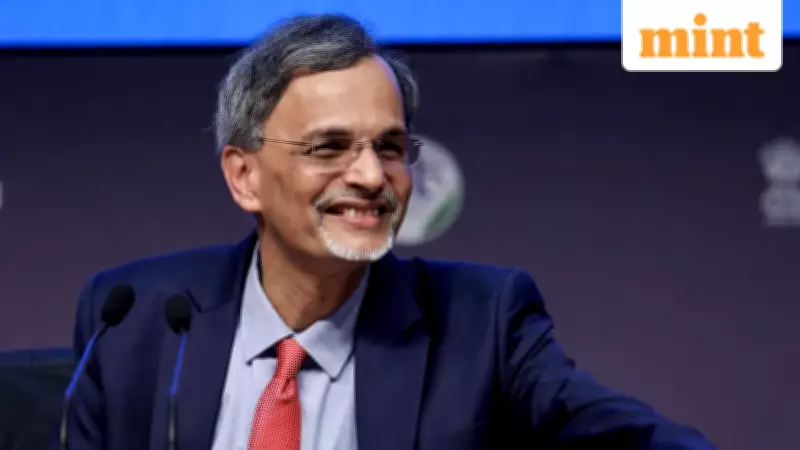
In a significant philosophical pivot, the Economic Survey for the fiscal year 2025-26, tabled in Parliament on Thursday, has placed the concept of 'delayed gratification' at the heart of India's economic narrative. Penned by Chief Economic Adviser V. Anantha Nageswaran and his team, the document draws profound parallels between a classic psychological experiment and the nation's developmental challenges.
The Marshmallow Test: A Lesson from Stanford for New Delhi
The Survey resurrects the famous marshmallow test, conducted by American psychologist Walter Mischel at Stanford University in the 1960s and 1970s. In this experiment, four-year-old children were offered a choice: one marshmallow immediately, or two if they could wait for fifteen minutes. This simple test became a powerful metaphor for long-term thinking versus immediate reward.
Follow-up studies revealed that children who demonstrated the ability to delay gratification grew into teenagers and adults with superior outcomes in areas like self-assuredness, academic performance, social competence, and self-worth. Conversely, those who opted for the immediate treat showed higher tendencies toward aggressive behavior and conduct disorders.

Ancient Wisdom Meets Modern Economic Policy
CEA Nageswaran elegantly bridges this modern psychology with ancient Indian philosophy. He invokes the Katha Upanishad, referencing the eternal choice between Śreya (the enduring good) and Preya (the fleeting comfort). 'The mature mind chooses Śreya; the immature mind settles for Preya,' he notes, framing delayed gratification not merely as a personal virtue but as a collective economic imperative for the nation.
The phrase 'delayed gratification' appears nine times in the Survey, underscoring its centrality. The document argues that whether for an individual child or a nearly $4 trillion economy, sustained effort over a long horizon is what ultimately yields meaningful results.
The Cost of Impatience and the Challenge for India
The Survey presents a stark warning about the perils of short-termism. It identifies the difficulty in sustaining delayed gratification as a recurring but underappreciated constraint on India's development trajectory. Competing globally in manufacturing, logistics, institutions, or elite sports, it states, requires bearing near-term costs for returns that are uncertain, delayed, and often invisible in the short term.
Nageswaran and his team elaborate on the complementary nature of hard work and working smart. They dispel the misconception that these are opposites. 'Working smart is the result of working hard over time,' the Survey asserts. True efficiency and shortcuts are earned through prolonged exposure to detail, repetition, and learning from errors, not discovered in isolation.
Systemic Risks and the Need for Behavioral Shift
The document delves into the systemic consequences when delayed gratification breaks down. It warns that systems become vulnerable to shortcuts that deliver short-term results at the expense of long-term credibility. Trust and legitimacy, it cautions, collapse far more rapidly than they can be rebuilt.
For robust and predictable economic outcomes, the Survey posits that millions of small actions must align over long periods. This alignment, however, cannot be legislated. It depends on citizens and organizations internalizing delayed gratification as an economic necessity rather than a personal sacrifice.
Confronting the 'Chalta Hai' Attitude
In a characteristically insightful passage, the Survey introduces the concept of 'hysteresis'—a term from physics describing how a system's state depends on its history. It uses this to illustrate the difficulty of shaking off India's pervasive 'chalta hai' attitude (a Hindi phrase meaning 'it's okay, let it be') while striving for a culture of delayed gratification.

The message is clear: the cost of rebuilding decayed skills and institutional capability is prohibitively high once impatience takes root. The Economic Survey 2025-26, therefore, concludes by framing delayed gratification not as a moral virtue, but as a productive capability essential for India's ascent on the global stage.





