

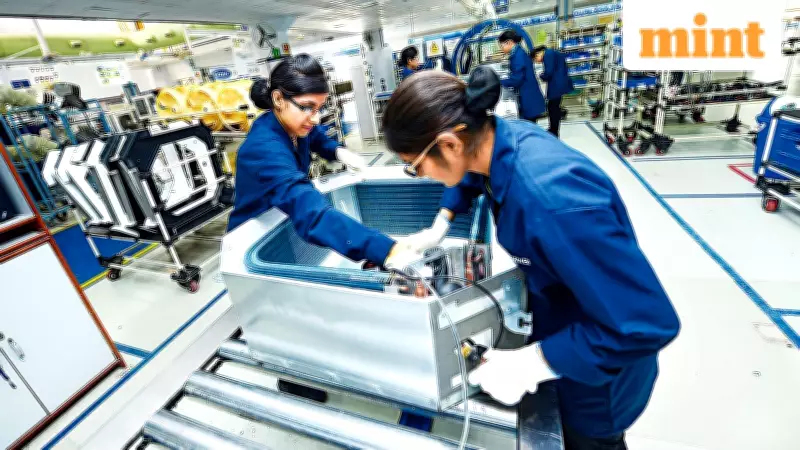
Economic Survey 2025-26 Calls for Policy Push to Address Women's Workforce Challenges
The Economic Survey 2025-2026, presented in Parliament on Thursday ahead of the Union Budget, has highlighted a critical imbalance in India's labour market. While women's participation in paid work is showing a gradual upward trend, the survey underscores an urgent need for comprehensive policies that promote shared domestic responsibilities and better care infrastructure.
Rising Participation Masks Persistent Structural Barriers
The survey reveals encouraging data on female labour force participation, which has increased significantly from 23.3% in 2017-18 to 41.7% in 2023-24. However, this improvement is tempered by deep-rooted challenges that continue to hinder women's full economic integration.
Despite these gains in economic participation, women workers face multiple structural barriers, including limited mobility, lack of affordable housing, and inflexible work arrangements that frequently conflict with caregiving responsibilities. These factors often relegate women to what are perceived as low-productivity jobs or part-time roles.

Disparities in Employment Quality and Representation
The survey provides detailed insights into the quality of employment for women. In the September quarter of 2025-26, women accounted for just 21.3% of regular wage or salaried jobs, compared to 27.2% for men. This gap highlights the need for more equitable access to formal employment opportunities.
An even more striking statistic emerges from the Periodic Labour Force Survey (PLFS) for 2023-24, which shows that women aged 25 and above with advanced degrees constitute a mere 2.9% of the employed female workforce across both rural and urban areas. Many highly educated women continue to work in low-productivity jobs due to social expectations, mobility constraints, and limited access to flexible formal employment.
Transportation and Mobility Challenges
The survey brings to light the unique commuting challenges faced by women workers. Their use of public transportation differs significantly from that of men, with women often traveling during off-peak hours, accompanied by children, and making multiple short trips to handle household chores or perform caregiving activities.
To address these issues, the survey recommends policies focused on extending safety infrastructure and providing affordable intermediate transport to cover women's entire travel chain—from doorstep to destination. It also suggests creating women-centric industrial clusters in manufacturing and industrial hubs.
The COVID-19 Impact and Recovery Efforts
The report notes that during and immediately after the COVID-19 outbreak, the sharp drop in women's participation in the workforce caused significant concern among Indian companies. In response, businesses across various sectors have implemented additional measures, including flexible working hours and work-from-home policies, to bring more women back into the workforce.
Need for Greater Inclusivity in STEM Fields
The Economic Survey emphasizes the importance of increasing inclusivity in the workforce, particularly by encouraging more women to enter male-dominated science, technology, engineering, and mathematics (STEM) fields. This recommendation comes as women continue to navigate challenges such as caregiving responsibilities, early marriage, and the rising cost of higher education.
Vision for Viksit Bharat 2047
The survey aligns with India's vision for Viksit Bharat 2047, which places women at the core of the national development agenda, envisioning progress as women-led. Estimates suggest that increasing women's workforce participation to around 55% by 2050 could be critical for maintaining a high annual gross domestic product (GDP) growth trajectory.
The Economic Survey 2025-26 thus presents a comprehensive analysis of women's workforce participation in India, highlighting both progress and persistent challenges while calling for a multipronged policy approach to further enhance participation and create a more equitable labour market.






