

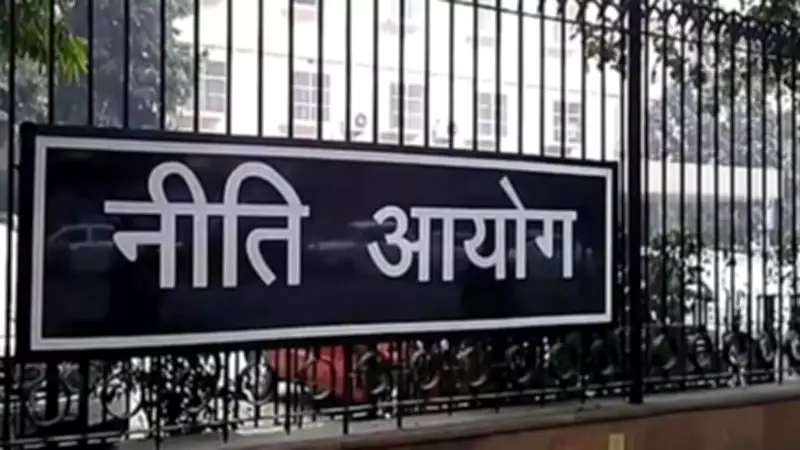
Economist and former vice-chairman of NITI Aayog, Rajiv Kumar, has articulated a compelling vision for India's future on the world stage, asserting that a robust economy serves as the indispensable foundation for a strong foreign policy. Speaking at the Rashtriya Raksha University in Gandhinagar on Wednesday, Kumar emphasized that India must accelerate its growth trajectory and substantially increase its share in global trade to command respect internationally.
The Economic Foundation of Geopolitics
Kumar, who currently chairs the Pahle India Foundation, a not-for-profit policy think tank, drew a direct correlation between economic strength and geopolitical influence. "Economic strength decides a country's position in global politics," he insisted, noting that nations with weak economies are often disregarded on the global stage. He echoed External Affairs Minister S. Jaishankar's perspective, stating, "The best foreign policy for India is to strengthen its economy. If you don't grow your economy, you don't have the leverage to talk about anything."
China's Example and India's Current Standing
To illustrate his point, Kumar pointed to China, the world's second-largest economy, as a prime example of how economic growth translates into global clout. "Today, China is leading in 47 out of 53 frontier technologies. The Chinese are now leading, not the Americans. That is what gives China the ability to stand up to the US," he maintained. In contrast, he highlighted India's modest position in global trade, revealing that the country's share in global merchandise trade has stagnated below 2% for the past three decades.

Kumar described this figure as inadequate for meaningful global influence, stating, "In the last 30 years, our share in global merchandise trade has been less than 2%. If you can make it 10%, then we will have a role on the global stage. Just 2% doesn't matter." He identified this as one of India's most significant economic challenges. In the services sector, India's global share is approximately 4%, which he stressed is insufficient for ambitions of global leadership without a much stronger economic base.
Strategic Autonomy and International Relations
Addressing India's role in the coming years, Kumar affirmed that the country must enhance its economic footprint to secure a more substantial voice internationally. He cautioned against overreaching, advising, "Let's not attempt to have a big global role unless we make our economy much stronger." On India-US relations amid global policy shifts, Kumar advocated for patience and firmness in safeguarding national interests, remarking, "This time will also pass. The second thing is to stick to your guns for your national interest. India is not a country that can be taken lightly."
Lessons from History and Future Directions
Kumar recalled India's resilience during the international pressure and sanctions following the 1998 nuclear tests under Prime Minister Atal Bihari Vajpayee, highlighting how the nation persevered. He emphasized the need for pursuing "real strategic autonomy," urging India to avoid excessive dependence on any single country and to reassess its relationship with China. "In this context, it is important to review our own relations with China. Time has come to review that relationship," he said.
To achieve this autonomy, Kumar argued for empowering the private sector, which he described as the "engine of economic growth." "We have to strengthen our private sector and give it all the support it needs, because India can build its economy through the private sector," he added, underscoring the critical role of domestic economic vigor in shaping India's global destiny.






