

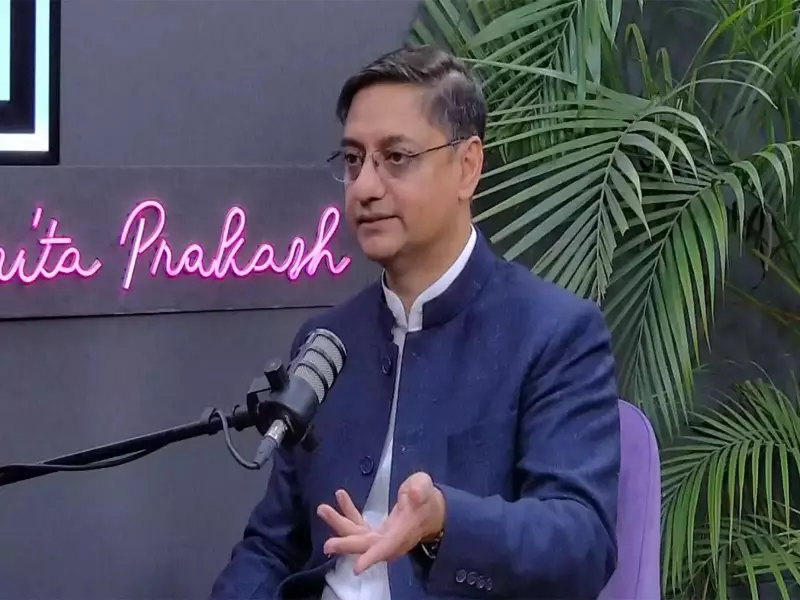
India must cultivate a greater comfort level with corporate and personal bankruptcy as an integral component of a thriving, risk-taking economy, according to a key advisor to the Prime Minister. Sanjeev Sanyal, a member of the Economic Advisory Council to the Prime Minister (EAC-PM), asserted that continuous insolvency and bankruptcy are not signs of weakness but are essential for building long-term economic dynamism.
The Case for 'Continuous Churn' in the Economy
In an interview with ANI, Sanyal elaborated that a robust economic system must permit what he termed a "continuous churn". This process involves older, less efficient companies shutting down, thereby creating space for new, innovative enterprises to emerge and take their place. He stressed that this state of constant change and renewal is a prerequisite for sustained economic strength, rather than a flaw to be avoided.
Reflecting on a critical period for the Indian banking sector, Sanyal pointed to 2017 as a pivotal year. At that time, banks were under severe financial stress due to mounting bad loans. The government's decision to allow some of the nation's largest and most indebted companies to undergo bankruptcy proceedings was a necessary, albeit difficult, step. "This did not make the corporate sector weaker. In fact, it came back much stronger after the cleanup," Sanyal stated, highlighting the positive outcomes of the Insolvency and Bankruptcy Code (IBC) process.

Learning from Jet Airways and the Role of Regulation
Sanyal used the aviation industry to illustrate his point. The collapse of Jet Airways created opportunities for other airlines to expand and fill the vacuum, ultimately leading to a more competitive and healthier market. He argued that companies failing to adhere to regulations or meet market standards should be allowed to exit, making room for more competent players.
While advocating for a tolerant view of failure, Sanyal clarified that success should not be vilified either. He cautioned against resenting companies that perform exceptionally well. However, he emphasized that regulators must step in decisively if large corporations misuse their dominant market position or engage in anti-competitive practices that distort the level playing field.
Safety Nets for Risk-Takers and Mumbai's Rising Financial Clout
The discussion also ventured into welfare policies. Sanyal expressed being "very, very uncomfortable with freebies" as a blanket policy. Instead, he championed the idea of a targeted safety net designed specifically to support those who take economic risks and fail. He noted that a risk-taking culture permeates every stratum of Indian society, from a billionaire launching a mega-venture to an individual opening a small kirana shop. Since not all risks succeed, a social security framework is crucial to catch those who "fall off at the edges."
On a positive note, Sanyal highlighted the growing prowess of India's financial markets. He declared that Mumbai has now eclipsed traditional hubs like London or Singapore as a more important centre for raising capital, particularly for Indian enterprises. He credited this growth to risk-taking capital, such as equity and venture funding, which are the primary drivers of innovation.
Looking ahead, Sanyal expressed hope that over the next 25 years, the composition of India's top 20 listed companies would be completely transformed from today's lineup. Drawing a global comparison, he noted that economic powerhouses like the United States and China maintain their vigor because their leading corporate entities change frequently. In contrast, he pointed to Europe, where the largest companies have remained largely static for nearly three decades, a situation he labeled as "stagnation."
Concluding his argument, Sanjeev Sanyal made a crucial philosophical point: bankruptcy should not be viewed as a moral failure. Instead, it should be seen as a natural and inevitable part of a society that is willing to embrace risk, experiment, and pursue ambitious growth.






