

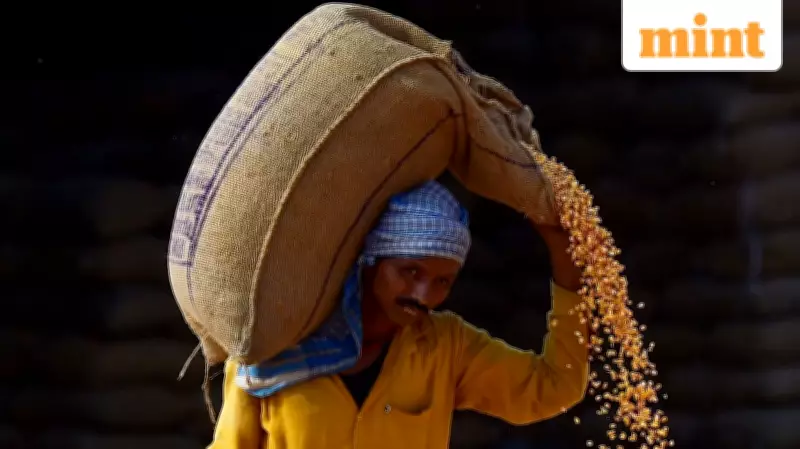
Economic Survey Sounds Alarm on Ethanol Program's Impact on Food Security
New Delhi: India's ambitious ethanol blending initiative for automobile fuel, while boosting energy independence, could pose significant risks to the nation's food self-reliance if not managed with careful foresight. The government's Economic Survey, released on Thursday, highlighted a concerning trend where farmers are increasingly abandoning pulses and oilseeds in favor of maize cultivation to capitalize on the rising prices of maize-based ethanol.
Shift in Crop Priorities Raises Concerns
The survey, authored by Chief Economic Adviser V. Anantha Nageswaran and his team, pointed out that the country's drive towards achieving 20% ethanol blending in petrol has necessitated a diversification beyond sugar-based ethanol to include food grains like maize. This strategic shift has led to a brisk increase in maize-based ethanol prices over the past few years, making it a more lucrative option for farmers.
"Pulses and oilseeds are structurally important to India's consumption basket and nutritional outcomes, yet they are shifting lower down the priority order for the nation's cultivators," the survey stated. This reordering of agricultural priorities threatens to entrench India's dependence on edible oil imports and expose domestic food prices to greater volatility during supply shocks.

Emerging Tension Between Energy and Food Security
The document underscored an "emerging tension between Aatmanirbharta in energy and Aatmanirbharta in food." While the ethanol blending program, which began in 2003 with 5% blending and has now reached 20% by 2025, has yielded substantial benefits—such as saving over ₹1.44 lakh crore in foreign exchange and substituting about 245 lakh tonnes of crude oil as of August 2025—it has also prompted closer scrutiny of its impact on crop patterns.
The increasing preference for maize is driven by government-administered prices for maize-based ethanol, which grew at a compound annual growth rate (CAGR) of 11.7% between FY22 and FY25. This rate far outpaces the growth seen in ethanol derived from rice or molasses, incentivizing farmers to prioritize maize over other essential crops.
Data Highlights the Growing Imbalance
According to the survey, maize has recorded rapid growth in both production and cultivated area between FY22 and FY25, with CAGRs of 8.77% and 6.68%, respectively. In contrast, pulses have experienced a decline in output and acreage during the same period, while oilseeds and cereals (excluding maize) have shown only modest growth.
Although the shift may not immediately threaten food security, the survey emphasized early warning signals. "As the ethanol programme matures, there is a strong case for developing a comprehensive roadmap that takes a holistic view of energy security and food security," it recommended.
Calls for a Balanced Approach
The cautionary note comes at a critical juncture, with discussions underway about potentially increasing ethanol blends beyond the current E20 standard. Auto companies have faced consumer backlash over mileage loss with higher ethanol blends, adding another layer of complexity to the debate.
The Economic Survey advocated for a balanced strategy moving forward. It suggested that the government should address the undue pricing advantages of certain feedstocks and focus on improving yields in pulses and oilseeds to restore their relative profitability. Such measures are essential to ensure that India's pursuit of energy independence does not come at the cost of its food self-reliance.






