

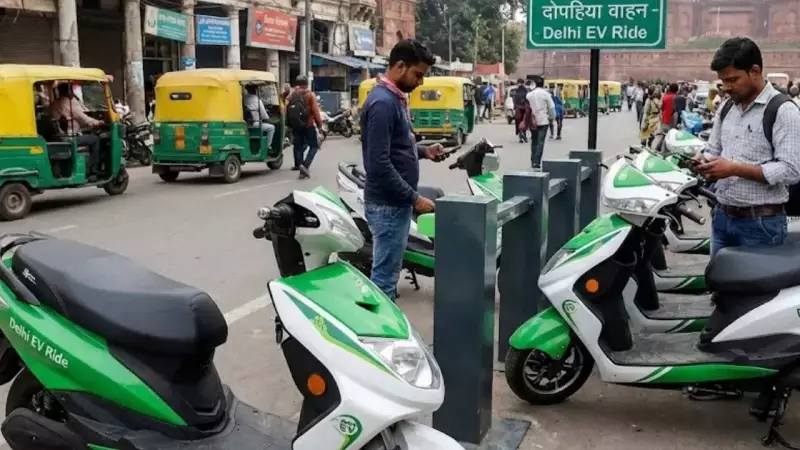
Electric two-wheeler rental systems are becoming a vital part of India's urban transport network. These systems offer affordable and flexible mobility solutions. They support last-mile deliveries and help reduce traffic congestion in cities. The industry also creates significant employment opportunities, especially in the delivery economy.
Industry Eyes Pre-Budget Discussions
With the Union Budget of 2026 approaching, industry leaders are closely monitoring pre-budget talks. The electric two-wheeler sector has received strong government backing. However, it still faces several hurdles. High investment costs, infrastructure gaps, and policy uncertainties remain key challenges. The EV industry has clear expectations for the upcoming budget to address these issues.
Reducing Fleet Acquisition Costs
One primary demand is direct support to lower fleet acquisition costs. EV rental companies operate in bulk, deploying hundreds or thousands of vehicles at once. This sets them apart from individual buyers. While existing incentives have boosted EV adoption, industry experts believe targeted fleet support will expand operations significantly. Their expectations include:

- Simplified and faster subsidy disbursement mechanisms
- Special incentive slabs for commercial EV fleets
- Extension of demand incentives for the two-wheeler sector
Reducing capital expenditure will enable operators to expand into new cities more effectively.
GST Rationalisation for Rentals and Batteries
The EV rental ecosystem often struggles with the current tax structure. Electric vehicles already enjoy lower GST rates compared to petrol or diesel vehicles. For rental systems and batteries, industry leaders seek greater clarity and rationalisation. They propose:
- Lower GST on batteries and battery swapping services
- Uniform and reduced GST on EV rental services
- Clear differentiation between EV ownership and rental models
A more favourable tax regime would improve unit economics for rental operators.
Boosting Charging and Battery-Swapping Infrastructure
Expanding EV two-wheeler use requires robust infrastructure. Private players have invested in charging and battery-swapping networks, but coverage in Tier 2 and Tier 3 cities remains inadequate. Industry expectations for Budget 2026 include:
- Integrating public transport hubs with charging infrastructure
- Incentives for standardising battery-swapping technology
- Increased public spending on urban charging infrastructure
- Support for private players to set up battery-swapping stations
Battery swapping is crucial for rental fleets to improve asset utilisation and reduce downtime. Policy incentives are central to enhancing operational efficiency in this area.
Long-Term Policy Roadmap for Shared Mobility
Long-term policy stability and clarity are essential for any budget. The EV rental segment requires heavy investment in infrastructure, vehicles, and technology. Therefore, long-term planning must avoid uncertainties around regulations, subsidies, and taxation. Industry leaders want:
- Centralisation of central and state policies to simplify operations
- Clear guidelines distinguishing private ownership from shared EV mobility
- A multi-year EV policy roadmap beyond short-term incentives
Predictable policy signals will build investor confidence and encourage sustained sector growth.
Access to Credit and Financing Support
Early-stage EV rental companies face challenges in securing affordable financing. Traditional lenders often view EV and battery assets as high-risk due to limited historical data. Budget 2026 is expected to provide relief through:
- Risk-sharing mechanisms and interest subvention
- Credit guarantee schemes for EV rental startups
- Priority sector lending status for EV fleet operators
Improved access to capital for small players will promote competition, innovation, and scaling of operations.
Encouraging Supply Chains and Local Manufacturing
India's broader manufacturing goals align with EV two-wheeler rental fleets. Strengthening domestic production of electric two-wheelers, components, and batteries is crucial. Key sector expectations include:

- Alignment with existing policy-linked incentive (PLI) schemes
- Support for domestic recycling and battery manufacturing
- Incentives for local production of EV components
Employment Support and Skill Development
The expanding EV sector generates jobs across infrastructure management, technology, maintenance, and operations. However, skill gaps persist in battery management and EV maintenance. Necessary measures include:
- Developing skill development programmes focused on EV technologies
- Including EV skills in national skilling initiatives
- Training fleet managers and technicians
These steps will create workforce readiness, increase job opportunities, and strengthen the industry overall.
Integrating EV Rentals into Urban Mobility
EV rentals play a major role in the mobility ecosystem. Desired policy actions involve:
- Including EV rentals in smart city mobility frameworks
- Creating dedicated charging zones and parking spaces in urban areas
- Enhancing coordination between rail networks, metros, and buses
These efforts will help reduce emissions and congestion in cities.
Conclusion
The EV rental system will remain central to Budget 2026. With the right policy support, it can become a pillar for sustainable urban mobility. It supports clean energy goals, generates employment, and offers affordable transport solutions. Pre-budget expectations focus on long-term policy clarity, lower fleet acquisition costs, and scaling charging infrastructure. Addressing these concerns will bring India closer to a smarter mobility future, strengthen mobility models, and accelerate EV adoption.
Views and opinions expressed in this article are solely those of the original author and do not represent any of The Times Group or its employees.





