

India's economic landscape showcased a mix of robust growth and persistent challenges in the latest weekly data compilation. Key indicators from trade, employment, and policy reveal a nation navigating a complex recovery path, marked by a strong export rebound and a landmark opening of the nuclear energy sector to private investment.
Trade and Employment Show Positive Momentum
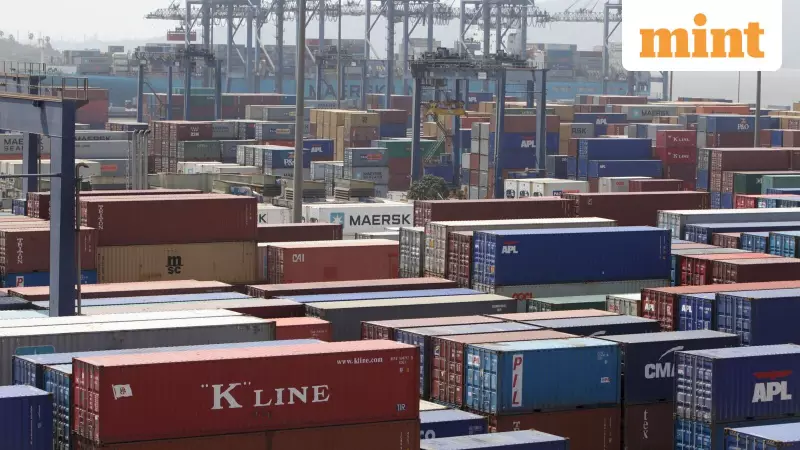
India's merchandise exports surged to $38 billion in November 2025, registering a powerful year-on-year growth of 19.36%. This represents the strongest performance since June 2022. A significant shift was seen in trade with the United States, which moved from being a drag to a key contributor, with exports growing by 22.6% despite higher tariffs. Even more dramatic was the 90.1% export growth to China, while shipments to the United Arab Emirates rose by 13.14%.
This export strength, combined with a 1.89% decline in imports, helped narrow the trade deficit substantially to $24.53 billion from $41.68 billion in October.

In parallel, the job market showed encouraging signs. The unemployment rate eased to 4.7% in November, the lowest since the statistics ministry began releasing monthly Periodic Labour Force Survey (PLFS) data in April. The improvement was broad-based. In rural areas, male unemployment fell to 4.1% from 4.6%, and female joblessness dropped to 3.4% from 4.0%. In urban centres, unemployment for men eased to 5.6% from 6.1%. However, the rate for urban women, though improved to 9.3% from 9.7%, remains a point of concern.
Policy Shifts and Sectoral Challenges
In a historic move, the Lok Sabha passed the Sustainable Harnessing and Advancement of Nuclear Energy for Transforming India (Shanti) Bill, 2025. This legislation opens up nuclear power generation to private companies for the first time, allowing them to build, operate, and decommission plants. A key provision exempts suppliers from liability in nuclear incidents, a measure aimed at attracting global investment. The bill supports India's ambitious goal of achieving 100GW of nuclear capacity by 2047, a significant leap from the current 8.8GW.
However, not all sectors are faring well. India's tourism industry is facing another difficult year. Foreign tourist arrivals (FTAs) for January-September 2025 stood at 6.18 million, which is 12% lower than the same period last year. Persistent issues like high costs, infrastructure gaps, and safety concerns have been worsened by a sharp drop in visitors from Bangladesh. Mint analysis suggests FTAs for 2024 are likely to fall short of 10 million, settling around 8.7-8.8 million.
Other Key Numbers from the Week
Finance Minister Nirmala Sitharaman highlighted the urgent need for fiscal consolidation, pointing to high debt levels in several states. Data shows that in 2022-23, West Bengal had the highest debt-to-GSDP ratio among major states at 39.5%, followed by Rajasthan (37.3%), Andhra Pradesh (33.0%), Tamil Nadu (32.0%), and Uttar Pradesh (30.2%).
Other significant developments included:
- Wholesale price inflation remained in negative territory at -0.32% in November, though it increased from -1.21% in December, indicating rising price pressures in food articles and electricity.
- The proposed Viksit Bharat-Guarantee for Rozgar and Ajeevika Mission (Gramin) Bill, 2025 promises 125 days of work, replacing the MGNREGA scheme which guaranteed 100 days.
- Solar solutions provider Candi Solar raised $58.5 million in a round led by the International Finance Corporation (IFC), taking its total capital raised to over $200 million.
- Due to alarming pollution, Delhi offices were allowed to operate at only 50% capacity from Thursday, with the air quality index in the 'very poor' category.
- The Rajya Sabha passed a bill allowing 100% Foreign Direct Investment (FDI) in the insurance sector, up from 74%, a move expected to increase coverage and make premiums more affordable.
The week's data paints a picture of an economy with strong export fundamentals and improving employment, actively pursuing transformative policy changes in energy and finance, while grappling with sector-specific headwinds in tourism and environmental challenges.






