

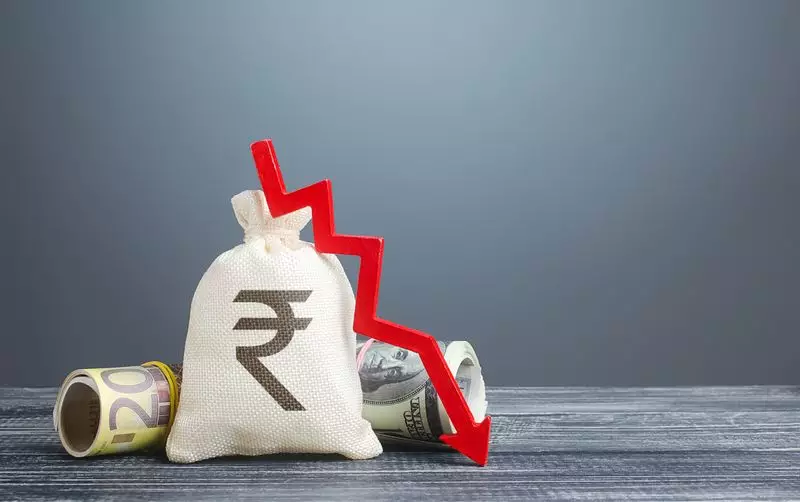
The Indian rupee's persistent decline against the US dollar is ringing alarm bells across the economy, with experts warning of a direct hit to household budgets through costlier imports and heightened inflationary pressures. The local currency recently breached the 83.50 mark against the greenback, a significant psychological level that underscores the mounting challenges.
Understanding the Rupee's Downward Spiral
Several interconnected global and domestic factors are conspiring to weaken the rupee. A primary driver is the robust strength of the US dollar, buoyed by expectations that the US Federal Reserve will maintain higher interest rates for longer to combat inflation. This attracts foreign capital away from emerging markets like India. Simultaneously, geopolitical tensions, particularly in the Middle East, are spurring demand for the safe-haven dollar, further pressuring currencies worldwide.
On the home front, India's widening trade deficit adds to the strain. The nation imports a vast quantity of crucial items, most notably crude oil, edible oils, and electronic goods. When the rupee loses value, paying for these essential imports becomes exponentially more expensive in local currency terms. This cost is inevitably passed on to consumers, fueling inflation.

Direct Impact on Prices and Everyday Life
The ripple effects of a weaker rupee are felt immediately in key sectors. For the common citizen, the most visible impact is at the fuel pump. India imports over 85% of its crude oil needs. A falling rupee directly translates into higher costs for oil marketing companies, which are then reflected in the prices of petrol and diesel. This, in turn, increases transportation costs, which has a cascading effect on the prices of virtually all goods and services.
Similarly, India is a major importer of edible oils like palm and sunflower oil. A depreciated currency makes these imports costlier, leading to more expensive cooking oil for households. The electronics sector, heavily reliant on imported components, also faces upward price pressure, affecting everything from smartphones to home appliances.
Economists point out that this imported inflation complicates the Reserve Bank of India's (RBI) task. The central bank, which has been focused on bringing consumer price inflation within its target band, may find its efforts undermined by external currency-driven price surges.
Expert Analysis and Potential Mitigation
Financial market veterans like VK Vijayakumar, Chief Investment Strategist at Geojit Financial Services, highlight the structural pressure on the rupee. He notes that while the RBI has been actively intervening in the forex market to prevent volatile swings, it cannot fundamentally alter the trend dictated by global dollar strength and a widening current account deficit.
The situation presents a complex policy dilemma. Aggressive intervention to prop up the rupee can deplete foreign exchange reserves. On the other hand, letting the rupee slide freely risks accelerating inflation. Experts suggest that a multi-pronged approach is necessary:
- Boosting exports to improve the trade balance.
- Attracting stable foreign direct investment (FDI) flows.
- Monitoring volatile portfolio investments that can exit quickly.
While a slightly weaker rupee can benefit export-oriented sectors like IT and pharmaceuticals by making their services more competitive overseas, the overwhelming consensus is that the current pace of depreciation is a net negative for the Indian economy. It erodes purchasing power, squeezes corporate margins for import-dependent businesses, and threatens to derail the disinflation process. All eyes are now on the RBI's next move and the trajectory of global oil prices as key determinants of the rupee's future path and its impact on inflation.






