

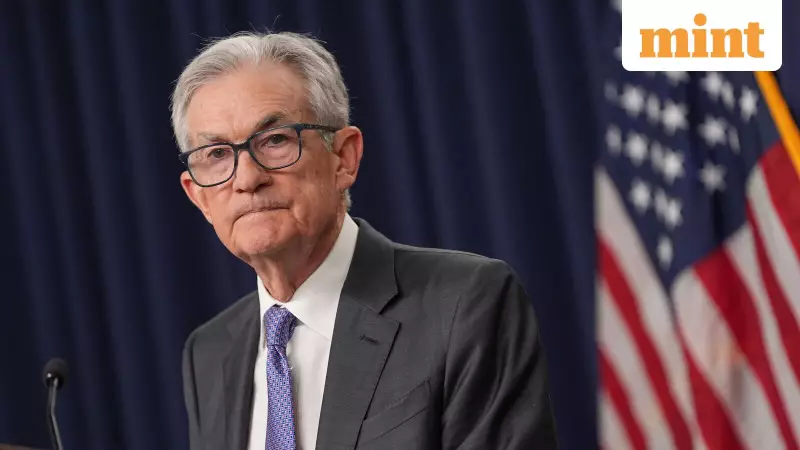
Fed Independence Under Siege: Presidential Pressure's Market & Inflation Impact
A groundbreaking new study has revealed that the independence of the Federal Reserve is increasingly coming under attack from presidential pressure, with significant implications for financial markets, inflation trends, and economic stability. The research, conducted by finance professor Yosef Bonaparte from the University of Colorado Denver's Business School, provides compelling evidence that when the president and the Fed clash, "the president usually wins," thereby systematically undermining the central bank's autonomy.
The Fed-President Pressure Index: Measuring Political Influence
Professor Bonaparte developed a sophisticated metric called the Fed-President Pressure Index (FPPI) to quantify the magnitude of presidential pressure on the Federal Reserve over time. This innovative index tracks the monthly number of articles in ten major news sources that discuss tensions between the president and the Fed, creating a historical database spanning more than four decades since 1980.
The FPPI has demonstrated remarkable fluctuations throughout its history, with the highest readings being more than 90 times greater than the lowest measurements. This reflects substantial historical swings in the intensity of presidential pressure campaigns targeting the Federal Reserve's decision-making processes.

Notable Pressure Campaigns Across Administrations
The study identifies several significant Fed pressure campaigns that have occurred across multiple presidential administrations:
- Two distinct campaigns during Donald Trump's first and second terms
- One campaign during Joe Biden's presidency
- Two additional campaigns during George W. Bush's first and second terms
These findings demonstrate that pressure on the Federal Reserve transcends party lines, occurring during both Democratic and Republican administrations with concerning regularity.
Economic Consequences: Lower Rates and Higher Inflation
Bonaparte's research reveals a direct correlation between increased FPPI levels and subsequent reductions in the federal-funds rate. The study found that higher presidential pressure consistently leads to lower interest rates than what would have been recommended by the Federal Reserve based solely on macroeconomic fundamentals.
As Professor Bonaparte explains, "political pressure can push rates below what would be justified by macro fundamentals alone." This artificial suppression of interest rates creates inflationary pressures, with Bonaparte's research providing clear evidence of this causal relationship.
The timing of these findings is particularly noteworthy given that, even before recent escalations in pressure campaigns, the FPPI was already approaching or reaching record-high levels. Bonaparte anticipates that January's FPPI reading will "very likely" be at or near a historical peak, suggesting unprecedented political pressure on the Federal Reserve.
Market Volatility and Stock Market Impact
The ripple effects of elevated presidential pressure extend beyond monetary policy to directly impact financial markets. Bonaparte's research demonstrates that increases in the FPPI correlate strongly with heightened market volatility, with small-cap stocks being particularly vulnerable to these fluctuations.
This connection between political pressure and market instability creates additional challenges for investors and financial institutions attempting to navigate increasingly unpredictable economic conditions.
Long-Term Implications and Legislative Solutions
While Bonaparte's 45-year database provides substantial evidence of the immediate effects of presidential pressure, the study acknowledges limitations in measuring the decades-long impact of compromised Fed independence on broader economic factors. These include economic uncertainty, sustained interest rate distortions, persistent inflation patterns, and fluctuations in the U.S. dollar's foreign-exchange value.

Despite these measurement challenges, Bonaparte emphasizes that sufficient evidence exists to warrant congressional action. The researcher specifically recommends that Congress should consider passing legislation designed to further protect and reinforce the Federal Reserve's independence from political interference.
The erosion of central bank autonomy represents a significant threat to long-term economic stability, with the study serving as a crucial warning about the consequences of allowing political considerations to override sound monetary policy decisions.





