

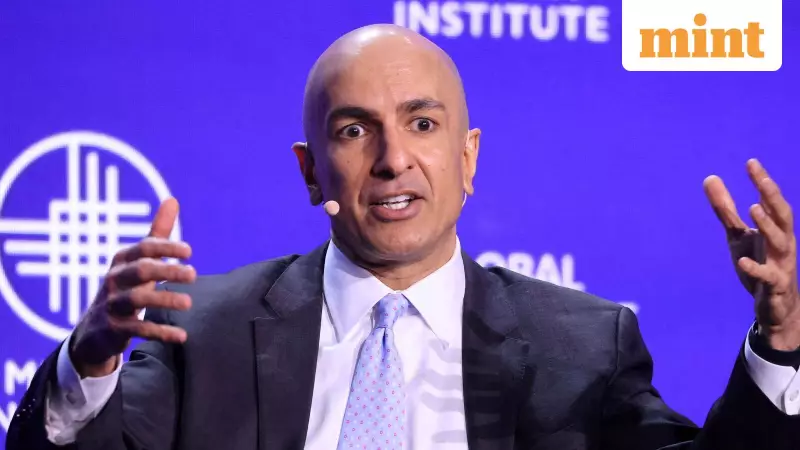
Minneapolis Federal Reserve President Neel Kashkari delivered a cautious message about interest rate cuts on Wednesday. He spoke during a virtual town hall hosted by the Wisconsin Bankers Association. Kashkari highlighted the surprising strength of the US economy as a major complication for monetary policy decisions this year.
Economic Resilience Creates Policy Challenge
"The economy has been more resilient than I thought it would be," Kashkari stated clearly. He pointed to steady consumer spending and substantial investments in artificial intelligence infrastructure. These include data centers and energy projects. This economic strength makes him question how restrictive current monetary policy really is.
Kashkari serves as a voting member of the Federal Open Market Committee this year. He emphasized the need for careful timing on rate reductions. The Fed must avoid cutting rates too aggressively before inflation clearly moves toward the 2% target.

Inflation Remains Primary Household Pressure
"Inflation is still the main reason many households feel under pressure," Kashkari explained. He expressed particular confidence about housing-related inflation easing. Slower rent growth should gradually appear in official data.
However, he showed less certainty about other inflation components:
- Goods inflation has risen over the past year
- Non-housing services inflation ties closely to wage growth
- This category could prove slower to cool down
Kashkari also warned about potential delays from tariff-related price increases. These might take longer than expected to work through the economy completely.
Labor Market Shows Mixed Signals
The labor market presents a complex picture according to Kashkari's analysis. Job growth has slowed and hiring has softened. Yet layoffs remain limited and unemployment hovers around 4.4%. This balance creates what he called "a narrow path" for policymakers.
"If we cut rates and that makes the inflation problem worse, are we really helping families?" Kashkari asked rhetorically. He framed this concern as central to maintaining the Fed's credibility with the public.
Fed Independence and Leadership Questions
Kashkari addressed questions about Federal Reserve independence during his remarks. The Department of Justice has launched an investigation into Chair Jerome Powell. This concerns management of a building renovation project. Meanwhile, President Donald Trump prepares to announce his nomination to replace Powell.
"Monetary policy decisions must remain insulated from political pressure," Kashkari insisted. He added that "whoever the next chair is will get one vote. And the best argument wins."
Contrasting Views Among Fed Officials
Kashkari's comments came on a busy day for Federal Reserve watchers. Other officials presented different perspectives:
- Philadelphia Fed President Anna Paulson signaled openness to additional rate cuts later in 2026. She conditioned this on continued inflation moderation and stable labor market conditions.
- Fed Governor Stephen Miran argued that deregulation could lower inflation pressures. This might justify easier monetary policy.
Against this backdrop, Kashkari maintained a more cautious position. He stated that inflation hasn't fallen far enough to justify an aggressive easing cycle. While acknowledging labor market cooling, he said policy decisions will depend on whether inflation continues weakening in coming months.
Commitment to 2% Target Faces Test
The central bank remains committed to its 2% inflation target according to Kashkari. But he acknowledged potential challenges to this commitment. "If this goes on for long enough, people are going to start to doubt how serious we are about that," he noted.
For now, Kashkari said his focus stays on ensuring inflation returns fully to target. Only then should the Federal Reserve move decisively to lower interest rates. This patient approach reflects his assessment of current economic conditions and inflation dynamics.






