

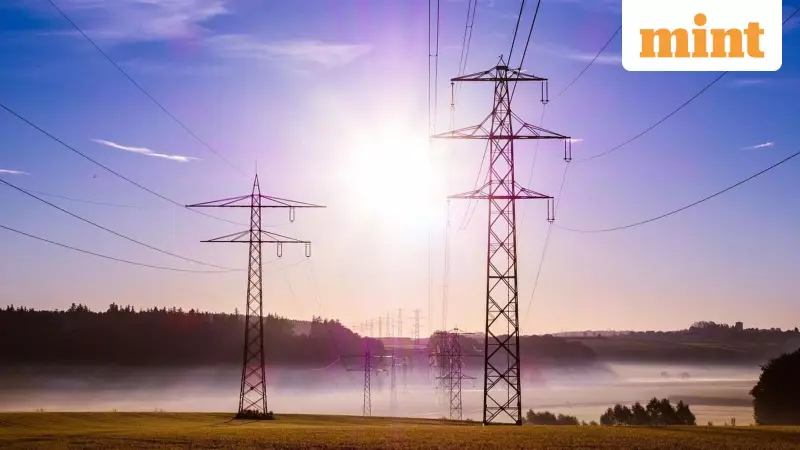
A combination of scanty winter rainfall, persistent dense fog, and high atmospheric pollution is creating a perfect storm, threatening the stability of power transmission lines across several north and central Indian states. Authorities are on high alert as these conditions significantly raise the risk of widespread power outages.
The Triad of Threats: Fog, Pollution, and Dry Winter
According to power sector officials, the current weather pattern poses a severe challenge to the grid. Dense fog increases moisture on power lines, which allows pollutants and dust in the air to stick to their surface. This accumulation reduces the insulation strength of the lines and insulators, leading to dangerous flashovers, short circuits, and the automatic tripping of transmission and distribution infrastructure.
Rain acts as a natural cleanser for this equipment, but this winter has been critically dry. Data from the India Meteorological Department (IMD) shows that rainfall in December was about 69% deficient compared to the long-term average. The deficit was even more severe in northwest India (84.8%) and central India (99%).

"This year, the winters have been rain-deficient, which has raised concerns," explained a power sector executive who requested anonymity. "Last year's rains helped clean the insulators. While cleaning was once done by helicopter, it is now primarily a manual process using chemicals."
States on High Alert and Record Fog Episodes
The states identified as being at heightened risk include Punjab, Haryana, Uttar Pradesh, Rajasthan, Delhi, Madhya Pradesh, and Chhattisgarh. The IMD has reported that fog episodes have been more frequent and intense this season. In December 2025, dense-to-very-dense fog persisted for 15-26 days across the Indo-Gangetic Plains.
Mrutyunjay Mohapatra, IMD's Director General of Meteorology, attributed the trend to weak wind conditions and persistent western disturbances. This prolonged fog has already caused operational disruptions, including the tripping of the 400 kV Bareilly-Unnao line in Uttar Pradesh and the 400 kV Suratgarh-Bikaner line in Rajasthan.
In response, the Grid Controller of India has instructed all generators and transmission service providers to maintain high alertness. State load dispatch centers have been asked to act swiftly to restore any affected elements.
Grid Under Pressure and Historical Precedents
The situation is compounded by India's record winter power demand, which reached 241 GW this season. The national grid, one of the world's largest integrated networks, is also managing the intermittency of a growing share of renewable energy. Data reveals there were multiple grid disturbances in December: seven in the north, ten in central India, seven in the west, and three in the east, linked to fog and pollution.
The worst-case scenario is a grid collapse, a nightmare India has experienced before. On July 31 and August 1, 2012, massive blackouts affected over 600 million people. While infrastructure has improved since, with the replacement of porcelain insulators with more resilient polymer ones, the threat remains in areas where upgrades are incomplete.
Anil Razdan, former power secretary, emphasized the need for vigilance: "The materials used for overhead systems do get impacted by the elements in polluted air... There has to be a constant health check and efficiency check of the systems."
Officials in Punjab and Haryana confirmed they are monitoring the situation daily. The persistent fog has already cascaded into other sectors, causing widespread flight and train cancellations, highlighting how interconnected weather, environment, and critical infrastructure truly are.






