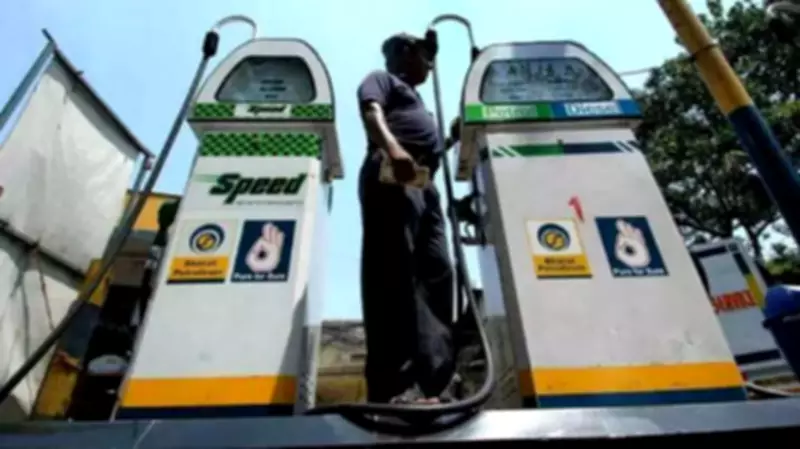
As geopolitical tensions escalate in the Middle East with recent attacks involving Israel, the US, and Iran, global crude oil prices have surged dramatically. Brent crude has jumped 16.8% and WTI crude by 14% following these developments, sparking widespread concerns about potential fuel price increases worldwide. However, in a significant relief for Indian consumers, retail petrol and diesel prices across major cities have remained unchanged, defying the global trend.
Government Strategy Shields Consumers from Price Hikes
According to government sources cited by PTI, consumers can breathe a sigh of relief as fuel prices are not expected to rise in the immediate future. The government is reportedly implementing a calibrated strategy that allows oil marketing companies (OMCs) to improve their profit margins when international crude prices are low, while simultaneously shielding consumers when global prices increase. This approach has created a crucial buffer against market volatility.
How Oil Marketing Companies Are Absorbing the Impact
A Nomura report provides detailed insight into the current situation. The analysis reveals that OMCs are likely to absorb part of the global price increase rather than passing it fully to consumers. This capability stems from the government's earlier decision not to reduce retail petrol and diesel prices when global crude prices had fallen, which created financial resilience within the companies.

The report explains that in theory, a 10% jump in global crude prices could add approximately 50 basis points to inflation if the entire increase were passed on to consumers, compared to earlier estimates of 30 basis points. However, such immediate pass-through rarely occurs in practice. "Retail prices of petrol and diesel are unofficially pegged, with OMCs absorbing the impact through their balance sheets," the report noted, highlighting the strategic management of fuel pricing in India.
Current Fuel Prices Across Major Indian Cities
As of March 5, 2026, petrol and diesel prices in key metropolitan areas remain stable despite the global turmoil:
- New Delhi: Petrol at Rs 94.77 per litre, Diesel at Rs 87.67 per litre
- Hyderabad: Petrol at Rs 107.46 per litre, Diesel at Rs 95.70 per litre
- Bengaluru: Petrol at Rs 102.92 per litre, Diesel at Rs 90.99 per litre
- Chennai: Petrol at Rs 100.84 per litre, Diesel at Rs 92.39 per litre
- Kolkata: Petrol at Rs 105.45 per litre, Diesel at Rs 92.02 per litre
- Lucknow: Petrol at Rs 94.69 per litre, Diesel at Rs 87.81 per litre
- Jaipur: Petrol at Rs 104.72 per litre, Diesel at Rs 90.21 per litre
Broader Context of Middle East Developments
The fuel price stability comes against a backdrop of significant Middle East developments. Recent reports indicate Iran has criticized the US following naval incidents, while the US has released footage claiming to show the initial phases of conflict operations. Meanwhile, eyewitness accounts from Dubai describe missile strikes occurring kilometers away, illustrating the regional volatility that typically drives global oil markets.
This situation demonstrates how India's strategic fuel pricing mechanism provides insulation from international crises, offering economic stability during periods of global uncertainty. The approach balances consumer protection with the operational needs of oil marketing companies, creating a buffer against inflationary pressures that might otherwise affect the broader economy.