

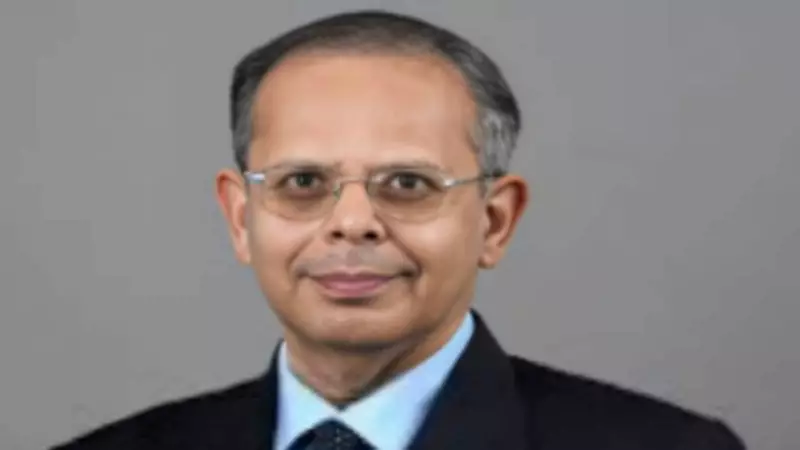
India's economic growth is expected to moderate in the coming quarters as inflation gradually moves closer to the central bank's target of 4%, according to a key member of the Reserve Bank of India's rate-setting panel. Saugata Bhattacharya, one of the three external members of the Monetary Policy Committee (MPC), stated that the Gross Domestic Product (GDP) growth 'prints' will slow in alignment with official forecasts.
Inflation Normalization to Guide Growth Trajectory
In an exclusive interview, Bhattacharya highlighted the direct link between cooling inflation and economic expansion. Consumer Price Index (CPI) inflation is projected at 2% for the financial year 2025-26 (FY26). For the subsequent year (2026-27), inflation is expected to rise to 3.9% in the first quarter (Q1) and 4% in Q2. The RBI operates under a flexible inflation targeting regime, mandated to maintain inflation at 4% with a tolerance band of +/- 2%.
"Now that inflation is forecast to gradually normalise towards the target over the next few quarters, GDP growth 'prints' will also slow in line with the forecasts in the MPC resolution," Bhattacharya told The Indian Express, clarifying that his views are personal and not representative of the entire MPC.

Detailed GDP Growth Projections
The growth moderation follows an unexpectedly strong performance in the first half of the current fiscal year. After averaging a robust 8% in H1 of FY26, real GDP growth is likely to decelerate to close to 7% in the second half. The RBI's detailed projections estimate Q3 growth at 7% and Q4 at 6.5% for FY26.
Looking ahead to FY27, the central bank anticipates growth rates of 6.7% in Q1 and 6.8% in Q2, as announced during its December monetary policy meeting. Bhattacharya attributed the earlier high growth to effects of lower-than-forecast CPI and occasional negative Wholesale Price Index (WPI) inflation, which created some ambiguity in interpreting underlying economic activity.
No Overheating Concerns, Policy Stance Evaluated
Addressing concerns that recent policy support could re-ignite inflation risks amid a weaker rupee and volatile crude oil prices, Bhattacharya, who is also a Senior Fellow at the Centre for Policy Research, sees little evidence of an overheating economy. He pointed to manufacturing capacity utilization levels, which have remained around 74-75% for many quarters.
"These levels are lower than the around 80% I have seen in the past, giving pricing power to producers," he explained. He added that merchandise import data suggests external supply is contributing to this 'overcapacity'. He also noted stable metal prices and an expectation for crude oil to hover around $60 per barrel, barring geopolitical shocks.
Earlier in December, the six-member MPC had reduced the repo rate by 25 basis points to 5.25% to support growth. When questioned about the potential for further rate cuts, Bhattacharya emphasized the difficulty of providing forward guidance due to prevailing uncertainties.
"The decision at each meeting will be based on the available data, evaluating the emerging risks, and proceed meeting by meeting," he stated. However, he affirmed that the current policy interest rate is consistent with achieving 'macroeconomic stability'.
Commenting on recent economic indicators, Bhattacharya observed that high-frequency data suggests a slight moderation in economic momentum, largely in trade-related sectors, which appears to be transient in nature.






