

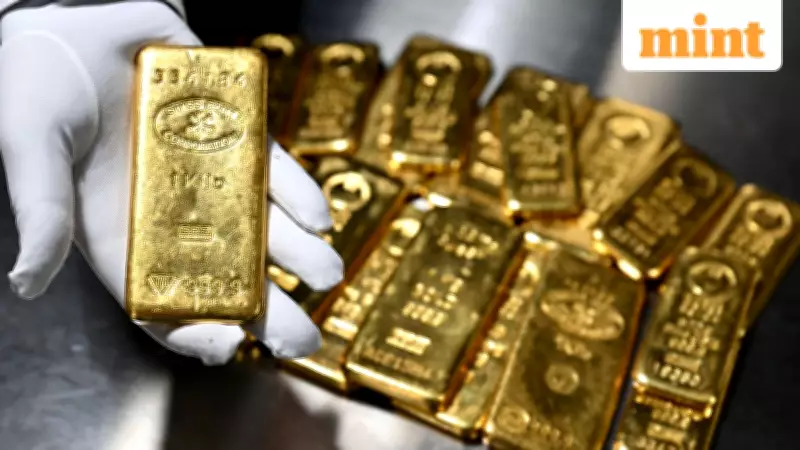
Global Gold Demand to Remain Strong as Investors Reassess Risk, WGC Says
The World Gold Council (WGC) has projected that global demand for gold will continue to be robust throughout 2026, fueled by a combination of lower interest rates, uncertainty in bond markets, and persistent geopolitical risks. This forecast comes as bullion prices recently crossed the $5,000 per ounce mark for the first time, signaling renewed investor interest in the precious metal as a safe-haven asset.
Factors Driving Gold's Appeal
In its quarterly report released on Thursday, the WGC highlighted that gold's role as an all-weather hedge compared to fixed-income investments is expected to attract significant investor demand well into 2026 and possibly beyond. Joseph Cavatoni, senior market strategist at the WGC, noted that investors across major economies are increasingly concerned about stressed global economic conditions and the stability of fiat currencies. This has prompted a reassessment of risk, diversification strategies, and wealth preservation methods, with gold gaining renewed attention as a key component in investment portfolios.
"Investors around major nations are having questions and concerns around their economic conditions," Cavatoni stated. "I think that's what's helping all the other factors that we know…political tensions, geopolitical tensions, trade relations."

Record-Breaking Performance and Price Forecasts
Gold has experienced a remarkable rally over the past year, bolstered by central-bank purchases and strong inflows into exchange-traded funds (ETFs) as investors shift away from sovereign bonds and currencies in favor of hard assets. In 2025, gold gained nearly 65%, marking its strongest annual performance since 1979. Recently, gold futures in New York climbed above $5,200 per troy ounce, with an intraday high of $5,306 after the U.S. dollar fell to a nearly four-year low, making gold more affordable for holders of other currencies.
This surge has led major financial institutions to revise their price forecasts upward:
- Societe Generale and Deutsche Bank predict gold could reach $6,000 per ounce this year.
- Morgan Stanley expects prices to climb to $5,700 per ounce in the second half of 2026.
- Goldman Sachs forecasts $5,400 per ounce by December 2026.
Demand Trends and Market Dynamics
The WGC anticipates another year of continued central-bank purchases, strong ETF inflows, and solid demand for bars and coins due to ongoing economic and geopolitical uncertainty. Mine supply and gold recycling are expected to remain broadly in line with last year's levels, with high margins encouraging production. However, jewelry spending is likely to hold up, though higher prices may limit the volume buyers can purchase.
Global gold demand accelerated in the fourth quarter of 2025, reaching 1,303 tons on the back of hefty ETF inflows and bar and coin buying, which hit a 12-year high. Total gold demand in 2025, including over-the-counter transactions, exceeded 5,000 tons for the first time, according to the WGC. Holdings of gold-backed ETFs surged to an all-time high last year, while central-bank purchases picked up in the fourth quarter.
Central Banks and Jewelry Demand
Despite the strong demand, higher valuations have encouraged a more cautious pace of buying by central banks, underscoring their sensitivity to price levels even as their long-term strategic interest in gold remains intact. "I think it is important that central banks are pretty savvy around where their entry point is," Cavatoni explained. "If they're running up against the 22% price increase year-to-date, they may pull down their buying programs to see if they can buy a dip, or they can buy when prices stabilize."

On the jewelry front, demand volumes declined across all major markets, reflecting the impact of high prices. "When things get expensive, it's not a surprise for us to see tonnage down, particularly in India and China," Cavatoni noted. In these markets, gold jewelry continues to serve as a form of savings, but the slowdown is more visible in fabrication and retail, where high prices have made retailers cautious about holding large inventories, leading to scaled-back upfront purchases. "The dollar value is still there, so we're not concerned about the jewelry space just yet," he added.
Overall, the WGC's analysis suggests that gold will remain a critical asset for investors seeking stability amid global uncertainties, with demand expected to stay strong in the coming year.





