

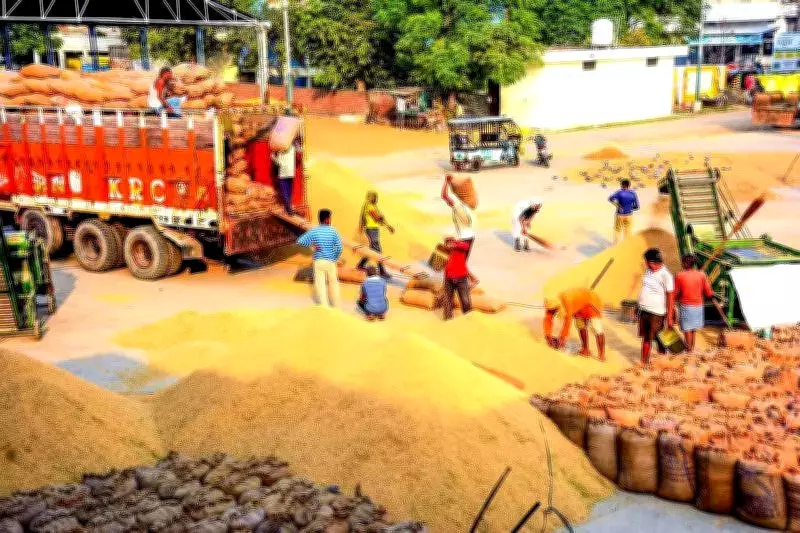
Haryana's Rs 5,000 Crore Fake Paddy Scam Sparks Urgent CBI Probe Demands
As the Central government initiates an investigation into the massive Rs 10,000-crore fake paddy procurement scam in Punjab, parallel allegations have emerged in Haryana, revealing a similar fraudulent scheme estimated at over Rs 5,000 crore. This has triggered immediate and forceful demands from farmer bodies and whistleblowers for a comprehensive Central Bureau of Investigation (CBI) probe to uncover the full extent of the corruption.
Allegations of Large-Scale Fund Misappropriation
Farmer organizations and whistleblowers have accused a network of commission agents (arthiyas), rice millers, and officials from procurement agencies of colluding in a sophisticated scam. They allege widespread misappropriation of Central government funds through forged procurement records, fake sale vouchers known as J-Forms, and illegal trading practices within Agricultural Produce Market Committee (APMC) mandis. According to detailed representations by Dr. Virender Singh Lather, a former Principal Scientist at the Indian Council of Agricultural Research (ICAR), the modus operandi in Haryana closely mirrors the fraudulent activities recently uncovered in Punjab.
Discrepancies in Procurement Data Raise Red Flags
Official records indicate that during the Kharif 2025 season, more than 62 lakh tonnes of paddy were reportedly procured in Haryana. This figure is nearly 8 lakh tonnes higher than the 54 lakh tonnes procured in the Kharif 2024 season. However, this surge in procurement has raised serious concerns among agricultural experts and farmers, who reported a significant 10–15 per cent decline in crop yields due to adverse weather conditions. Untimely rains, widespread flooding, and crop diseases such as dwarfing virus and loose smut affected production between August and October 2025.

Agricultural data further complicates the narrative. Paddy was cultivated over approximately 15.5 lakh hectares in Haryana, with nearly half of this area dedicated to basmati variety, which is not procured at the Minimum Support Price (MSP). The remaining 7.5 lakh hectares of parmal paddy could have yielded around 48 lakh tonnes, based on an average productivity of 6.2 tonnes per hectare. Despite this, procurement agencies allegedly recorded purchases exceeding actual production by over 14 lakh tonnes, leading to an estimated loss of Rs 3,300 crore to the Central exchequer at the MSP rate of Rs 2,390 per quintal.
Mechanics of the Alleged Fraud
The scam reportedly involved the use of fake gate passes, forged J-Forms, and illegal 'Kachchi Parchi'—informal sale slips that bypass official channels. Farmers' bank accounts were allegedly used as conduits to route government payments. After MSP amounts were credited through Direct Benefit Transfer (DBT), commission agents are said to have recovered large sums in cash from farmers, generating unaccounted and tax-free money. This practice not only defrauded the government but also inflicted additional financial losses on farmers, estimated at nearly Rs 400 per quintal, amounting to over Rs 2,000 crore, even when their produce was already procured at MSP.
Historical Context and Legal Interventions
This is not the first instance of such fraudulent activities in Haryana. Fake paddy procurement scams have been repeatedly reported since 2014, with little to no stringent action taken against those involved. For example, during the Kharif 2020 season, Haryana allegedly procured 65 lakh tonnes of paddy against an estimated production of only 50 lakh tonnes, highlighting a persistent pattern of discrepancies.
In a significant legal development, the Punjab and Haryana High Court, while hearing a Public Interest Litigation on January 27, 2026, directed the Haryana government to decide within 30 days on prohibiting illegal 'Kachchi Parchi' trading in APMC markets. The court also mandated strict enforcement of the APMC Act, 1961, which requires immediate issuance of J-Forms and full payment after sale and weighment.

Broader Implications and Calls for Action
The petitioner in the case has claimed that similar illegal practices are prevalent in Punjab and other states, undermining transparency and defeating the core purpose of the MSP regime. Citing the staggering magnitude of the alleged fraud—combining to Rs 15,000 crore across Punjab and Haryana—the petitioner has urgently appealed to the Centre to order a CBI inquiry. This matter is framed as one of grave public interest, with far-reaching implications for farmers' livelihoods, public finances, and national food security.
The unfolding scandal underscores the critical need for robust oversight and accountability in agricultural procurement systems to protect both government resources and the welfare of farmers across India.





