

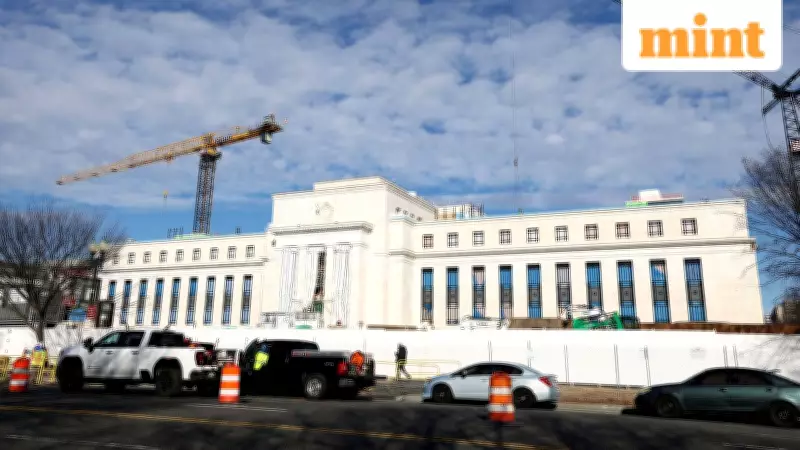
Presidential Pressure on Federal Reserve Chairs: Three Historical Lessons for Trump and Warsh
President Donald Trump has made his expectations clear for his newly appointed Federal Reserve chair, Kevin Warsh, particularly regarding interest rate reductions. However, history provides stark warnings about how presidential attempts to influence Fed leadership can lead to significant political and economic consequences. Three distinct historical precedents illustrate the potential pitfalls awaiting presidents who believe they can control monetary policy through their appointments.
The Nixon-Burns Inflation Debacle
President Richard Nixon's relationship with Fed Chair Arthur Burns serves as the classic cautionary tale. At Burns's 1970 swearing-in ceremony, Nixon joked about expecting "lower interest rates and more money" while publicly claiming to respect the Fed's independence. Burns, who had served as Nixon's longtime economic adviser, delivered precisely what the president wanted ahead of the 1972 election by maintaining artificially low interest rates.
The consequences were severe: Inflation skyrocketed from below 4% in 1972 to over 12% by 1974. The Federal Reserve was forced to implement sharp rate increases, triggering a punishing recession that coincided with Nixon's resignation over the Watergate scandal. Although inflation initially moderated, the Fed subsequently lost its resolve and abandoned tight monetary policies, allowing inflation to rebound dramatically.

The Carter-Miller Institutional Clash
President Jimmy Carter's experience with Fed Chair G. William Miller demonstrates how institutional dynamics can undermine presidential expectations. Carter believed he was appointing a cooperative corporate executive when he nominated Miller in late 1977. Miller had successfully led industrial conglomerate Textron for more than a decade but quickly found himself at odds with the Federal Reserve's established culture.
"Bill Miller had a terrible time—particularly, his first four or five months—because it didn't occur to him that he had to get a majority," recalled former Fed Governor Nancy Teeters in a 2008 interview. "He thought he could tell us what to do, and we'd do it. And we said, 'Huh?'"
Miller's early missteps included voting with the minority against raising interest rates during one of his first meetings, a move that destroyed confidence in his leadership. After just seventeen months, Carter reassigned Miller to the Treasury Department and appointed Paul Volcker as Fed chair. Volcker's aggressive rate hikes ultimately broke inflation but contributed to a recession that helped end Carter's presidency.
The Truman-Martin Independence Standoff
President Harry Truman's experience with William McChesney Martin Jr. reveals how even seemingly loyal appointees can assert independence. When Truman appointed Martin in 1951 following the Treasury-Fed accord that granted the central bank greater autonomy, Washington insiders assumed the Treasury was installing its own representative. However, Martin immediately established his independence during a White House meeting before accepting the position.
When Truman asked for a commitment to maintain stable interest rates, Martin refused to comply, stating that markets "will not wait on kings, prime ministers, presidents, secretaries of the Treasury, or chairmen of the Federal Reserve." Truman appointed him anyway but quickly regretted his decision as the Fed continued raising rates. Their relationship deteriorated so severely that when they encountered each other on the street in 1952, Truman responded to Martin's greeting with a single word: "Traitor!"
Contemporary Parallels with Warsh and Trump
Kevin Warsh arrives at the Federal Reserve with significant advantages over Miller, having served five years on the board during the financial crisis and possessing deep institutional knowledge. However, he faces similar challenges regarding credibility with his colleagues. Warsh built his reputation as an inflation hawk who warned for years about the dangers of easy money policies, yet he now finds himself appointed by a president expecting interest rate reductions despite inflation remaining above the Fed's 2% target.
Several factors complicate Warsh's position:

- His previous policy inconsistencies, including voting for quantitative easing in 2010 then publicly questioning the decision days later
- Skepticism from current Federal Open Market Committee members about his sudden conversion to supporting lower rates
- The delicate balance between maintaining Fed independence and managing presidential expectations
Former New York Fed President William Dudley noted that while Warsh is "very poised," he may struggle initially to "win the hearts and minds of the Fed staff and the FOMC" due to what some perceive as underdeveloped policy ideas. Minneapolis Fed President Neel Kashkari, a current FOMC voting member, has previously criticized Warsh's policy inconsistencies publicly.
The Tightrope of Central Bank Independence
Warsh himself has previously articulated the importance of Federal Reserve independence, stating in a 2010 speech that "the only popularity central bankers should seek, if at all, is in the history books." Now he must navigate the delicate balance between preserving institutional autonomy and managing presidential expectations.
Former economic advisor Daleep Singh observed that Warsh is "genuinely, sincerely committed to the Fed remaining a respected and independent institution," but noted that "if preserving the institution's autonomy puts him at odds with Trump, Warsh risks Powell's fate." The reference to current Fed Chair Jerome Powell is particularly relevant, given Trump's public attacks on Powell and the Justice Department's criminal investigation into his conduct.
At the World Economic Forum last month, before announcing his Fed chair selection, Trump mused about how central bankers can disappoint presidents once appointed, stating "It's amazing how people change once they have the job." The historical record suggests this observation contains more truth than perhaps even Trump realizes, as the experiences of Nixon, Carter, and Truman demonstrate that attempts to control monetary policy through Fed appointments often produce unintended and damaging consequences for both presidents and the nation.





