

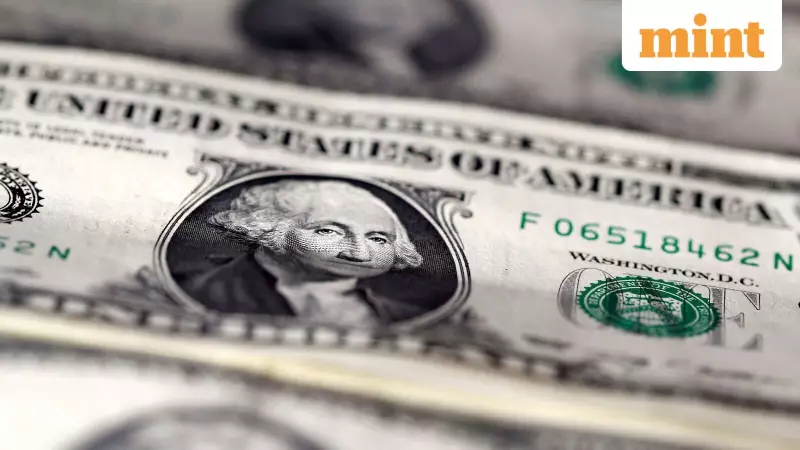
For decades, a simple rule held true in global finance: when panic struck, investors rushed to the safety of the US dollar and American government bonds. This dynamic reinforced the greenback's unshakeable position at the heart of the world economy. However, a startling shift is now underway, driven by the policies of President Donald Trump's administration, making the dollar look vulnerable for the first time in generations.
A Broken Financial Relationship
The recent market turmoil, sparked by a significant escalation in American tariffs, has broken this historical pattern. In past crises, like 2008 and 2020, a falling stock market saw the dollar rise as investors sought refuge in US Treasuries. This time is different. Investors are now eschewing US debt, causing yields on 10-year Treasury bonds to climb from 4.2% to 4.5% in a month. Simultaneously, the US Dollar Index has plunged over 9% since its mid-January peak.
This breakdown reflects deep unease with the current American government's approach. President Trump's aggressive trade policies, coupled with administrative unpredictability and even skepticism from some advisors about the dollar's global role, have spooked foreign investors. Their confidence is critical, as they hold a staggering $32 trillion in American stocks and bonds. This overseas demand has long provided America with an "exorbitant privilege," keeping interest rates low on its massive debt and supporting its markets.

The Global Rush to Diversify
Once a far-fetched idea, the potential decline of dollar dominance is now being taken seriously in financial capitals worldwide. Central banks, in particular, have been preparing. The dollar's share of global reserves has dropped from 73% in 2001 to 58% today. Diversification is not just into other currencies like the Australian dollar or Swiss franc, but also into gold, with central banks buying over 1,000 tonnes annually for the past three years.
Gary Smith of Columbia Threadneedle Investments, who advises central banks, notes this trend will only accelerate. He had previously expected a ten-percentage-point decline in the dollar's reserve share over the next decade but now believes that was a "sizeable underestimate." The sentiment is echoed by Huw van Steenis of Oliver Wyman, who states that international investors are "fretting about the end of US hyper-exceptionalism" and that the need for better diversification will be a lasting conclusion.
Even a marginal reduction in dollar dominance spells trouble for US finances. With a budget deficit at 7% of GDP and a ballooning interest bill, higher bond yields—driven by weaker foreign demand—could create profound fiscal challenges. This comes as Congress approved a budget plan on April 10th that could add $5.8 trillion to deficits over ten years, a sum larger than major spending bills of recent years combined.
No Heir Apparent to the Greenback
While investors seek alternatives, they face a dilemma: the dollar has no clear successor. The euro, once a contender, is held back by structural issues in its debt markets and political fragmentation. Germany's safe debt market is only about one-twelfth the size of America's. The Chinese yuan, despite China's economic size, remains a distant prospect, comprising just over 2% of global reserves. China shows no intent to relax capital controls, and state interference in the private sector deters foreign investment.
Instead of challenging the dollar directly, China is building parallel systems, like its own cross-border payment platform, to reduce reliance on Western financial networks like SWIFT. According to Martin Chorzempa of the Peterson Institute, these efforts may not dethrone the dollar but could limit its influence outside the West, offering an alternative to sanctioned nations.
The ultimate risk is a fragmented global financial system. Without a true successor currency, the world could splinter into competing currency blocs, with less efficient trade, capital barriers, and a lack of safe assets rivaling US Treasuries. The recent market volatility offers a preview of this future—and it is an unsettling one. The era of unquestioned dollar supremacy, a cornerstone of the modern economic order, is facing its most serious test in eighty years.






