

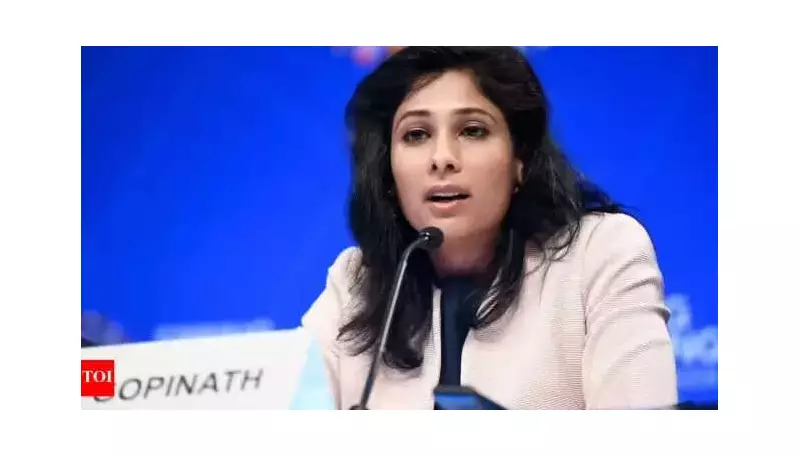
In a significant development for the Indian economy, former International Monetary Fund (IMF) deputy managing director Gita Gopinath indicated that the global financial body is poised to significantly raise its growth projection for India. Speaking on Wednesday, the Harvard University professor of economics stated the IMF is likely to revise its forecast for India's GDP growth in the current fiscal year closer to the 7% mark.
Revised Forecasts Follow Robust Q2 Growth
Gopinath's prediction comes on the heels of India's impressive 8.2% GDP expansion in the July-September quarter of 2024. She pointed out that the IMF's last revision in October, which set growth for 2025 at 6.6%, was made before these powerful second-quarter numbers were released. "I expect they will move up to 7% the next time they come up with their numbers," Gopinath affirmed, adding that India's economic performance has surpassed pre-crisis predictions.
This anticipated upgrade aligns with a broader trend. Following the stellar Q2 data, several multilateral agencies, brokerage firms, and independent economists have already upwardly revised their GDP growth projections for India for the fiscal year 2025-26.

Global Resilience and the AI Offsetting Effect
Gopinath also provided a global context, noting the world economy has shown considerable resilience since the imposition of widespread tariffs. She identified a key factor behind this unexpected strength: artificial intelligence (AI). "I believe artificial intelligence has been a big offset for tariffs around the world. The spending on it has supported growth everywhere," she explained.
However, she cautioned against interpreting this resilience as a sign that high tariffs are harmless. "I don't think the lesson to take away is that high levels of tariffs are not a problem for the world. They are consequential," Gopinath stated. She warned that the geoeconomic environment would continue to exert a drag on growth for the next couple of years.
US Tariffs Near Their Peak, Says Economist
Delving into the specifics of US trade policy, a major source of global tariff tensions, Gopinath offered a nuanced perspective. She argued that from a US standpoint, the nation is "past peak tariffs" for several compelling reasons.
First, the 2026 midterm elections in the US are a crucial political factor. "I don't think there's anybody who wants to have a lot of uncertainty in the run up to the elections," she noted, suggesting a political incentive for stability. Second, the economic impact at home is acting as a deterrent. Gopinath revealed that tariffs have raised prices in the US and pushed up inflation by approximately 0.7 percentage points, creating affordability issues that dampen public support for further increases.
Finally, she highlighted ongoing legal challenges within the US against the tariffs, which she believes will help scale them back. Concluding her analysis on US policy, Gopinath said, "So, from the US tariff perspective, I suspect we are, if not past the peak, but definitely close to the peak."
The combined insight points towards a favorable near-term outlook for India, powered by strong domestic growth drivers and a global landscape where the negative impact of trade barriers is being partially counterbalanced by technological investment.






