

India Takes Emergency Steps to Secure Cooking Gas Supply Amid Global Turmoil
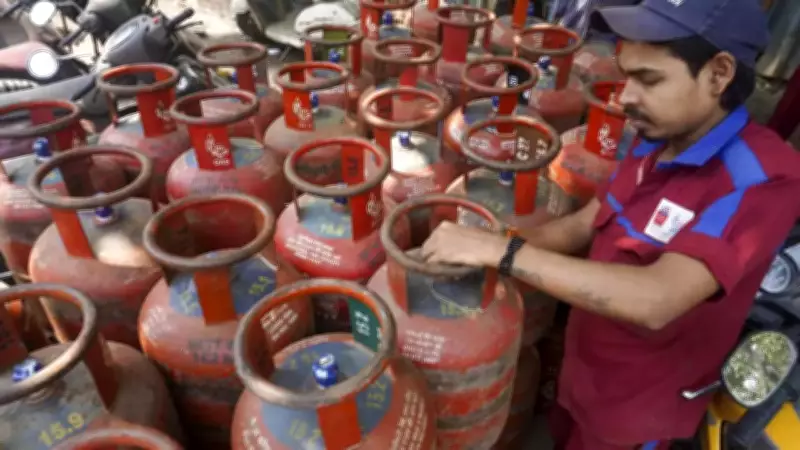
In a decisive move to safeguard domestic energy security, the Indian government has invoked its emergency powers to direct oil refiners across the nation to significantly ramp up production of Liquefied Petroleum Gas (LPG), commonly known as cooking gas. This urgent directive, issued late on Thursday, aims to prevent any potential shortage for households as supply chains face severe constraints due to the ongoing military conflict in West Asia.
Critical Dependence on Imports Through Disrupted Routes
The necessity for this intervention stems from India's heavy reliance on imported LPG, which constitutes over 60% of the country's total domestic requirement. A staggering 85-90% of these crucial imports traditionally transit through the Strait of Hormuz, a vital maritime chokepoint currently experiencing significant disruption. This vulnerability threatens the steady flow of supplies essential for millions of Indian kitchens.
Official data highlights the scale of the challenge: during the 2024-25 period, India's total LPG consumption reached 31.3 million tonnes. However, domestic production accounted for only 12.8 million tonnes, leaving a substantial deficit that must be filled through international imports now under threat.

Government Directive to Maximize Domestic Output
Leveraging India's surplus oil refining capacity, the Ministry of Petroleum and Natural Gas issued a formal order on March 5. This order, enacted under the powers granted by the Essential Commodities Act of 1955, mandates that all public and private sector oil refineries must prioritize and maximize the production of LPG. Specifically, they are required to utilize all available propane and butane streams—the primary components of LPG—whether produced, recovered, or fractionated within their facilities.
The directive explicitly states that these hydrocarbon streams must be supplied exclusively to the three major public sector oil marketing companies: Bharat Petroleum Corporation Limited (BPCL), Indian Oil Corporation Limited (IOCL), and Hindustan Petroleum Corporation Limited (HPCL). Furthermore, in a significant shift, refiners are now prohibited from diverting propane or butane for the manufacture of petrochemicals or other downstream derivatives. The order warns that any contravention will attract strict penal action.
Safeguarding Supply for 33 Crore Households
The primary objective of this emergency measure is to ensure an uninterrupted supply of cooking gas to India's vast consumer base, which includes approximately 33.1 crore active LPG users. Officials emphasize that the additional LPG procured by the oil marketing companies under this order is to be sold strictly for domestic household cooking purposes, reinforcing the government's commitment to protecting essential consumer needs.
Diversifying Import Sources and Managing Natural Gas
Beyond boosting domestic production, the government is actively pursuing a multi-pronged strategy to mitigate risks. Authorities are scouting for LPG supplies from regions outside the immediate conflict zone. In a strategic move to diversify energy sources and bolster long-term security, India has recently finalized an LPG import contract with the United States. Cargoes have already begun arriving, and public sector companies are set to import 2.2 million tonnes of LPG from the US Gulf Coast by 2026—a volume equivalent to roughly 10% of the nation's annual LPG imports.
Simultaneously, gas companies are re-prioritizing the distribution of natural gas, another critical fuel. The focus is on ensuring uninterrupted supply to vital sectors including automobile fuel (CNG), household kitchens (PNG), and the fertilizer industry. India's current natural gas consumption stands at about 195 million metric standard cubic meters per day, with imports meeting more than half of this demand.
The global supply chain for natural gas is also under strain. With Qatar—a primary supplier—having shut down a key LNG production facility and shipments through the Strait of Hormuz blocked, an estimated 60 million metric standard cubic meters per day of supplies are currently unavailable. This has compelled Indian companies to urgently source alternative cargoes from other global markets to bridge the gap.






