

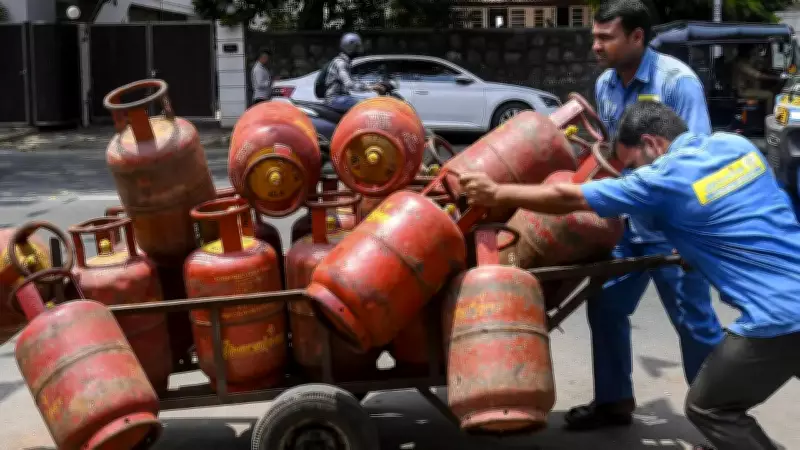
India's LPG Supply in Crisis as Imports Plummet Over 40% Amid Global Turmoil
India is grappling with a severe liquefied petroleum gas (LPG) supply crisis, triggered by geopolitical tensions in West Asia that have disrupted global shipments and led to a sharp decline in imports. According to recent data, LPG imports dropped to approximately 1.22 million tonnes in March, marking a staggering 46% decrease from January and a 40% fall from February. This significant reduction is directly linked to the conflict involving Iran, which has severely impacted maritime traffic through the Strait of Hormuz, a critical route responsible for nearly one-third of global LPG exports.
Global Supply Shifts and Domestic Shortfalls
Traditional suppliers to India, including the United Arab Emirates, Qatar, Kuwait, and Saudi Arabia, experienced substantial declines in their shipments. Collectively, these countries accounted for only 55% of India's LPG imports in March. In a notable shift, the United States emerged as the largest supplier during this period, while Iran resumed its shipments after a hiatus of nearly seven years, providing some relief but failing to fully compensate for the overall shortfall.
Despite concerted efforts to boost domestic LPG production by around 40% and redirect hydrocarbon streams towards LPG output, the gap between supply and demand persists. The government has begun to reverse some of these measures due to competing industrial demands, exacerbating the supply crunch. With imports meeting nearly 60% of India's total LPG consumption, the repercussions of this shortage are cascading across multiple sectors.

Impact on Food and Hospitality Industries
The crisis is most acutely felt in the food and hospitality industry, where rising commercial LPG prices have forced many establishments to implement drastic measures. The cost of a 19-kg commercial LPG cylinder has surged from approximately Rs 1,765 in February to nearly Rs 2,035 in April, following two consecutive price hikes. This financial strain has compelled eateries, particularly small and mid-sized ones, to either increase menu rates, cut operational costs, or scale down their activities.
In states like Kerala, the shortage has already led to reduced operations and temporary shutdowns, disrupting daily food supply chains and affecting local economies. Small vendors and roadside stalls, which operate on thin profit margins, are among the worst hit, struggling to maintain their businesses amidst escalating fuel costs.
Urban Transport and Auto LPG Shortages
Urban transport, especially in cities like Bengaluru, has been severely impacted by an acute shortage of auto LPG. Autorickshaw drivers are facing immense challenges, with many spending four to five hours in long queues at fuel stations, where lines sometimes stretch over a kilometer. Several outlets have reported "no stock" situations, forcing drivers to move between stations or rely on informal networks for updates on availability.
The shortage, coupled with LPG prices reaching as high as Rs 120 per litre in parts of Bengaluru, has severely impacted drivers' earnings. Many report losing half their working day waiting for fuel, while fares on aggregator platforms remain unchanged. This situation has also adversely affected commuters, leading to longer waiting times and reduced ride availability, further straining urban mobility.
Government Response and Enforcement Actions
Authorities have stepped up efforts to mitigate the crisis. Indian Oil has increased distribution across Karnataka, but demand continues to outpace availability. In response to emerging instances of black marketing and illegal refilling, stricter enforcement measures have been implemented. For example, raids in Delhi and other regions have led to seizures of LPG cylinders, with officials reiterating a zero-tolerance stance towards such activities.
In Koraput district, 51 cylinders were seized during raids at three locations, highlighting ongoing efforts to curb misuse of subsidised domestic gas for commercial purposes. Similarly, in Sirsa, eight LPG cylinders were confiscated from a store to prevent potential black-marketing. These actions underscore the administration's intensified campaign to ensure fair distribution and combat irregularities.

Political Controversies and Public Statements
The crisis has sparked political debates, with Senior Congress leader Kamal Nath stating that there is no shortage of gas in the country but criticizing the government's arrangements as lacking. The BJP quickly used this statement to accuse the Congress of misleading the public and instilling fear for political gain. Union minister Jyotiraditya Scindia emphasized that Nath's remarks exposed what he called propaganda by the opposition regarding LPG availability.
Prime Minister Narendra Modi has called for an "all-out effort" to safeguard Indian citizens from the impact of the West Asia conflict and stressed the importance of a timely and authentic public information system to counter misinformation.
Adaptations and Community Resilience
Despite the challenges, some communities have shown resilience. In Goa, bakers managed to meet their annual production target of nearly one tonne of hot cross buns for Maundy Thursday by adapting to the shortage. Faced with nearly two weeks of commercial LPG unavailability, urban bakers transitioned to diesel-based induction cookers or electric ovens, ensuring output remained unaffected. This swift adaptation highlights the innovative approaches being taken to cope with the crisis.
Long-Term Implications and Policy Shifts
The LPG crunch underscores the vulnerability of supply chains to geopolitical shocks, with widespread consequences for livelihoods, small businesses, and urban mobility. In the long term, policy shifts such as phasing out LPG connections in areas with piped natural gas (PNG) infrastructure signal a transition towards alternative energy sources. However, in the short term, supply disruptions, rising costs, and operational challenges continue to strain both consumers and businesses, posing broader economic and social implications for India.
As the situation evolves, ongoing monitoring and enforcement will be crucial to manage the crisis and ensure equitable distribution of essential resources.





