

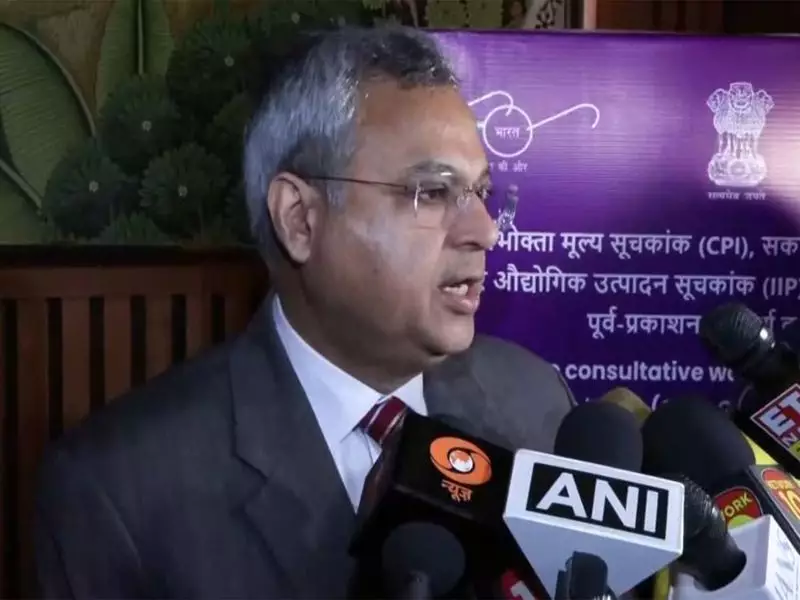
The Indian government has initiated a crucial update to the framework used to calculate the nation's economic growth. The Ministry of Statistics and Programme Implementation (MoSPI) is revising the base year for calculating the Gross Domestic Product (GDP) and other key economic indicators from the current 2011-12 to 2024-25. This move aims to create a more accurate and contemporary picture of the Indian economy by capturing the profound impact of the digital revolution and utilizing new, more reliable data sources.
Why the Base Year Revision is Critical
Secretary of MoSPI, Saurabh Garg, emphasized that the primary objective of this revision is to better reflect the structural changes in the economy over the past decade. The current base year of 2011-12 predates the massive expansion of India's digital and startup ecosystem, the widespread adoption of goods and services tax (GST), and the surge in digital transactions. The existing series, therefore, may not fully capture the contribution of these new-age sectors.
The new series will incorporate data from the GST network, the Ministry of Corporate Affairs (MCA), and other new-age sources, moving beyond traditional surveys. This shift is expected to provide a more comprehensive and real-time understanding of economic activity, especially in the services and corporate sectors. The revision process is a standard statistical practice followed every decade to ensure economic measurements remain relevant.

Key Changes and New Data Sources
The overhaul will extend beyond just changing a reference year. It involves a complete review of the methodology, the basket of goods and services considered, and their respective weights in the indices. A significant focus will be on integrating the digital economy, which includes e-commerce, fintech, and IT-enabled services, into the national accounts framework.
Garg highlighted that the use of GST data will offer a more robust and frequent measure of manufacturing and services activity. Similarly, data from the MCA will improve the coverage of the corporate sector. The National Statistical Office (NSO) is also working on developing new surveys and mechanisms to measure emerging economic activities that were negligible or non-existent in 2011.
Timeline and Implementation Process
The process for this major revision is already underway. The MoSPI has constituted internal committees and is in the process of engaging with external experts and stakeholders. The work on revising the Gross Value Added (GVA) and GDP estimates is being carried out simultaneously. The goal is to release the new series with the 2024-25 base year in the next few years, following extensive data collection and validation exercises.
This revision is not expected to alter the fundamental growth narrative of the Indian economy but will provide a more accurate and granular view. It will help policymakers, investors, and analysts make better-informed decisions based on data that mirrors the current economic structure.
Implications for Economic Policy and Analysis
The updated GDP series will have far-reaching implications. It will enable a truer assessment of sectoral contributions, such as the share of high-growth digital services versus traditional manufacturing. This clarity is vital for designing targeted policies and allocating resources efficiently.
Furthermore, international comparisons of economic size and growth rates will become more meaningful with a modernized data framework. The revision underscores India's commitment to strengthening its statistical system and embracing evidence-based governance. As the economy evolves, its measurement tools must evolve in tandem, and this base year revision is a decisive step in that direction.






