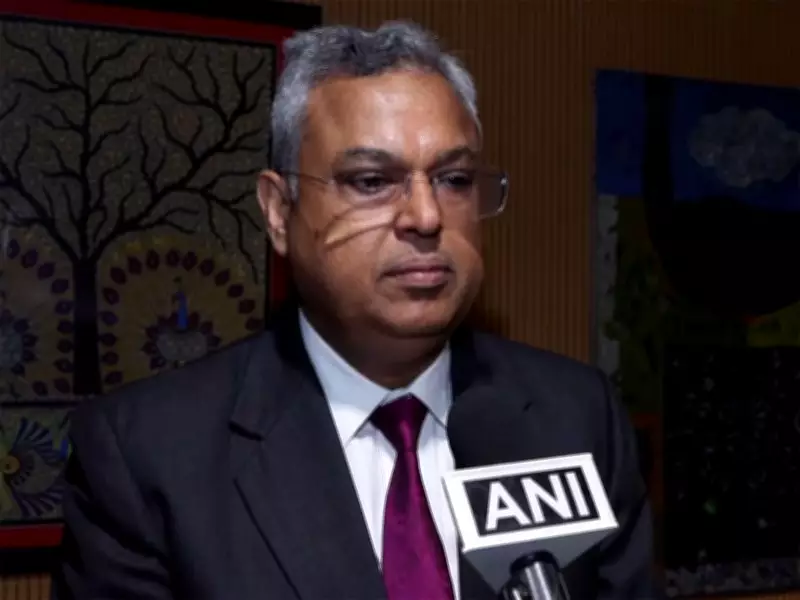
India's economy continues to demonstrate resilience despite global headwinds, with key economic indicators pointing to sustained growth, according to Saurabh Garg, Secretary in the Ministry of Statistics and Programme Implementation (MoSPI). In an exclusive interview with ANI on Monday, Garg highlighted that the Index of Industrial Production (IIP) for April stood at 4.9 percent, reflecting positive momentum.
IIP Data and Economic Outlook
Garg noted that the last quarter was extremely positive, and initial data releases for April, including the IIP, indicate continued strength. He refrained from anticipating the May IIP data, scheduled for release later that day, but expressed optimism: "All indications are that despite the global headwinds, the economy continues to do well and the resilience of the economy is coming out."
Speaking on the sidelines of the 20th Statistics Day celebrations in New Delhi, Garg underscored the theme "Unlocking the Potential of Administrative Data for Decision-Making," which focuses on leveraging the growing volume of government-generated data for evidence-based policymaking.

Resilience Amid Global Challenges
When asked about the impact of global geopolitical headwinds on the Indian economy, Garg stated that available data shows the economy remains extremely resilient. "Despite headwinds, it continues to grow well. I would just say that we hope that will continue. The future is looking bright," he said.
Garg attributed part of this resilience to the growth of Digital India over the past decade, which has generated vast administrative data sets that can be harnessed for policy decisions. He emphasized Prime Minister Narendra Modi's focus on data-driven decision-making, particularly in the context of achieving Viksit Bharat by 2047.
Harmonizing Administrative Data
MoSPI is working to harmonize administrative data across ministries and departments to ensure it is interoperable, machine-readable, and based on standard classifications. "On our part, the Ministry of Statistics is helping to ensure that the data is more harmonised so it is interoperable, it can speak to different datasets, it follows a standard classification and all the data is machine-readable," Garg explained.
This effort is crucial for enabling seamless data exchange and supporting more effective decision-making over the coming decade. Garg highlighted that the future possibilities of administrative data were a key discussion point at the Statistics Day event.
Technology in Official Statistics
Garg noted that MoSPI has completely moved away from pen-and-paper surveys and now conducts all field data collection through Computer Assisted Personal Interviewing (CAPI). Frontier technologies, including Artificial Intelligence (AI) and Machine Learning (ML), are also being deployed. Portals, mobile applications, and data visualization tools are making official statistics easier to access and understand.
"The technology should be such that it is intuitive, that people who do not have a knowledge of technology are able to understand the data, are able to visualise it and more effectively utilise it for day-to-day activities," he said.
Challenges and Priorities
On the challenges associated with administrative data, Garg identified data harmonization as one of the biggest tasks before the Ministry. Making datasets accessible, ensuring they are machine-readable, and enabling seamless data exchange across ministries and departments are among the other key priorities. MoSPI is working with state governments and other ministries to address these challenges and build a stronger data ecosystem for the future.