

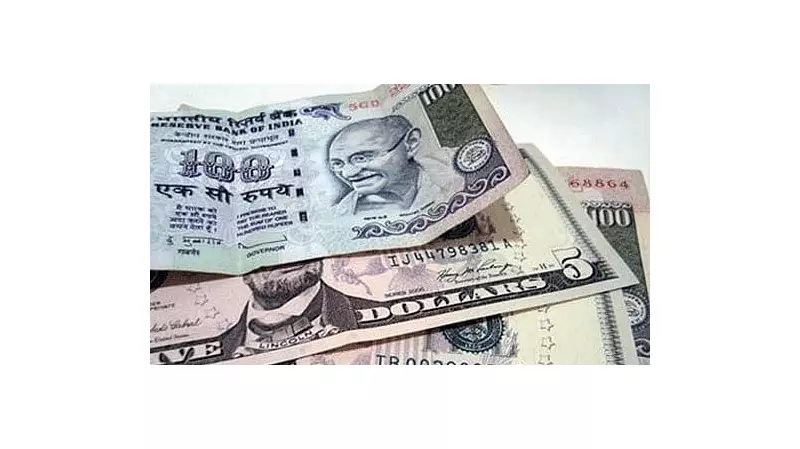
The Indian rupee is experiencing a significant and sustained depreciation against major global currencies, with analysts predicting that a swift recovery is not on the horizon. The currency's sharp decline is attributed to a confluence of domestic and international pressures, with recent tariff announcements from the United States being a prominent contributing factor.
Multiple Headwinds Weigh on the Currency
While America's tariffs have captured headlines, they represent just one piece of a complex puzzle. The rupee is being squeezed by a strong US dollar, elevated global crude oil prices, and persistent foreign portfolio investor (FPI) outflows from Indian equity markets. These outflows increase the demand for dollars as investors repatriate funds, directly putting downward pressure on the rupee's value. Furthermore, the widening trade deficit, where India's import bill outstrips its export earnings, continues to be a fundamental drag on the currency.
Why a Quick Bounce-Back Seems Unlikely
Financial experts and market observers suggest that the conditions for a rapid rupee rebound are not currently in place. The global macroeconomic environment remains challenging, with major central banks, particularly the US Federal Reserve, maintaining a hawkish stance on interest rates to combat inflation. This policy divergence, where US rates stay higher for longer, tends to attract capital back to dollar-denominated assets, thereby strengthening the dollar further against emerging market currencies like the rupee. The consensus is that the rupee's weakness may persist in the near to medium term until these global headwinds begin to subside.

Implications for the Indian Economy
A depreciating rupee has a mixed impact on the economy. On one hand, it makes imports more expensive, which can fuel domestic inflation, especially for critical items like oil, electronics, and edible oils. This poses a challenge for the Reserve Bank of India's inflation management goals. On the other hand, it makes Indian exports more competitive in the global market, potentially boosting sectors like information technology, pharmaceuticals, and textiles. However, the net effect is often negative in the short term due to the country's heavy dependence on imported energy.
The situation underscores the need for vigilant monitoring by policymakers. The focus will likely remain on building robust foreign exchange reserves to cushion against volatility and implementing measures to attract stable foreign investment flows to support the currency.






