

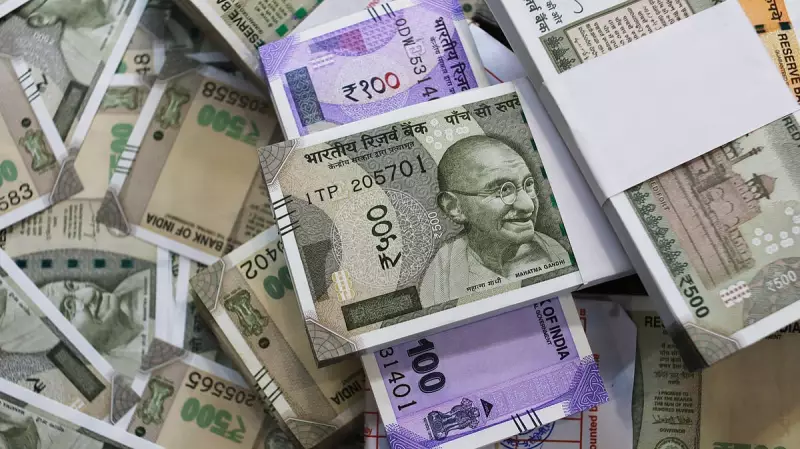
The year 2025 will be etched in the memory of forex traders and policymakers as a period of exceptional turbulence for the Indian rupee. The domestic currency witnessed its most volatile performance in recent history, navigating a perfect storm of global and domestic headwinds that sent it on a wild ride against the US dollar.
The Anatomy of the Rupee's Rollercoaster Year
The primary narrative of 2025 was the relentless strength of the US dollar, fueled by a hawkish US Federal Reserve. The Fed's commitment to tackling persistent inflation kept interest rates elevated, attracting global capital towards US assets and pressuring emerging market currencies like the rupee. This external pressure was the dominant force driving the rupee's depreciation for a significant part of the year.
Compounding this was a sharp widening of India's trade deficit. The nation's import bill, particularly for critical commodities like crude oil and gold, remained substantial. While software exports and remittance inflows provided a cushion, they were insufficient to fully offset the outflow from trade, putting further downward pressure on the currency's value.

Geopolitical tensions also played a crucial role in amplifying volatility. Conflicts in key regions and general risk aversion in global markets periodically triggered flight-to-safety movements. During these phases, investors rushed to park funds in the perceived safety of the US dollar, leading to sudden and sharp sell-offs in emerging market currencies, including the Indian rupee.
The RBI's Strategic Defence
In the face of this onslaught, the Reserve Bank of India (RBI) emerged as the key stabilizing force. The central bank deployed a multi-pronged strategy to manage the rupee's descent and curb excessive volatility. Its most visible tool was direct intervention in the spot and forward currency markets. By selling US dollars from its reserves, the RBI aimed to bridge the demand-supply gap and prevent disorderly market conditions.
The RBI's interventions, however, came at a cost, leading to a notable decline in India's foreign exchange reserves over the course of the year. Beyond direct action, the central bank also relied on verbal guidance and administrative measures to manage market expectations and discourage speculative bets against the rupee. This proactive and vigilant stance was widely credited with preventing a steeper and more chaotic fall in the currency's value.
Outlook and Implications for the Future
The extreme volatility of 2025 carries several important lessons and implications. For businesses, especially importers and exporters, it underscored the critical importance of robust forex risk management strategies. The year highlighted how external shocks can swiftly transmit to the domestic economy through the currency channel, affecting inflation, corporate earnings, and investment decisions.
Looking ahead, the rupee's trajectory in 2026 remains intricately linked to the path of the US Federal Reserve. Any signals of rate cuts could provide much-needed relief. Domestically, the focus will be on narrowing the trade deficit and attracting stable foreign investment flows. The RBI is expected to maintain its data-driven approach, prioritizing inflation control while using its reserves judiciously to smooth out undue volatility.
In conclusion, 2025 was a defining year that tested the resilience of the Indian rupee and the RBI's management framework. While the currency faced immense pressure, the systemic safeguards held firm. The experience has set the stage for a continued focus on building stronger external buffers and fostering a more resilient economic framework to weather future global financial storms.






