

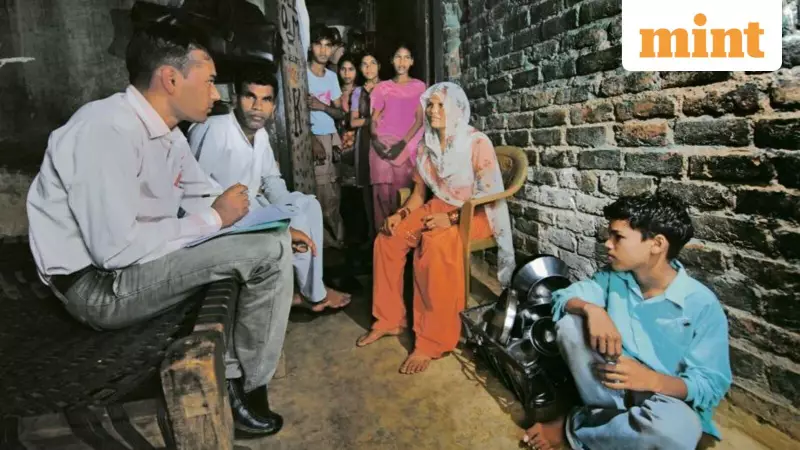
For decades, India's policymakers have navigated the complex landscape of poverty, inequality, and welfare with a crucial piece of the puzzle missing: accurate data on what households actually earn. The nation has long relied on consumption expenditure as its primary metric, but a transformative shift is on the horizon. The Ministry of Statistics and Programme Implementation (MoSPI) is gearing up for the landmark Household Income Survey 2026 (HIS), a national exercise designed to finally illuminate the true income patterns of Indian homes.
Why Measuring Income is a Game-Changer for India
Consumption data, while valuable, paints an incomplete picture. It often masks the true scale of inequality, as higher-income families tend to save a significant portion of their earnings, while lower-income households spend nearly all they earn. Income is the fundamental resource that enables saving, investment in education, insurance purchases, and resilience against economic shocks. By directly measuring income, the HIS 2026 will provide indispensable insights for critical policy questions. These include assessing the real reach of welfare transfers, understanding the true burden of taxation, identifying the drivers of inequality, and evaluating the financial fragility of different population groups.
This initiative is not India's first attempt to measure income. The National Sample Survey Organisation (NSSO) experimented with income modules in the early 1980s but faced conceptual and operational hurdles. However, the Indian economy has undergone a radical transformation since then, becoming increasingly driven by technology and services, with households diversifying their income sources. The time is now ripe for a renewed, official effort.

The Roadmap to HIS 2026: Methodology and Progress
To ensure the survey's robustness, MoSPI constituted a Technical Expert Group (TEG) comprising seasoned economists, statisticians, and survey methodologies. This group has been guiding the National Statistics Office (NSO) on every aspect, from sampling design and questionnaire architecture to field protocols and piloting strategy. The goal is to blend global best practices with India's unique economic context, which includes a vast informal sector.
Significant progress has already been made. The sampling design is finalized, and the core questionnaire has been refined through iterations. Structured pilot tests have yielded encouraging results, validating field protocols. The NSO is now deep into training enumerators and digitizing field processes to enhance accuracy and supervision. Full-scale fieldwork is scheduled to begin shortly, with the first set of national findings expected by September 2027. This timeline allows for thorough data processing, validation, and dissemination.
Learning from the Past, Building for the Future
While official surveys have lagged, other institutions have paved the way. Surveys like the NCAER's NSHIE (2005) and PRICE's ICE 360 have demonstrated that credible income estimation is possible in India, even within highly informal settings. They used techniques like source-specific questions, valuation of in-kind receipts, and cross-checks with expenditure. However, being outside the official system, these efforts were sporadic and lacked the continuity needed for long-term, comparable data. HIS 2026 aims to institutionalize this capability within the national statistical architecture.
International examples from countries like Brazil, Indonesia, and South Africa show the power of regular income surveys. They enable real-time monitoring of labour markets, inequality trends, and welfare outcomes, building public trust through consistency and transparency. For India, HIS 2026 will complement data from tax records and national accounts, offering a ground-level, granular view that administrative data often misses.

The success of this ambitious project hinges on meticulous execution. This includes stratified sampling to capture both the top and bottom of the income distribution, careful design of recall periods for different income flows, and robust protocols for valuing in-kind and home-produced income. Maintaining public confidence will require transparent dissemination, timely release of anonymized microdata, and unwavering methodological clarity. MoSPI's longstanding commitment to data anonymity will be crucial in encouraging households to share information openly.
HIS 2026 represents a historic convergence of institutional readiness, technological maturity, and policy urgency. It offers India a chance to build a credible and enduring system of income measurement. For a nation with global economic aspirations, eliminating this statistical blind spot is more than a technical upgrade—it is a democratic imperative for evidence-based governance and accountable policymaking.





