

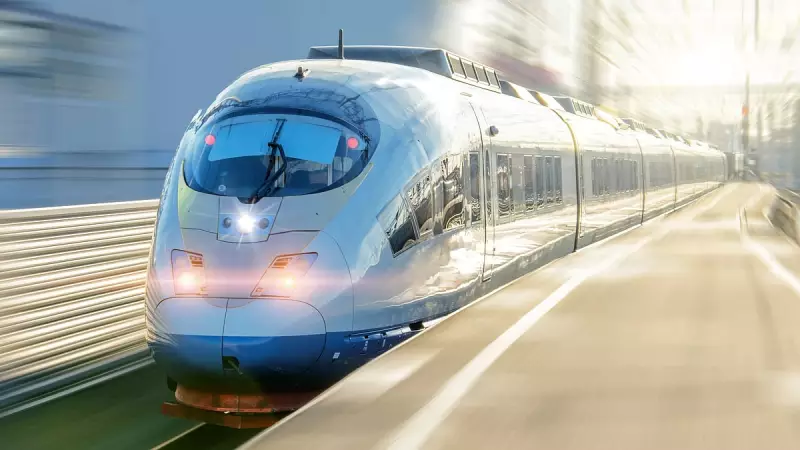
India's ambitious high-speed rail corridor linking Mumbai and Ahmedabad represents a monumental leap in infrastructure. However, as the project progresses with Japanese partnership, a critical eye turns to the experiences of other nations, particularly Jakarta, to understand the intricate balance between rapid development and financial sustainability.
The Strategic Partnership with Japan
India's approach to its first bullet train network has been strategically deliberate. The country partnered with Japan, the pioneer of high-speed rail technology known as Shinkansen. This collaboration, formalized several years ago, is not merely a vendor-client relationship but involves extensive technology transfer, financing through a soft loan from Japan International Cooperation Agency (JICA), and training for Indian personnel. The choice of Japan over other contenders was based on a proven safety record, operational efficiency, and favorable financial terms.
Jakarta's Precedent: A Cautionary Tale on Debt?
The development of Jakarta's high-speed rail line in Indonesia, which connected the capital to Bandung, serves as a contemporary case study. That project, while achieving its goal of modern transport, sparked significant debate over funding models and long-term debt obligations. Analysts like V Ranganathan have pointed to the need to scrutinize how such mega-projects are financed. The central question is whether the economic growth and productivity gains promised by bullet trains outweigh the burden of substantial foreign debt, especially for developing economies.

India's Performance and Progress
So, how has India fared in its own bullet train endeavor? The project has seen steady, though sometimes delayed, progress. Land acquisition, often a major hurdle in Indian infrastructure projects, has been largely completed for the majority of the route. Significant construction milestones have been achieved, including the launch of the first undersea rail tunnel in India near Mumbai. The project aims to drastically reduce travel time between the two major economic hubs from over 7 hours to approximately 2 hours, potentially transforming regional connectivity and economic activity.
The financial structure of the Indian project is distinct. The lion's share of funding comes via a low-interest Japanese loan covering roughly 80% of the project cost, with the remainder borne by the Indian states of Maharashtra and Gujarat and the central government. This model is designed to mitigate immediate fiscal pressure. However, the long-term repayment schedule and the project's ability to generate sufficient revenue to cover operational and capital costs remain subjects of analysis and discussion among economists and policymakers.
The Road Ahead: Development Versus Fiscal Prudence
The final lesson from global comparisons is clear: infrastructure is not just about steel and speed. It is about sustainable development. For India, the Mumbai-Ahmedabad bullet train is a test case. Its success will be measured not only by its timely completion and operational safety but also by its economic viability. Will it spur new urban clusters, boost tourism, and create a net positive economic impact that justifies the investment? Or will it become a financial strain?
The experience from Jakarta underscores the importance of transparent cost-benefit analysis, robust ridership projections, and careful management of foreign debt. As India continues its journey towards becoming a high-speed rail nation, integrating these lessons will be crucial to ensuring that this symbol of modern development translates into broad-based, sustainable growth without compromising fiscal health.






